


Humanizing S.T.E.M.:
A Study of Educator Experience and Reimagining Learning
In the fall of 2025 through the winter of 2026, Nth Education Partners recognized an urgent need to reconnect with educators, particularly leaders in S.T.E.M. education, to better understand what is happening on the ground in our education system to search collectively for answers alongside those living the reality of today’s political climate. This study explores the essential theme of Humanizing S.T.E.M. Education in an Era of Political Pressure and Institutional Erasure of Justice, Equity, Diversity, and Inclusion practices.
Our findings challenge a common narrative: S.T.E.M. education is not failing because students lack ability or motivation. It is faltering because our education systems have forgotten how to belong to the communities they serve. Educators are doing the invisible work of translating rigid systems, often created by people who have never stepped into a classroom, into meaningful learning experiences for students. When we bring human-centered systems into S.T.E.M. classrooms, we create space for identity, curiosity, culture, and connection inside structures that too often prioritize control, testing, and compliance.
Across participant voices, student disengagement and institutional barriers emerge as deeply connected. For examples, learners are not disconnected from mathematics; they are disconnected from systems that make math feel fearful, alienating, or irrelevant to their lives. At the same time, educators face structural limits that restrict their ability to teach in relational, inquiry-driven, and culturally responsive ways. These constraints are not merely pedagogical. They are systemic. Together, the data suggests that the greatest obstacle to meaningful S.T.E.M. learning is not a lack of knowledge or innovation, but the conditions that prevent schools from practicing humanity at scale. This study argues that the S.T.E.M. field will not transform through new standards or reforms alone, but through meaningful partnership rooted in community.
Transformation will come through educator-led ecosystems that reconnect mathematics to identity, community, and culture. Nth Education Partners exists to make that work visible, supported, and sustainable. We build bridges between schools, educators, and communities—helping districts move beyond compliance and toward cultures rooted in dignity, agency, belonging, and meaningful learning.
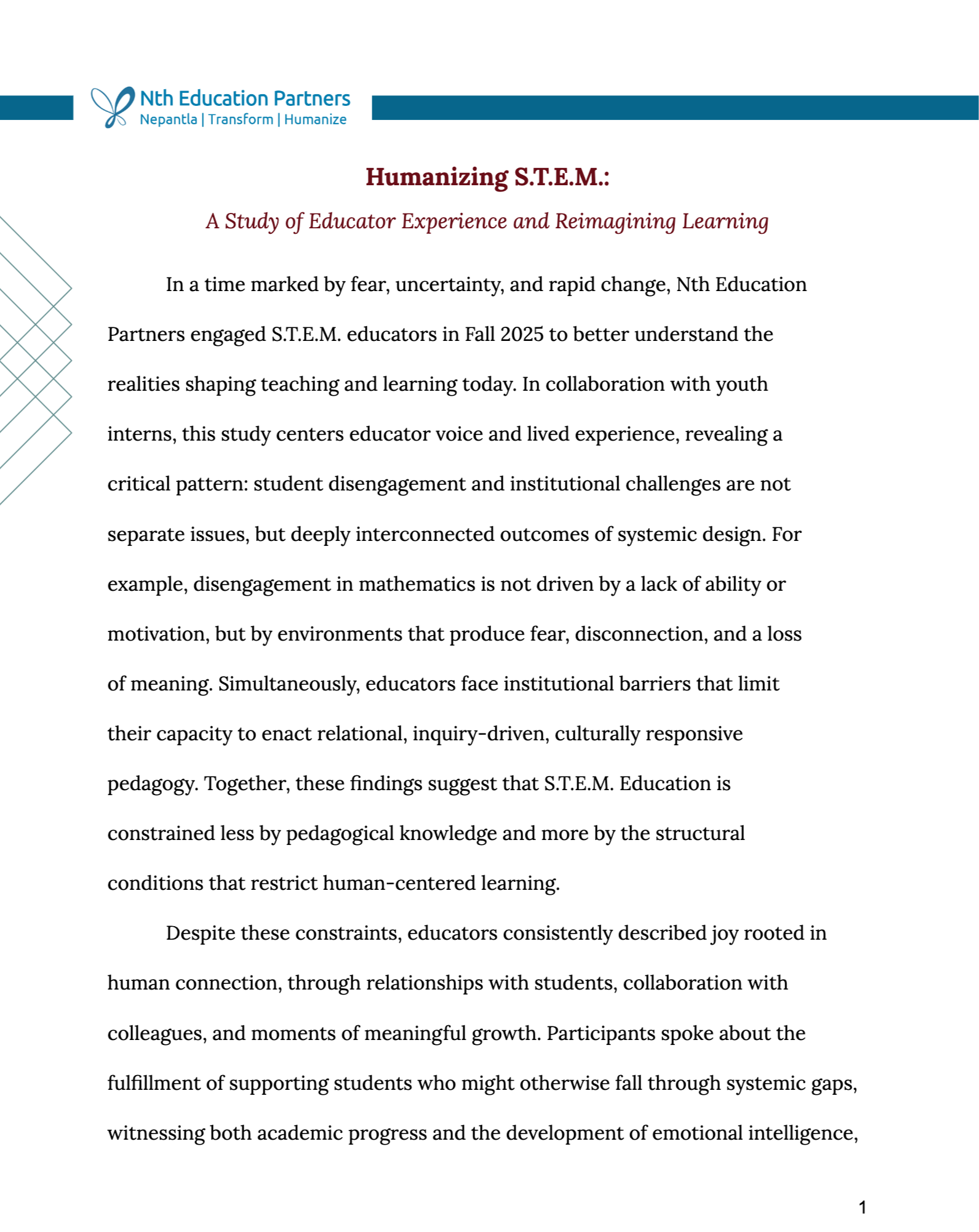
To capture the depth, reflection, and lived wisdom of the educators we interviewed, we organized our findings through the archetype of oracle cards. Each card represents a core dimension of the educator journey—inviting us to pause, reflect, and engage with these insights not as cold data points, but as living truths that guide our collective path forward.
OUR 6 CORE FINDINGS

Idealism Meets Institutional Constraint
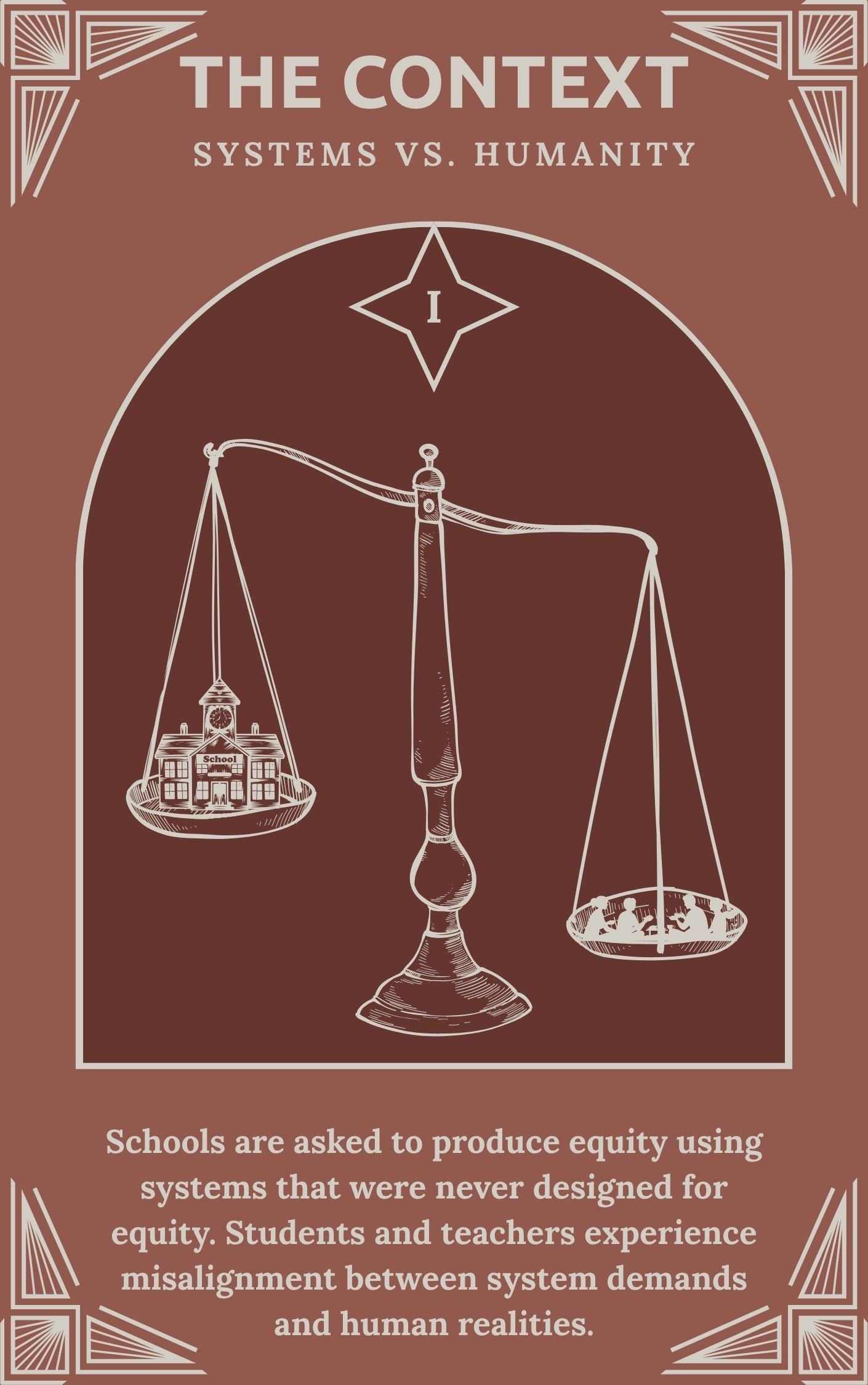
What began as a vision of creative, meaningful teaching becomes more complex in practice. Educators face heavy workloads, emotional labor, and limited autonomy within systems that prioritize compliance. A lack of representation further constrains change. In this reality, educators realize that teaching is not just about content, but about who students are, how they experience the world, and how learning connects to their lives.
-
Educators described how traditional math structures often produce fear, disconnection, and the belief that some students simply “are not math people.” At the same time, they envision mathematics as a space for inquiry, confidence, and belonging—revealing a tension between the humanizing potential of math and the harm caused by rigid instructional systems. here
-
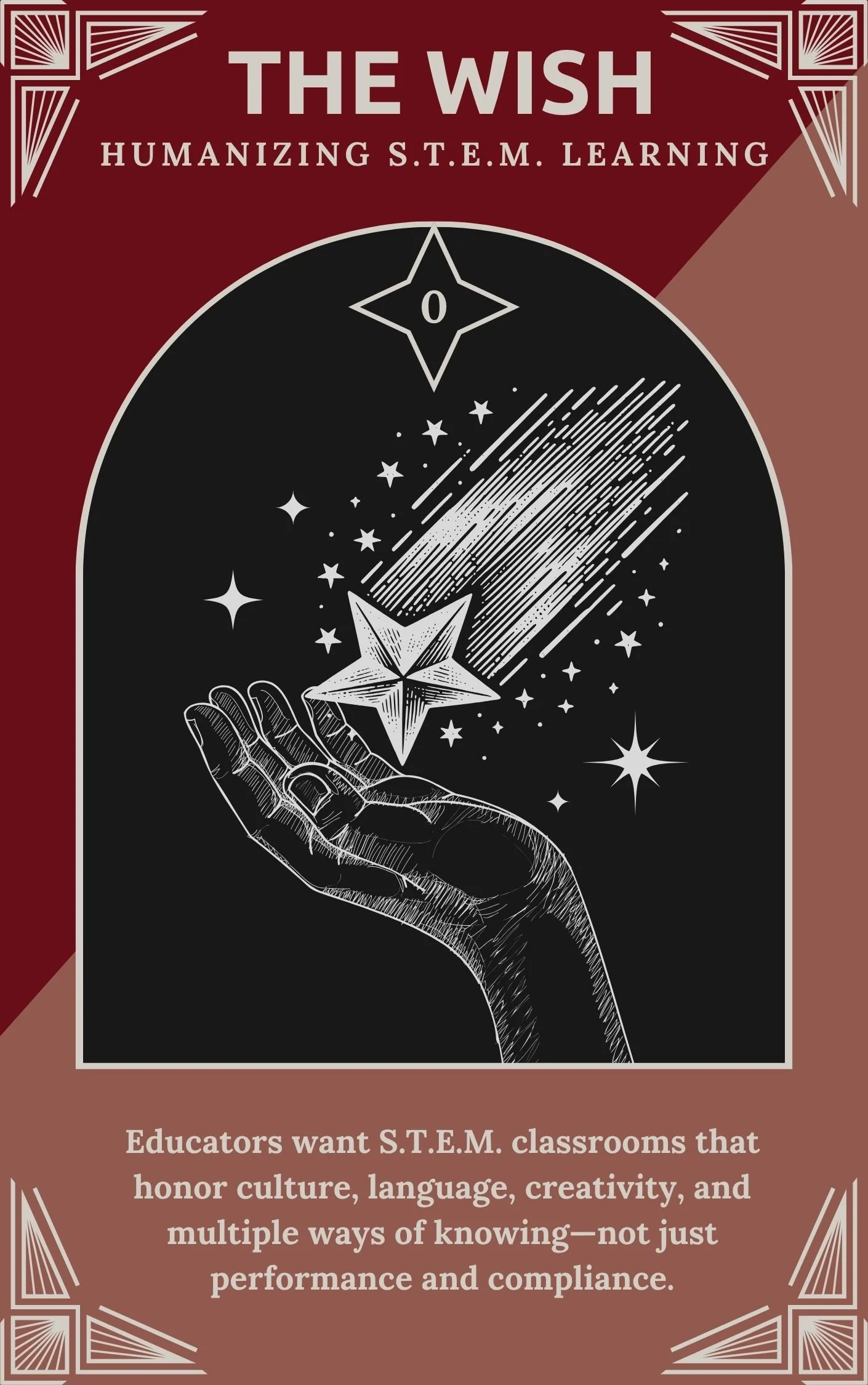
Participants emphasized that students’ identities, lived realities, and unmet basic needs deeply shape how they engage in school. Yet institutional expectations often ignore these realities, creating learning environments where academic demands can feel disconnected from or even oppressive to the students they are meant to serve.
-
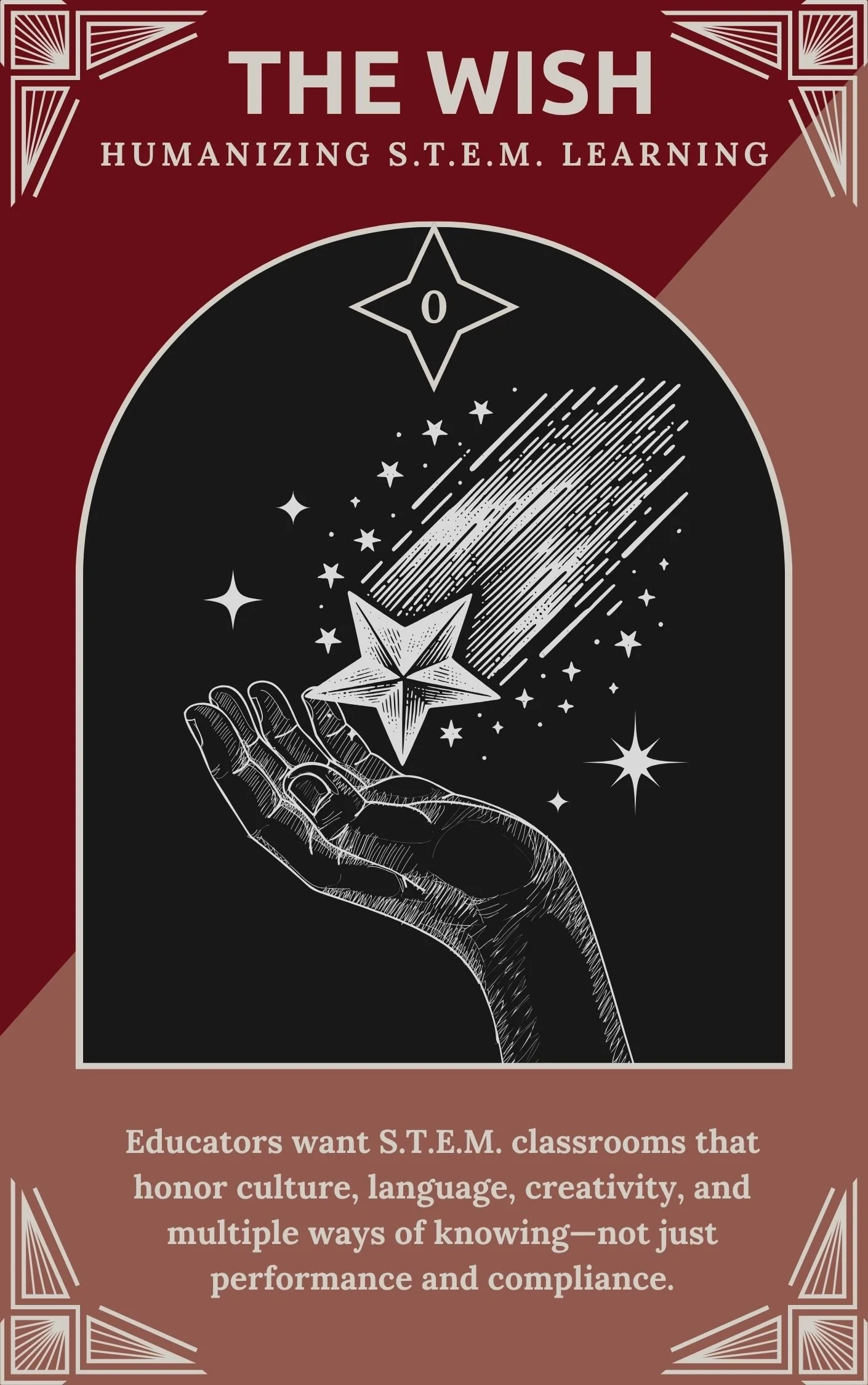
Educators consistently expressed a desire for collaborative, hands-on, and meaningful S.T.E.M. learning, but described working within systems built around procedure, pacing, and compliance. This disconnect limits opportunities for authentic engagement and makes it difficult to enact the kind of human-centered learning they know students need.
Direct quotes from participants aligned to The Wish
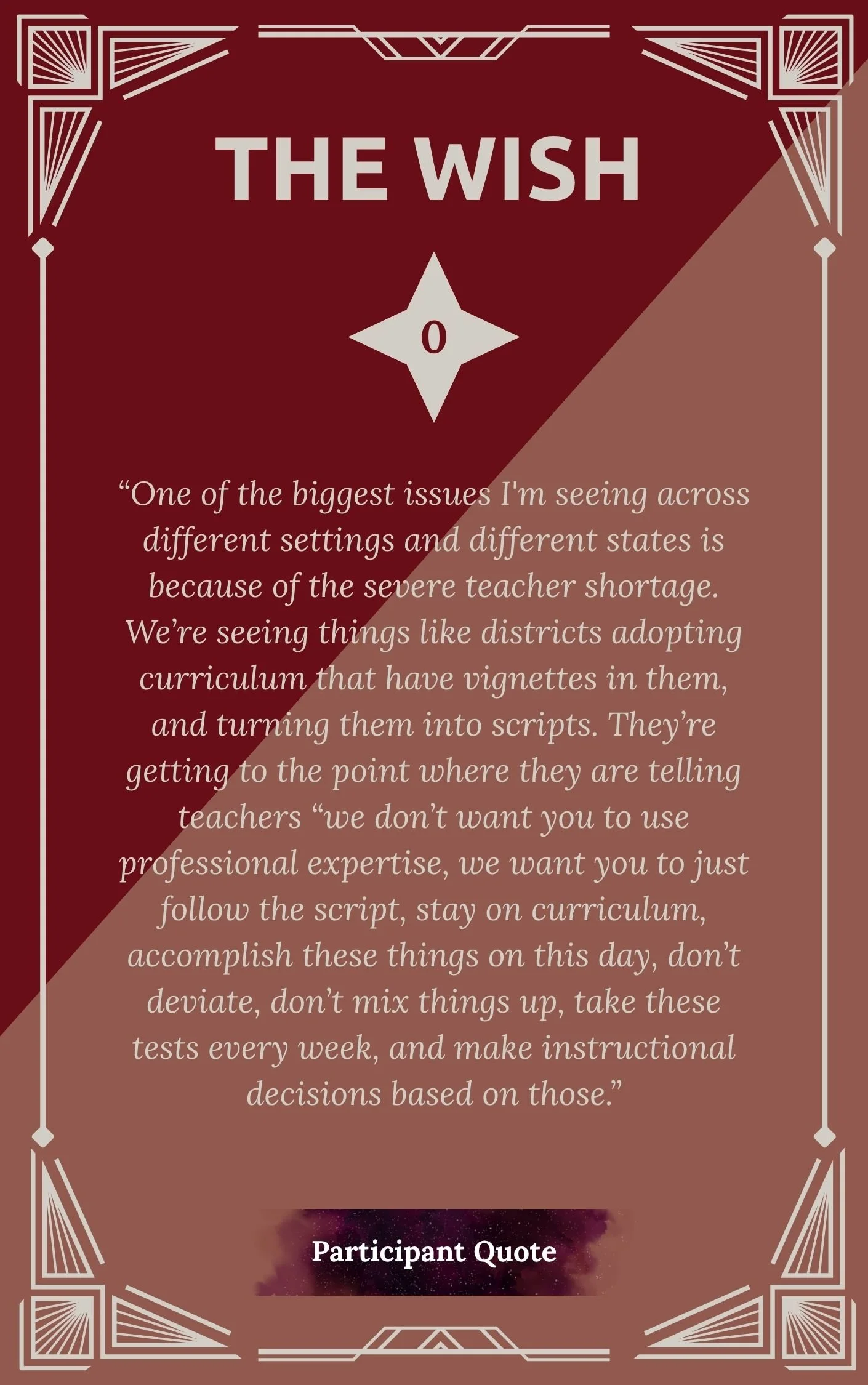
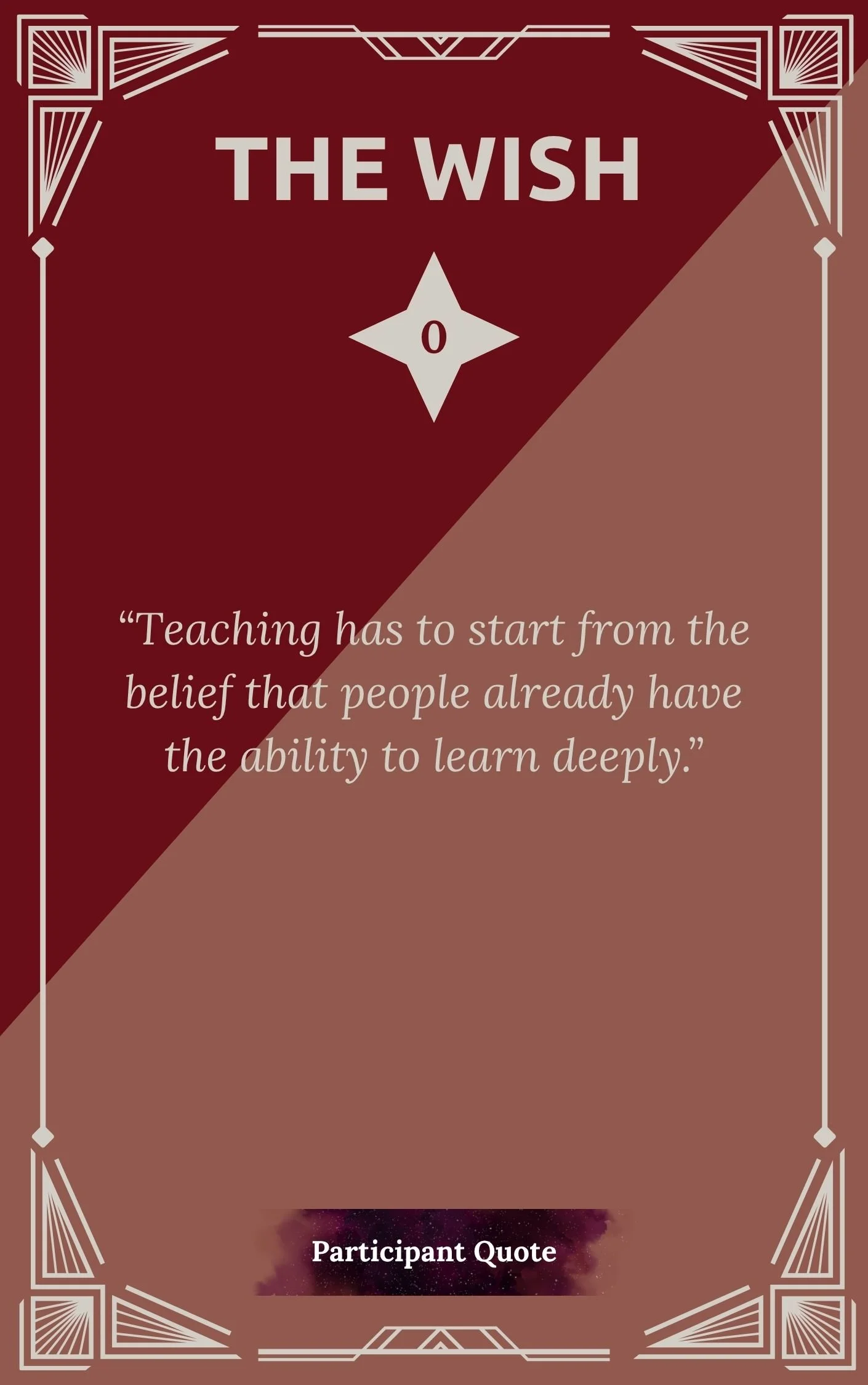
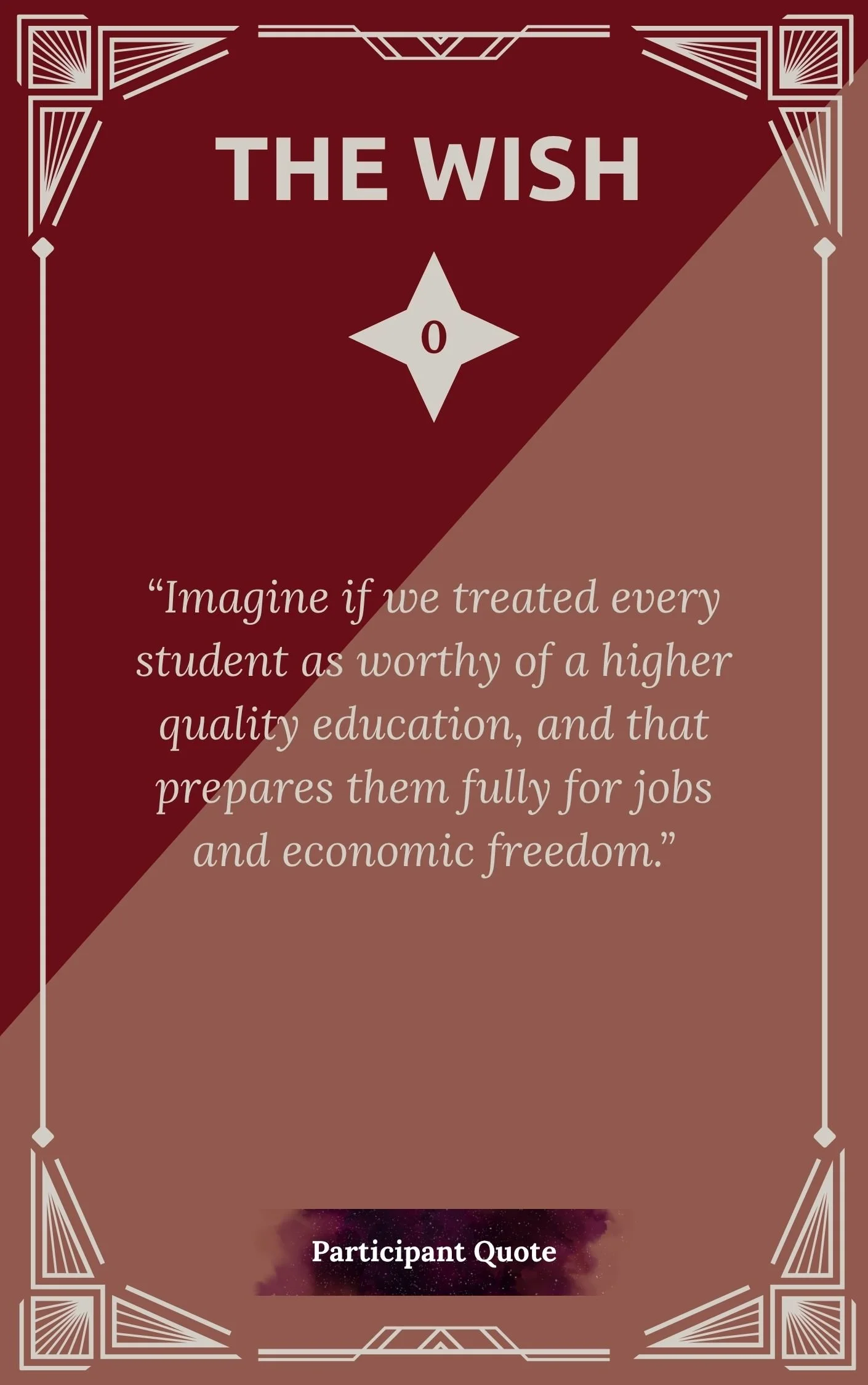
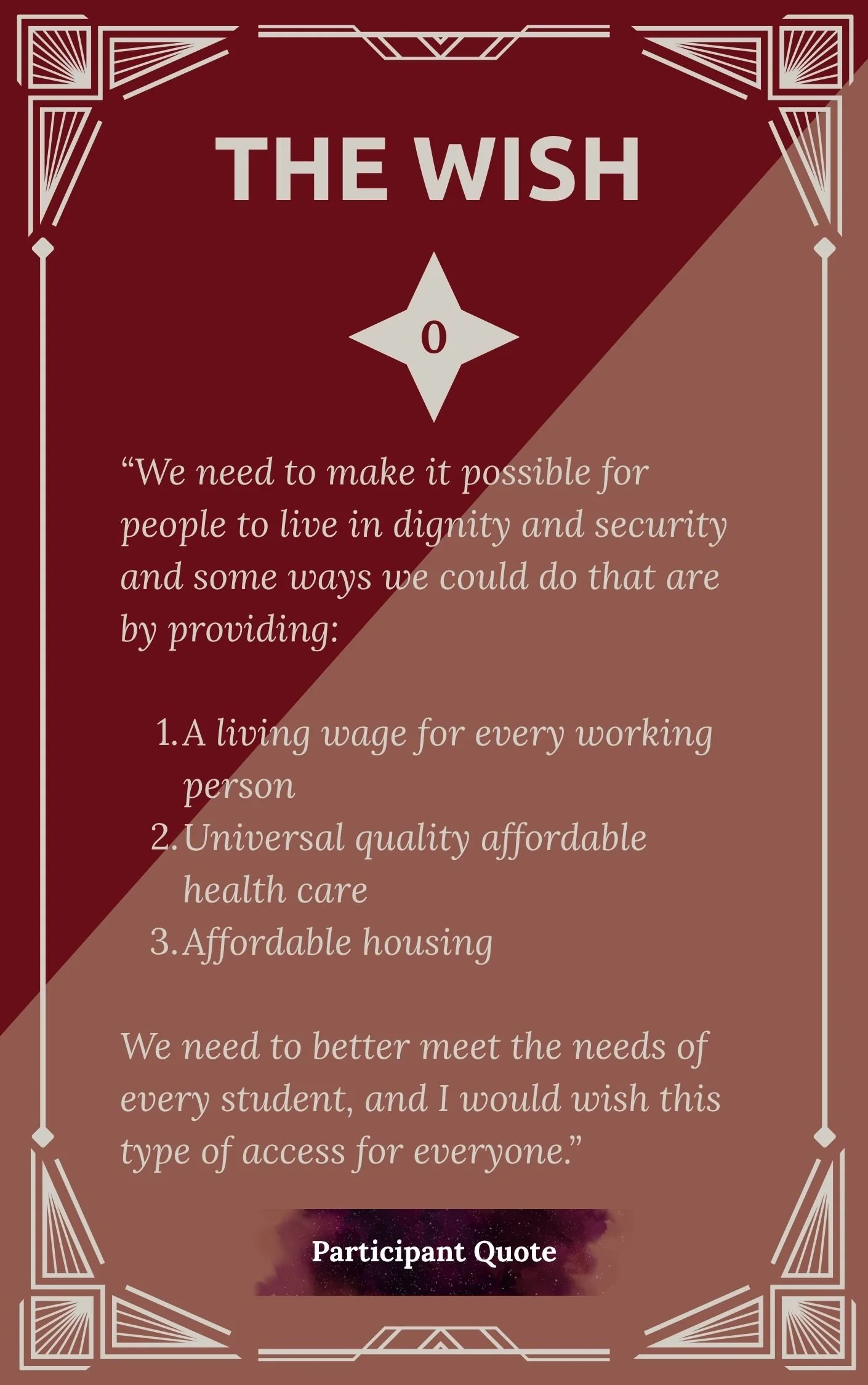
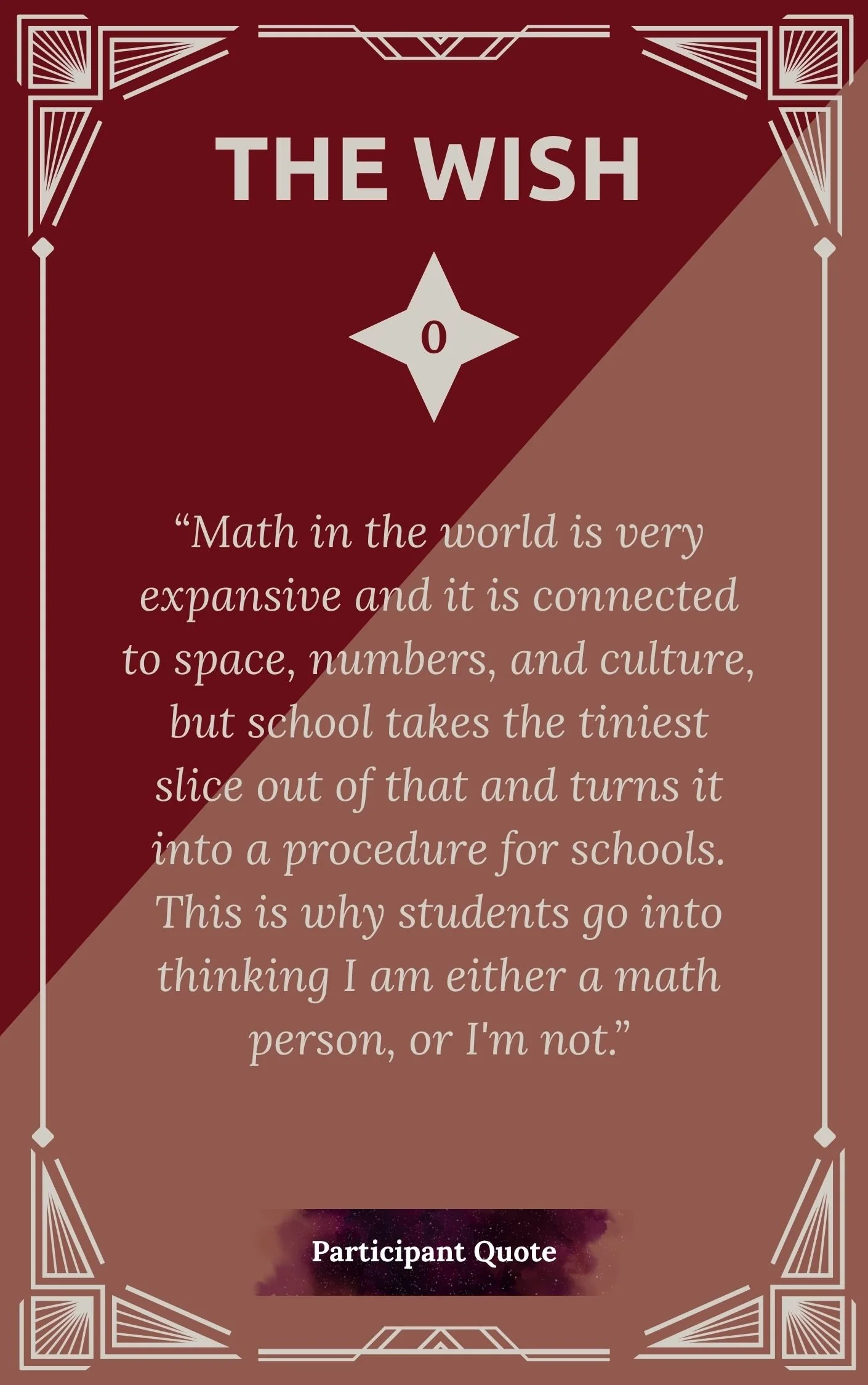
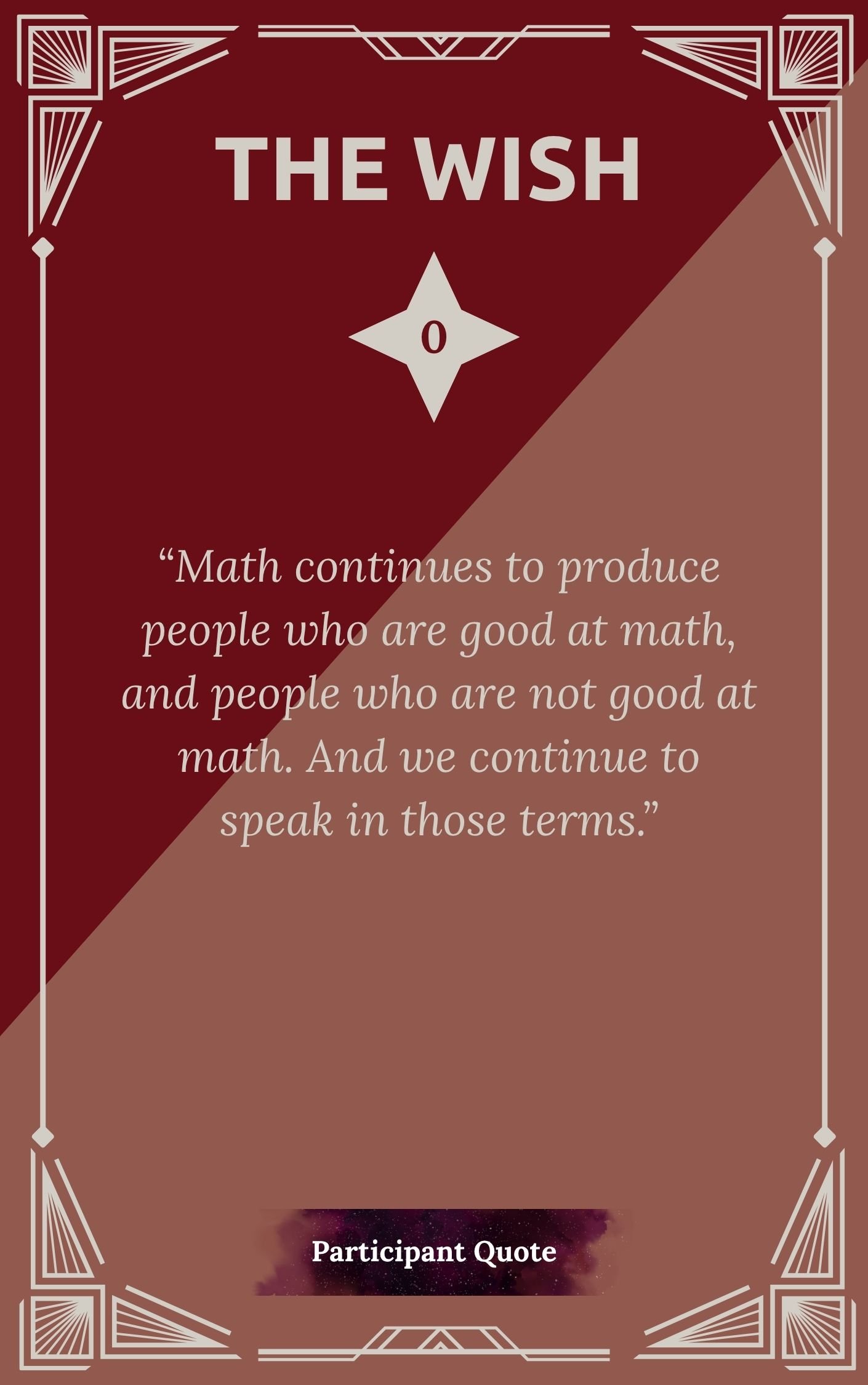
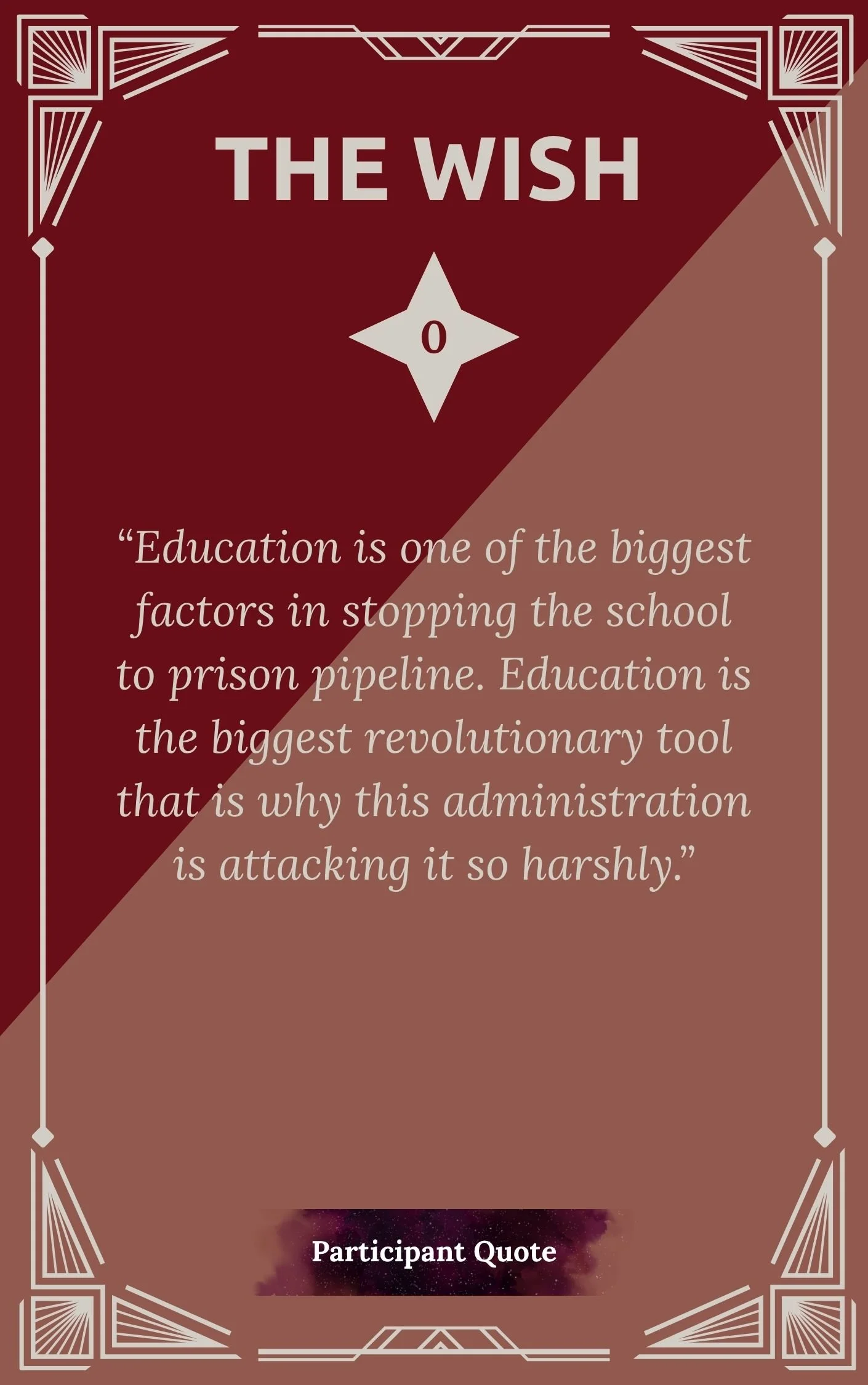
Educators enter the profession to inspire, create, and make a meaningful impact, but quickly find themselves navigating systems that constrain their autonomy, intensify emotional labor, and limit their ability to teach in ways that fully honor students’ humanity.
Teaching as Human, Constrained, and Political Work
-
Many participants described a growing disconnect between students and the institutions designed to serve them. When schools prioritize compliance, control, and performance over relationships, identity, and belonging, learning can feel oppressive rather than empowering. Students often experience education as something done to them rather than with them, particularly when their cultures, lived experiences, and basic needs are overlooked. When students cannot see themselves reflected in their learning, school can feel irrelevant, alienating, and disconnected from the realities of their lives.
-
Participants described teaching and learning within a broader context of social and political instability. Educators shared concerns about how political rhetoric, policy shifts, and fears surrounding immigration enforcement are affecting school communities. Many noted that students are carrying significant emotional burdens related to safety, identity, family stability, and belonging, while educators are increasingly expected to support students through these challenges with limited resources and institutional support. These realities create additional barriers to learning and contribute to a climate of uncertainty that extends far beyond the classroom.
-
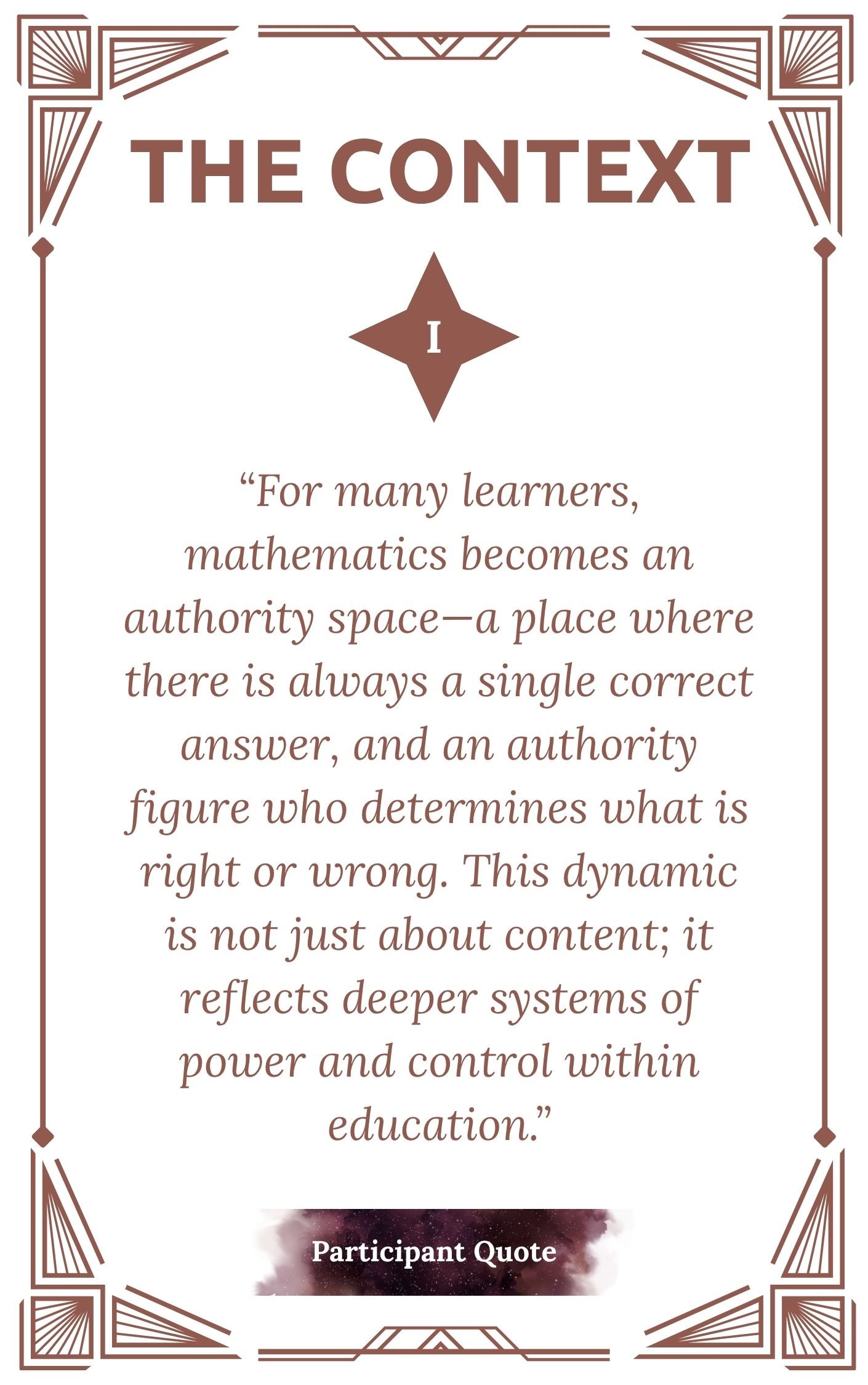
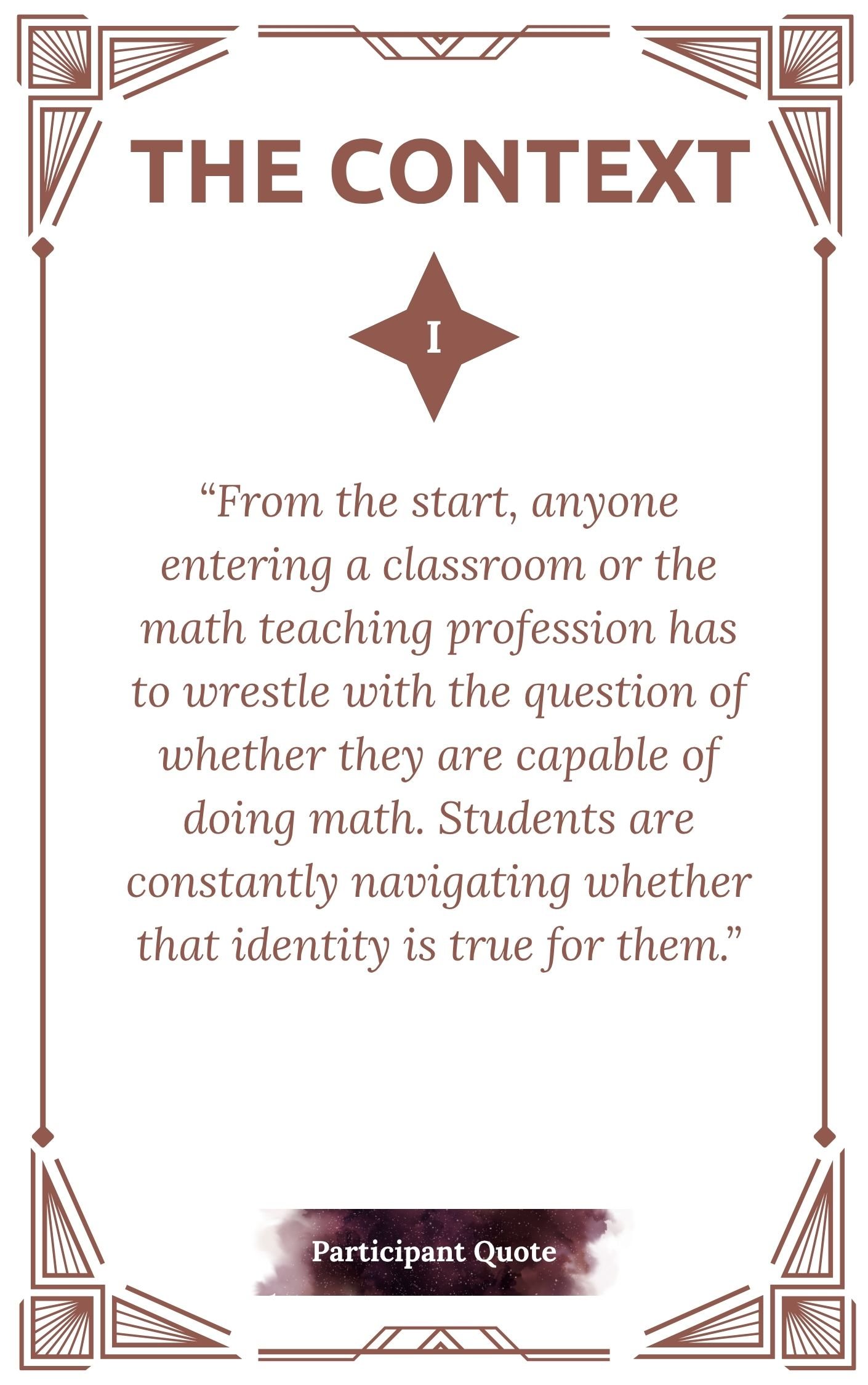
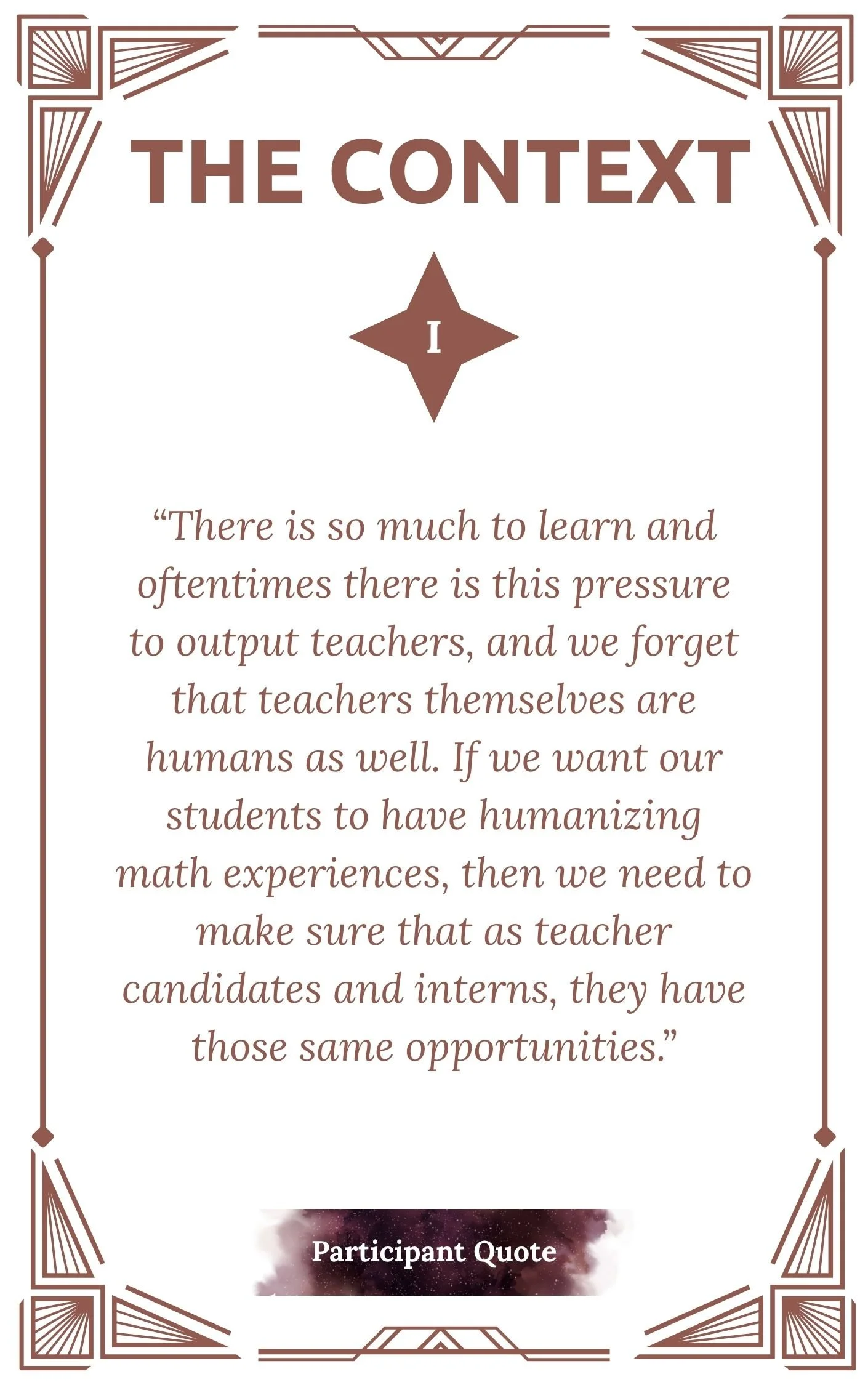
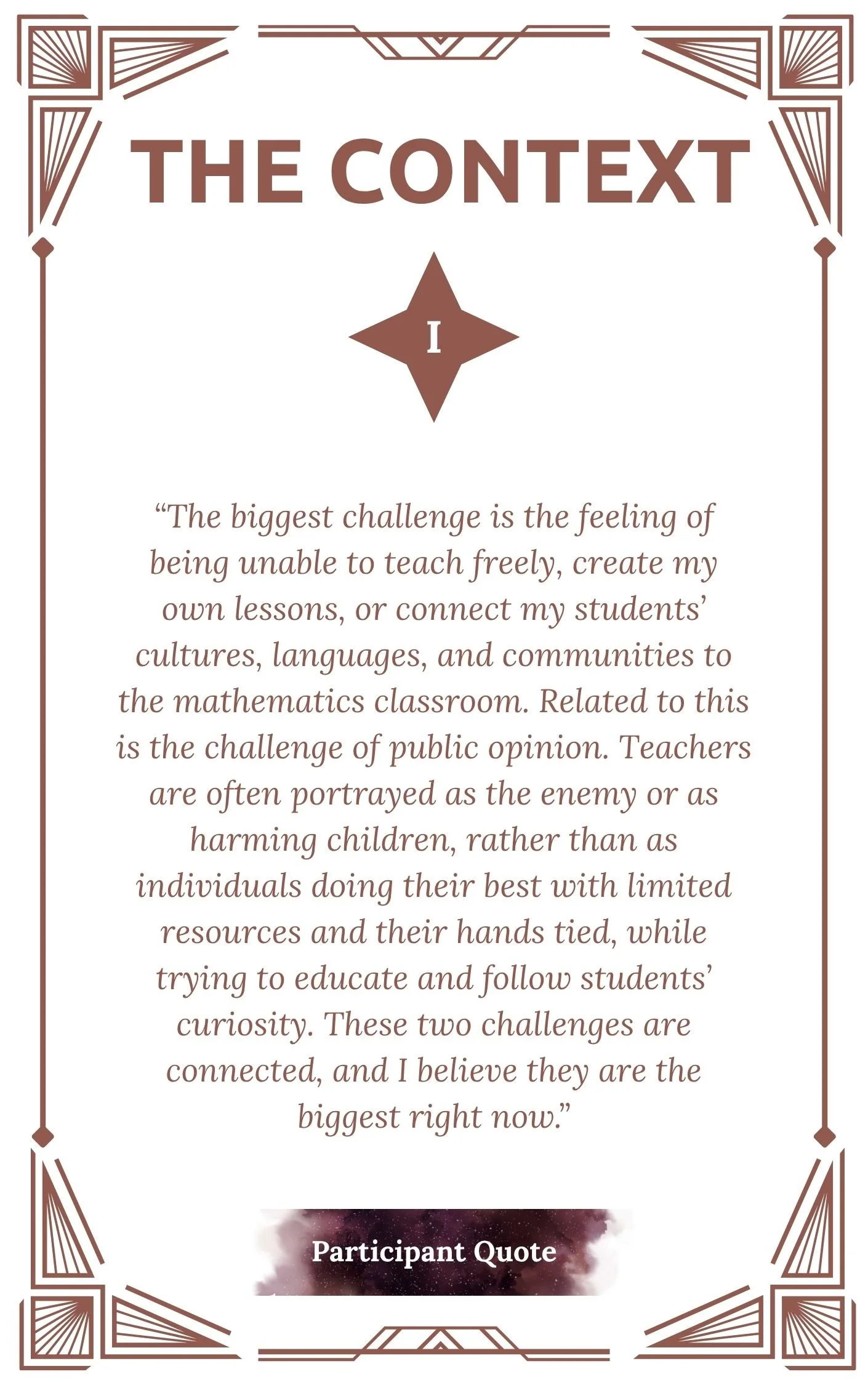
More than any other subject, mathematics was described as carrying powerful emotional and cultural narratives about intelligence, ability, and worth. Participants repeatedly referenced the widespread belief that people are either "math people" or "not math people," a distinction that often begins early and follows students throughout their educational journeys. Many educators observed that fear, anxiety, trauma, and repeated experiences of failure have become deeply embedded in students' relationships with mathematics. These outcomes are not inevitable; they are produced by systems that emphasize speed, correctness, testing, and gatekeeping over curiosity, collaboration, and sense-making. As a result, mathematics often functions as a filter that determines who is perceived as capable rather than a tool that helps all students develop confidence, agency, and belonging.
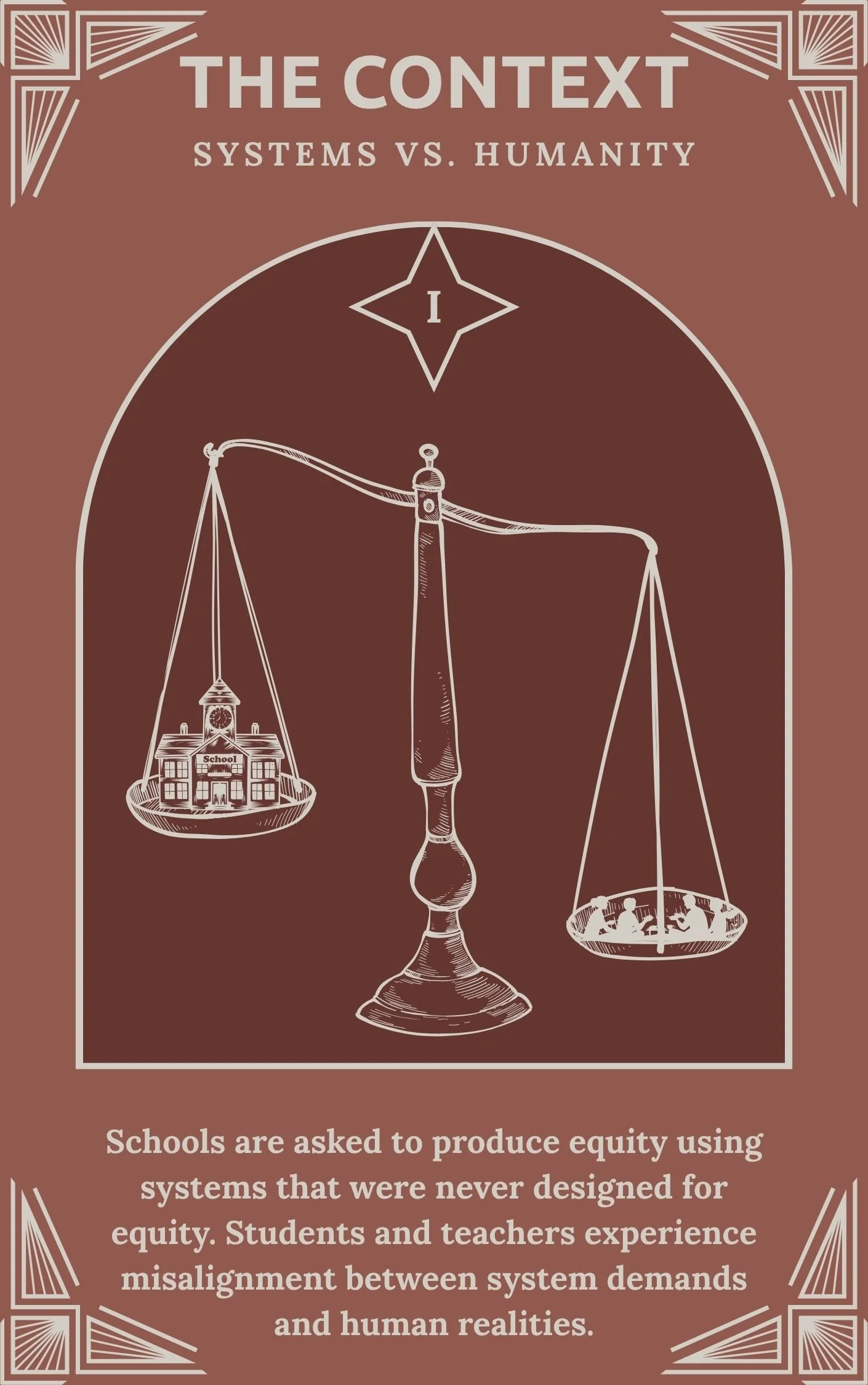
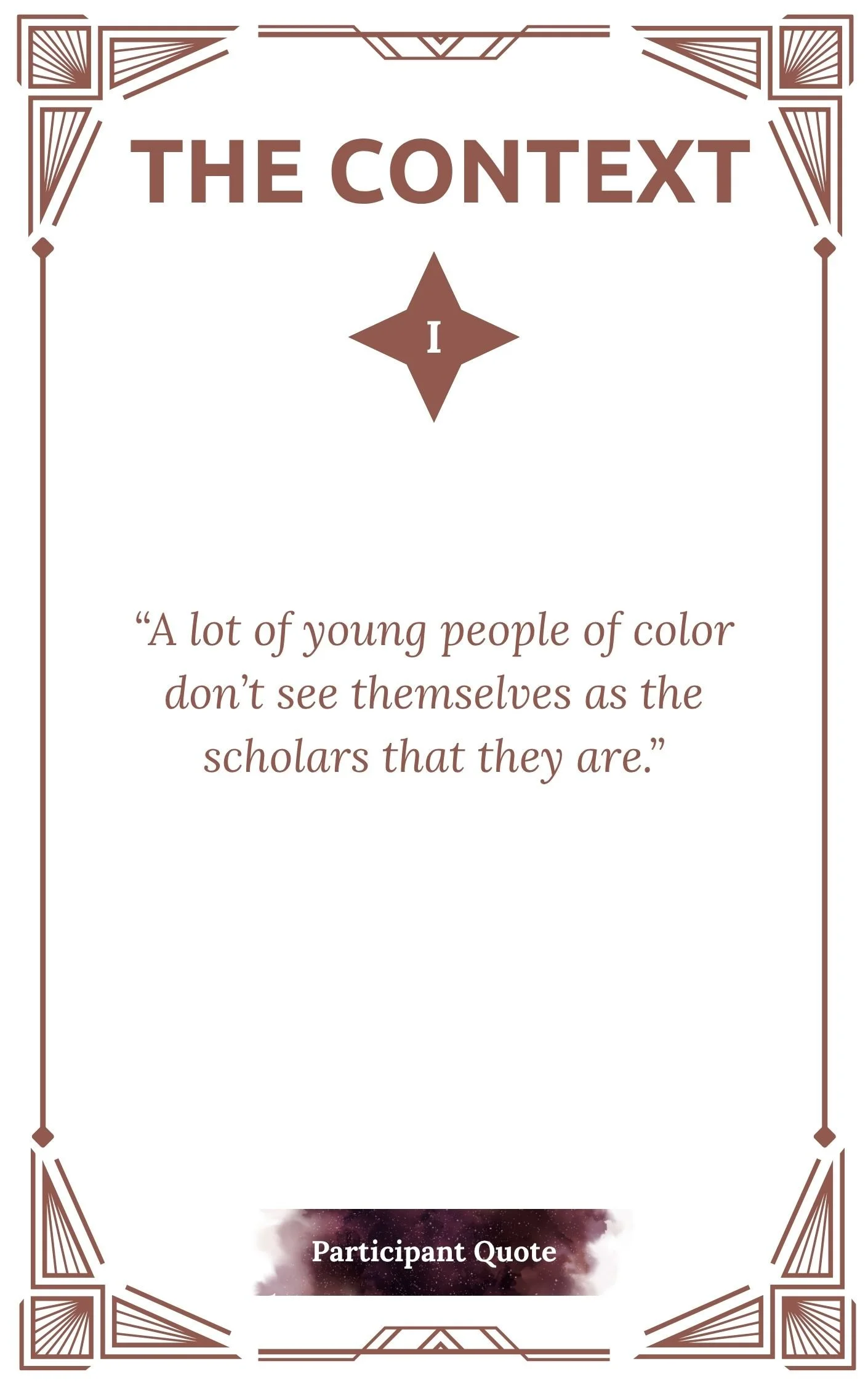
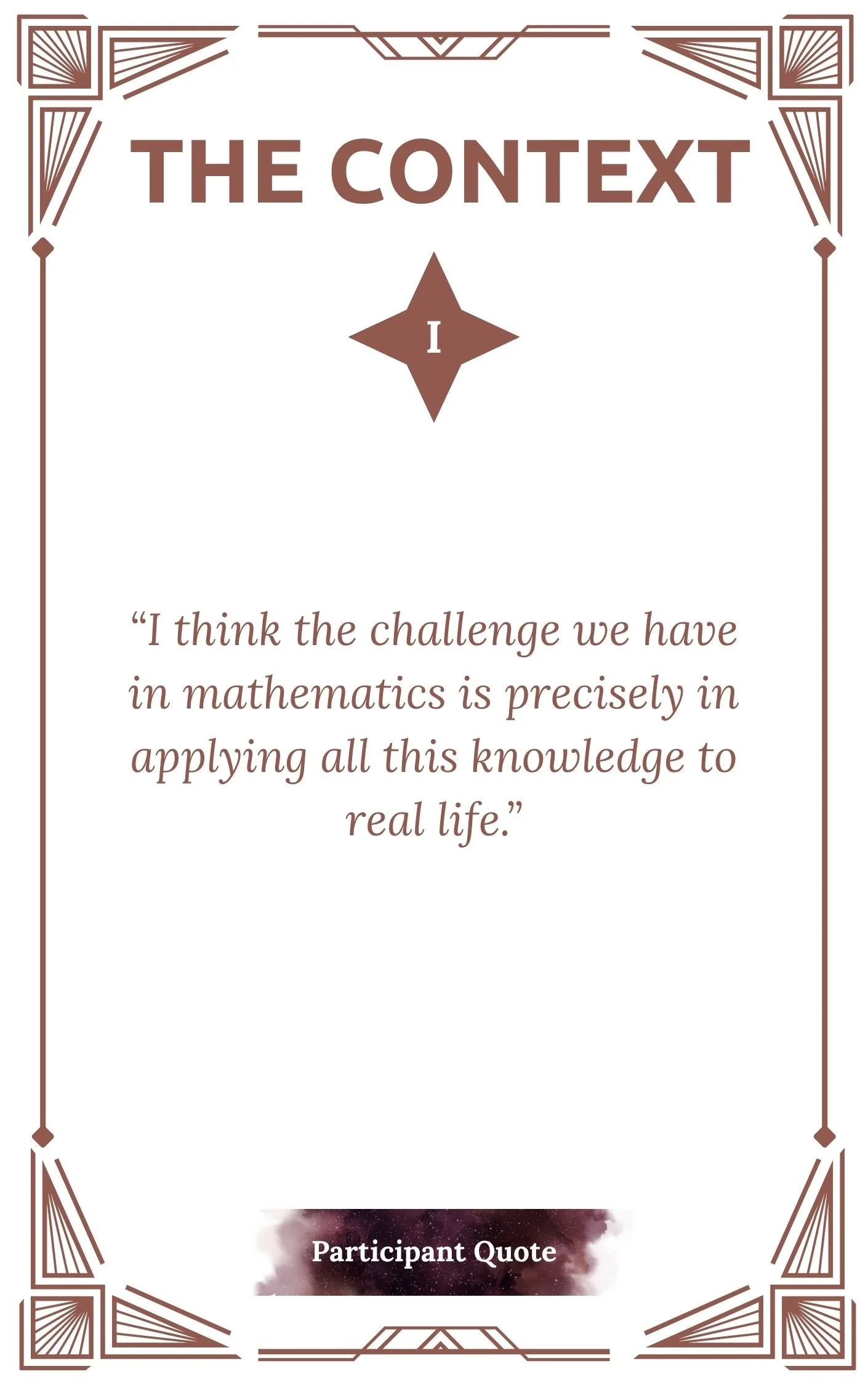
Direct quotes from participants aligned to The Context
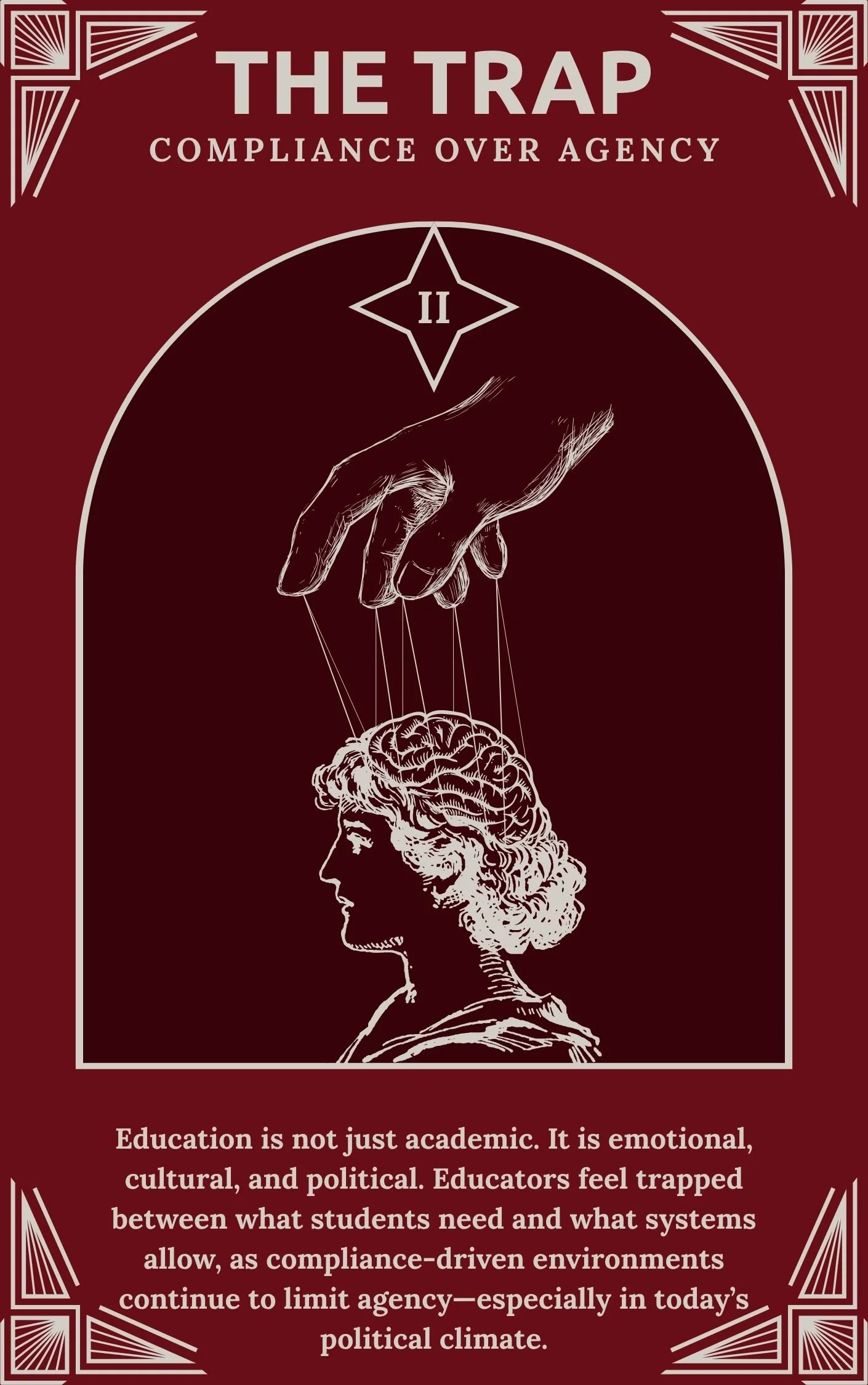
Fear Consuming the Education System
Under a tense political climate and an education system designed without students’ well-being in mind, students are struggling to connect with learning and educators, while not having sufficient resources or autonomy, are trying to find ways to lift some of their ever growing fears.
Emotional Climate of Schooling and Student Vulnerability
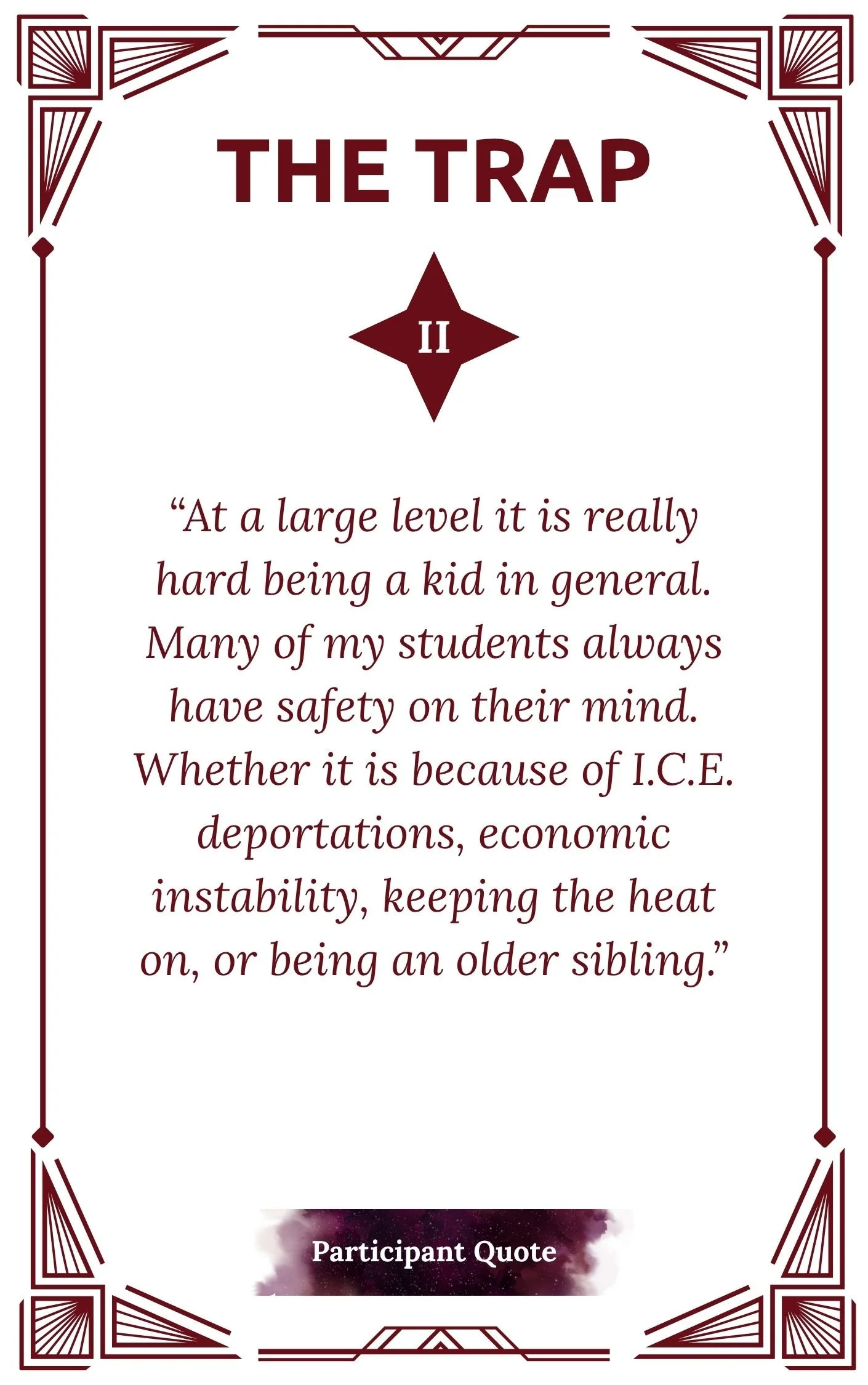
The emotional climate of schooling, marked by fear, pressure, and constraint; intersects with student vulnerability and identity-related challenges, as students navigate academic stress alongside concerns about safety, belonging, and aspects of identity such as race, gender, and immigration status, often intensifying feelings of anxiety or exclusion.
-
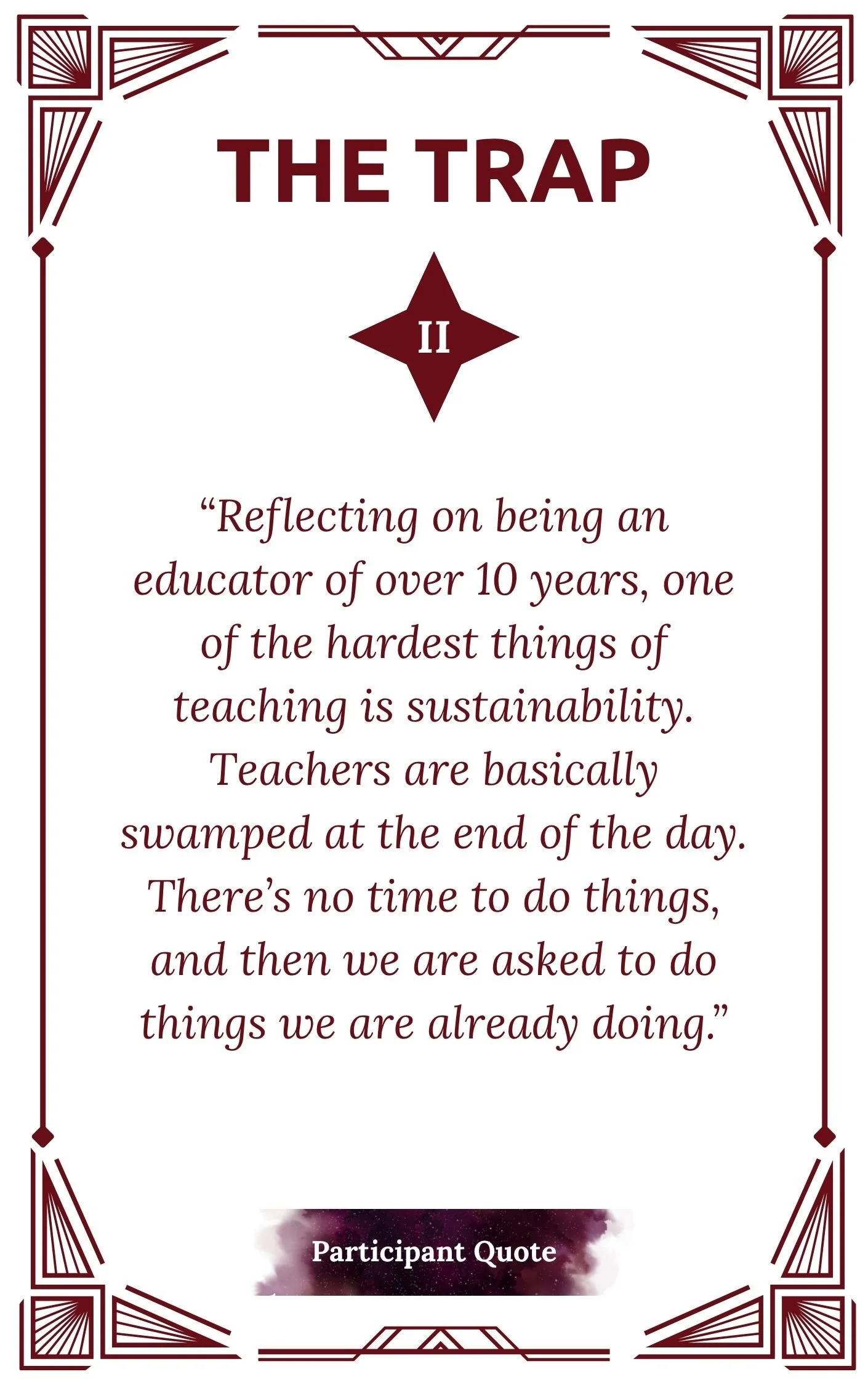
Participants consistently described a system struggling to meet the needs of both students and educators. Across schools, districts, and universities, educators expressed concerns about staffing shortages, increasing workloads, and the growing challenge of sustaining a healthy teaching workforce. University faculty and teacher educators noted declining interest in pursuing careers in education, particularly in mathematics and STEM fields, raising concerns about the future pipeline of educators. Participants emphasized that these shortages are not simply workforce issues; they are symptoms of broader systemic conditions that make teaching increasingly difficult to sustain. As expectations rise and support diminishes, many educators worry about the long-term capacity of schools to provide the relationships, attention, and care students need to thrive.
-
Educators repeatedly identified insufficient funding as a barrier to meaningful learning opportunities and student support. Participants described challenges ranging from limited classroom resources and outdated materials to inadequate intervention services, staffing, and enrichment opportunities. These challenges were particularly pronounced in schools serving historically marginalized and low-income communities, where educators often find themselves compensating for systemic gaps with their own time, labor, and personal resources. Across responses, funding was not framed solely as a budget issue but as an equity issue—one that directly impacts students' access to engaging, supportive, and human-centered learning experiences.
-
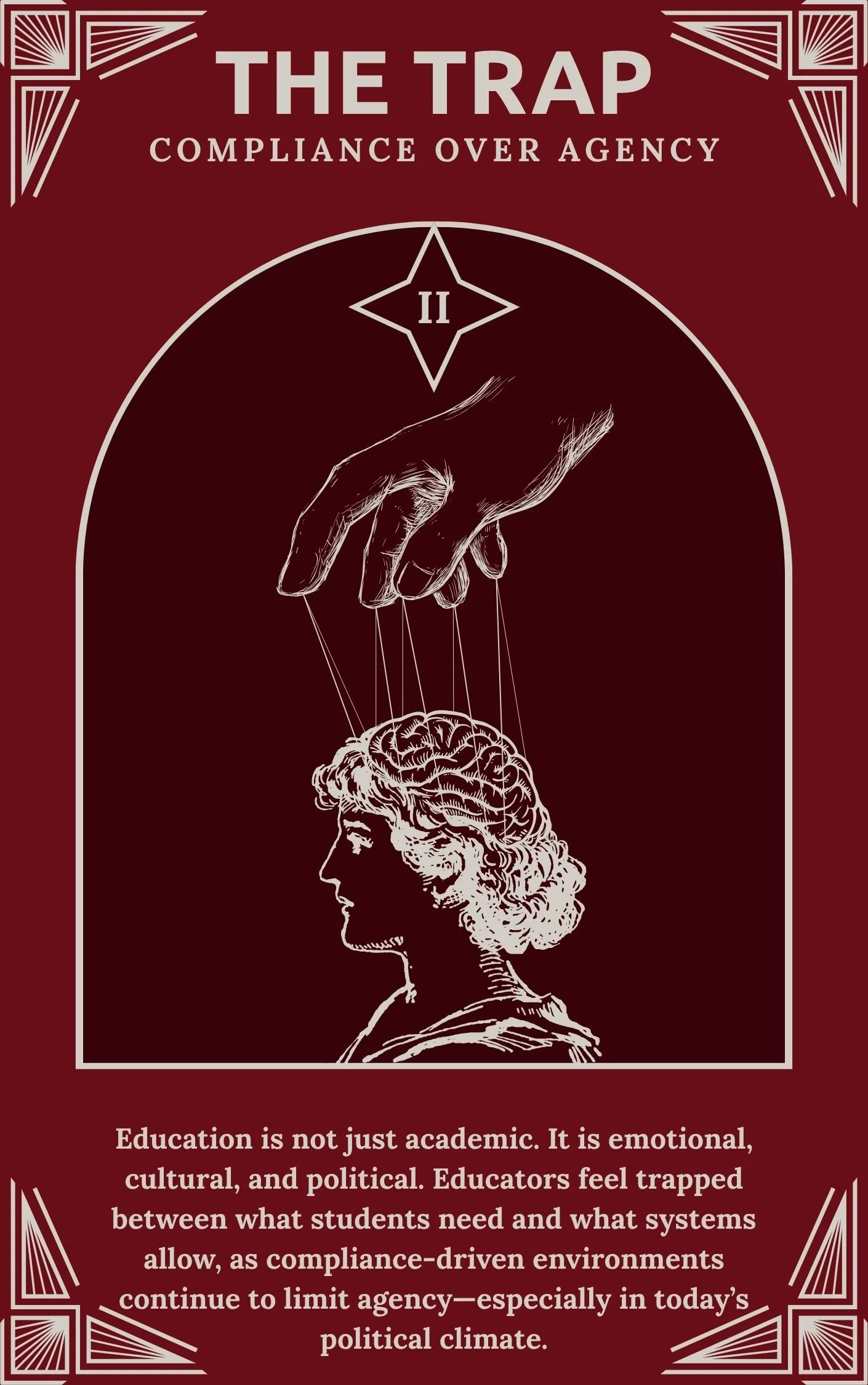
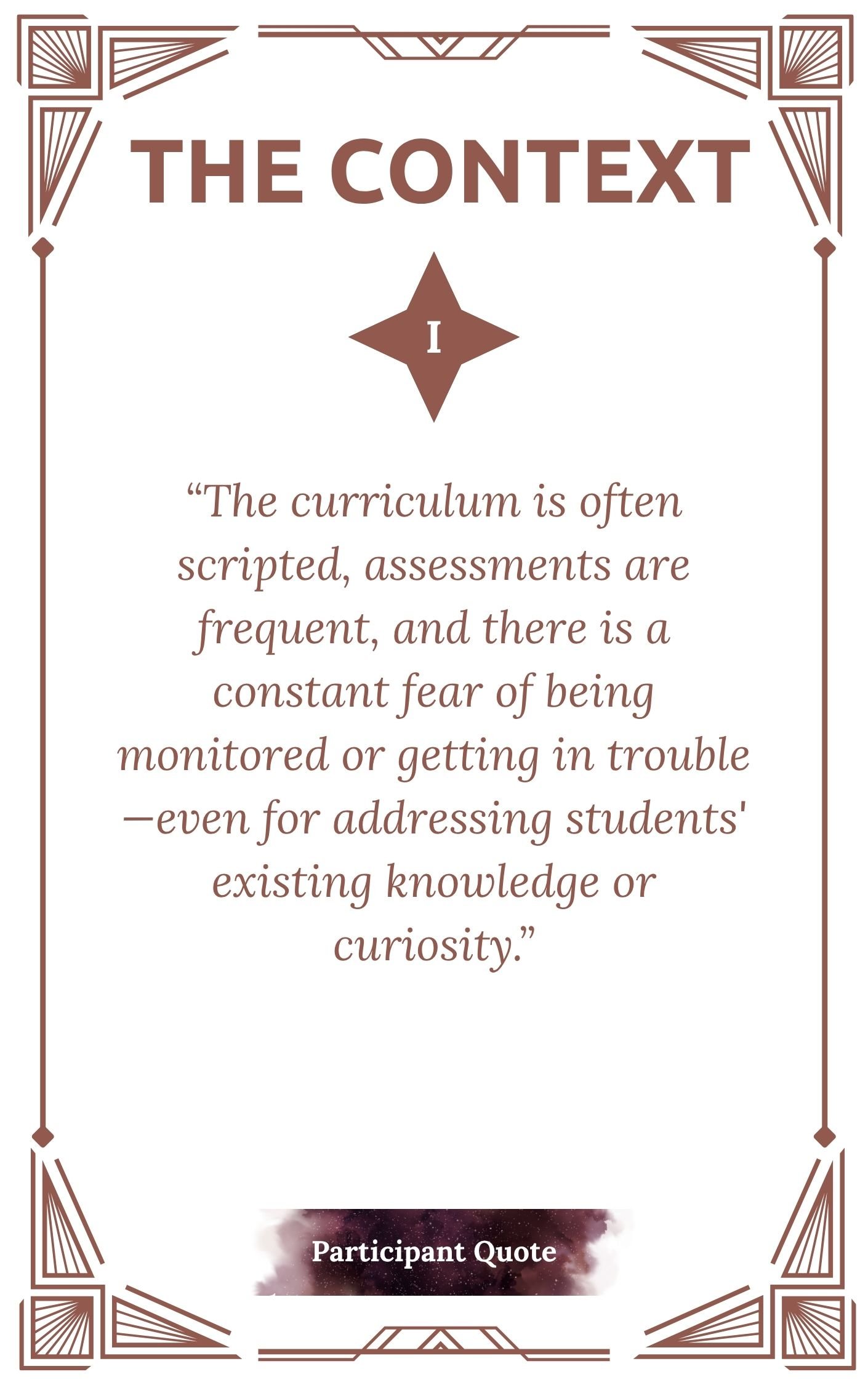
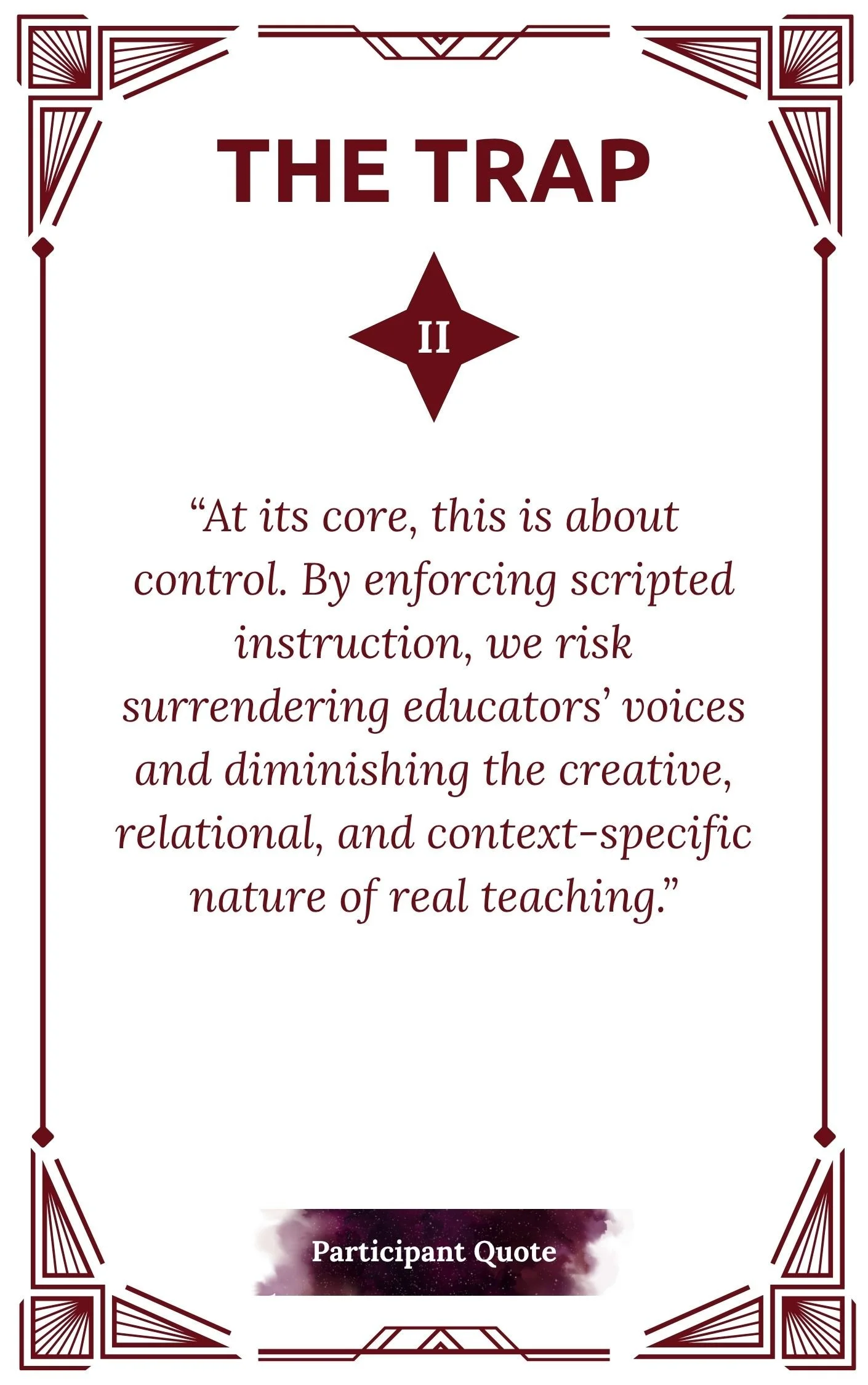
Educators described feeling increasingly constrained by systems that prioritize compliance over professional judgment. Many educators expressed concern about the rise of scripted curricula, heightened accountability measures, and growing pressures to standardize teaching practices while navigating a broader climate of political tension, public scrutiny, and uncertainty about what can be discussed or taught in classrooms. Several participants also reflected on the emergence of artificial intelligence as both an opportunity and a challenge, requiring educators to rethink traditional approaches to teaching and learning while responding to fears about the future of the profession. Together, these forces contribute to a growing sense that educators are being asked to do more while having less agency to make decisions in the best interests of their students.
-
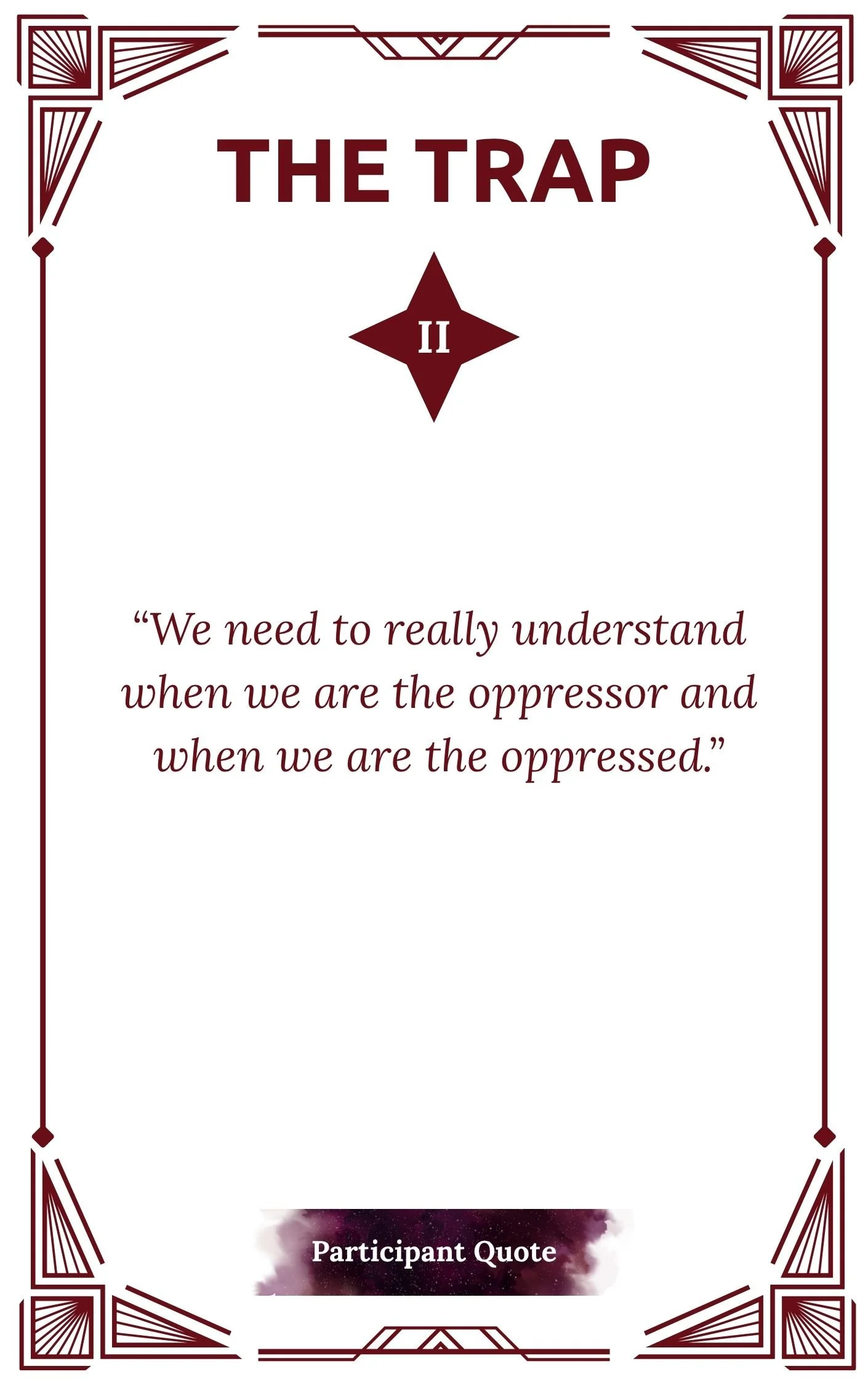
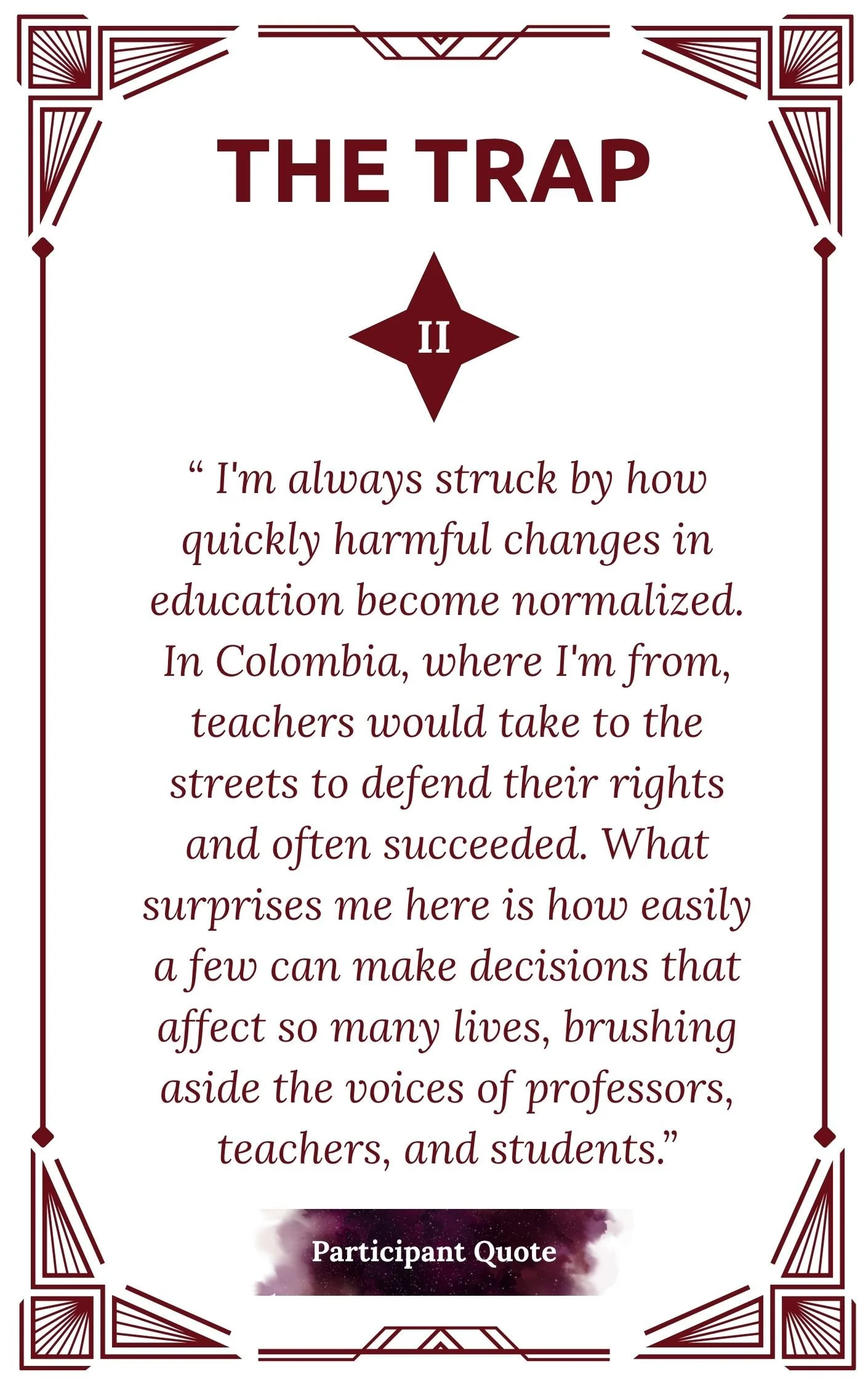
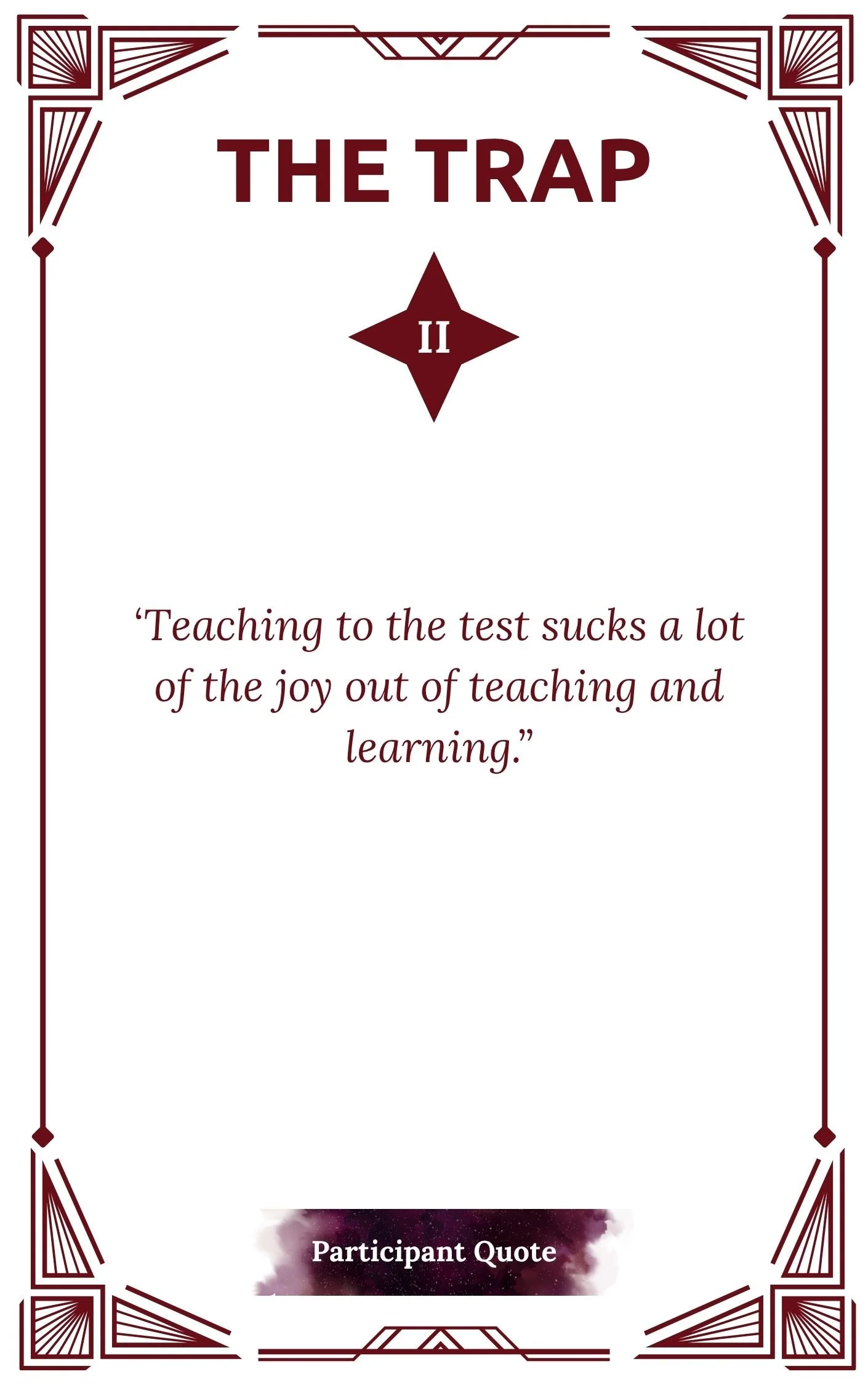
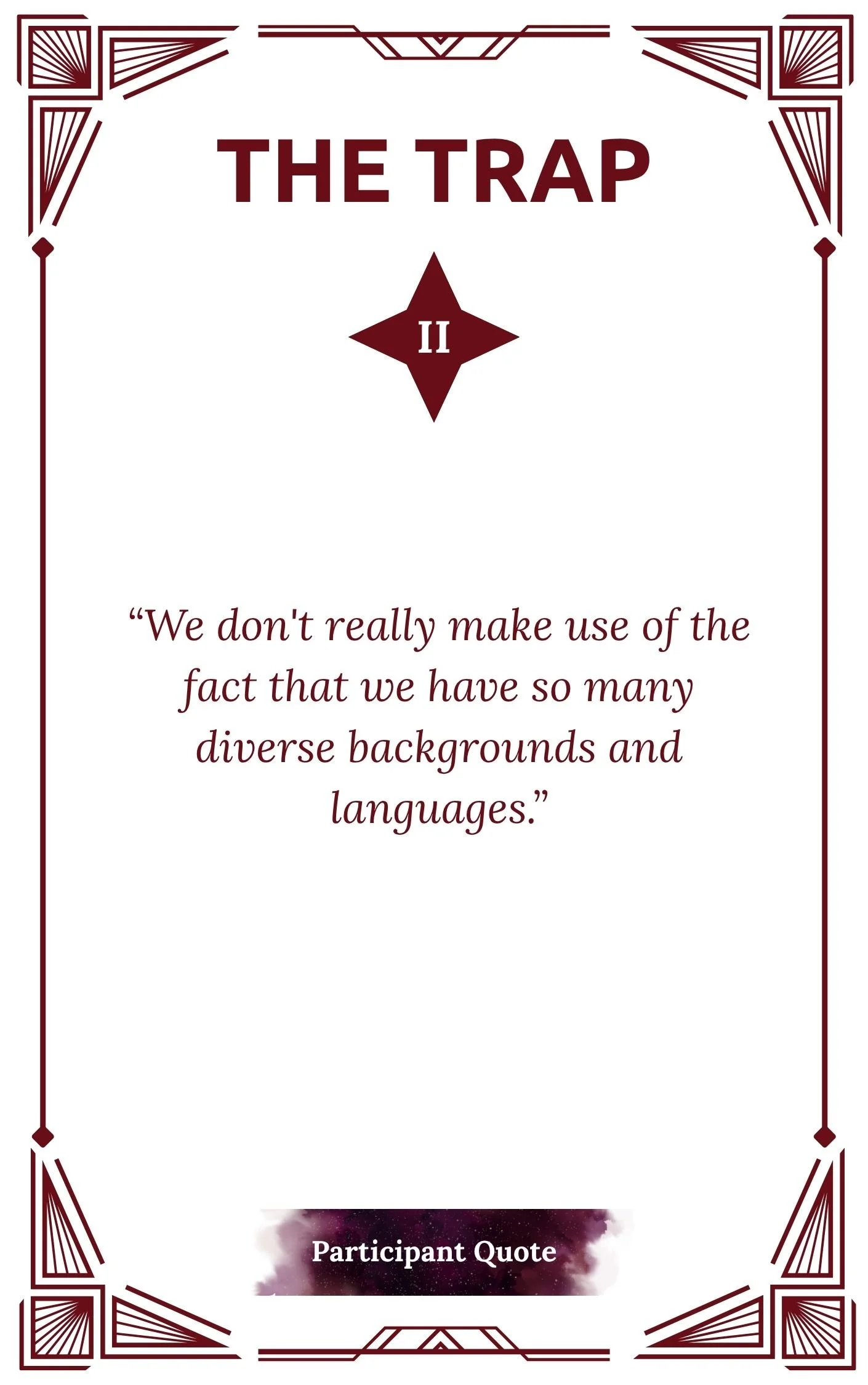
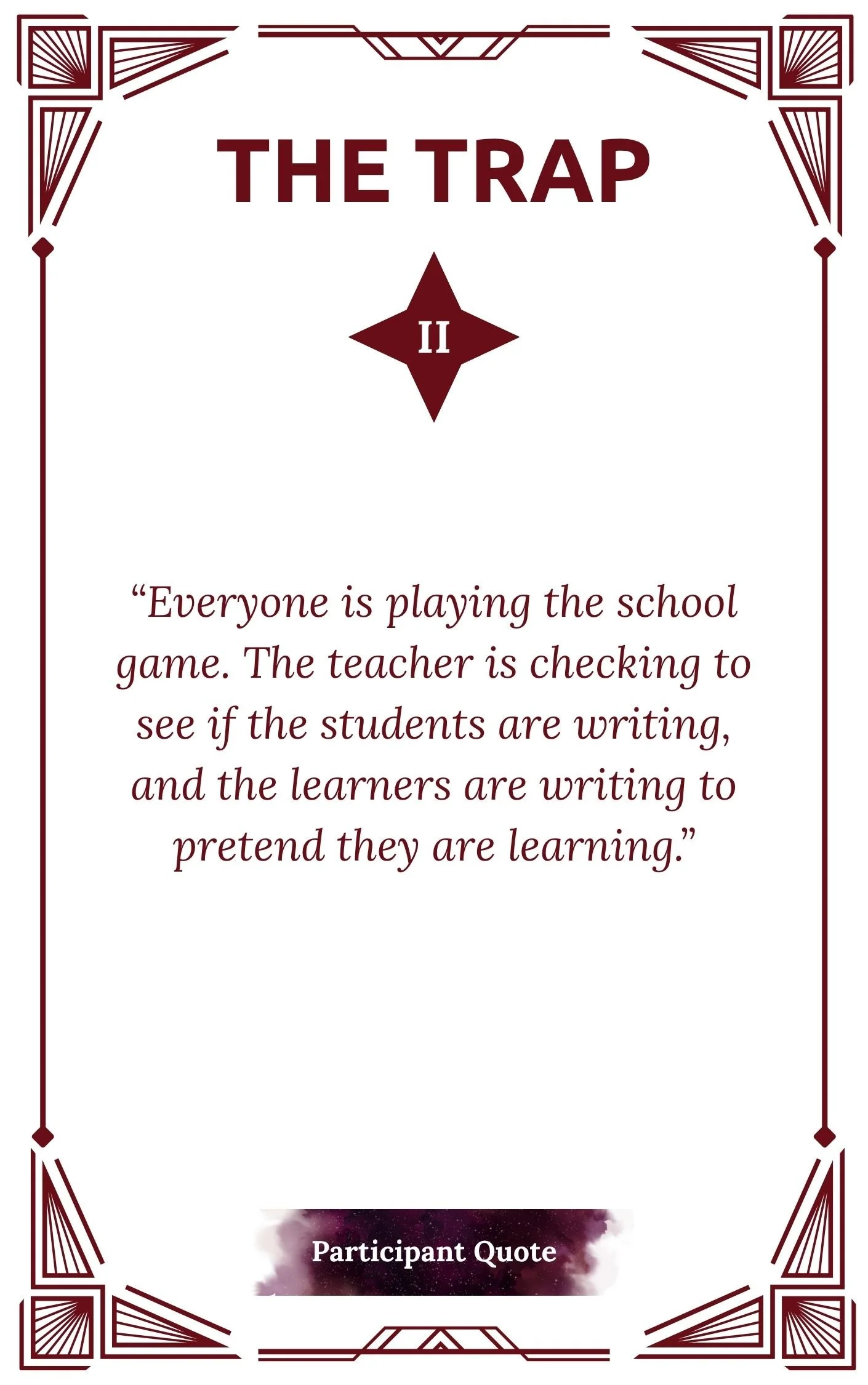
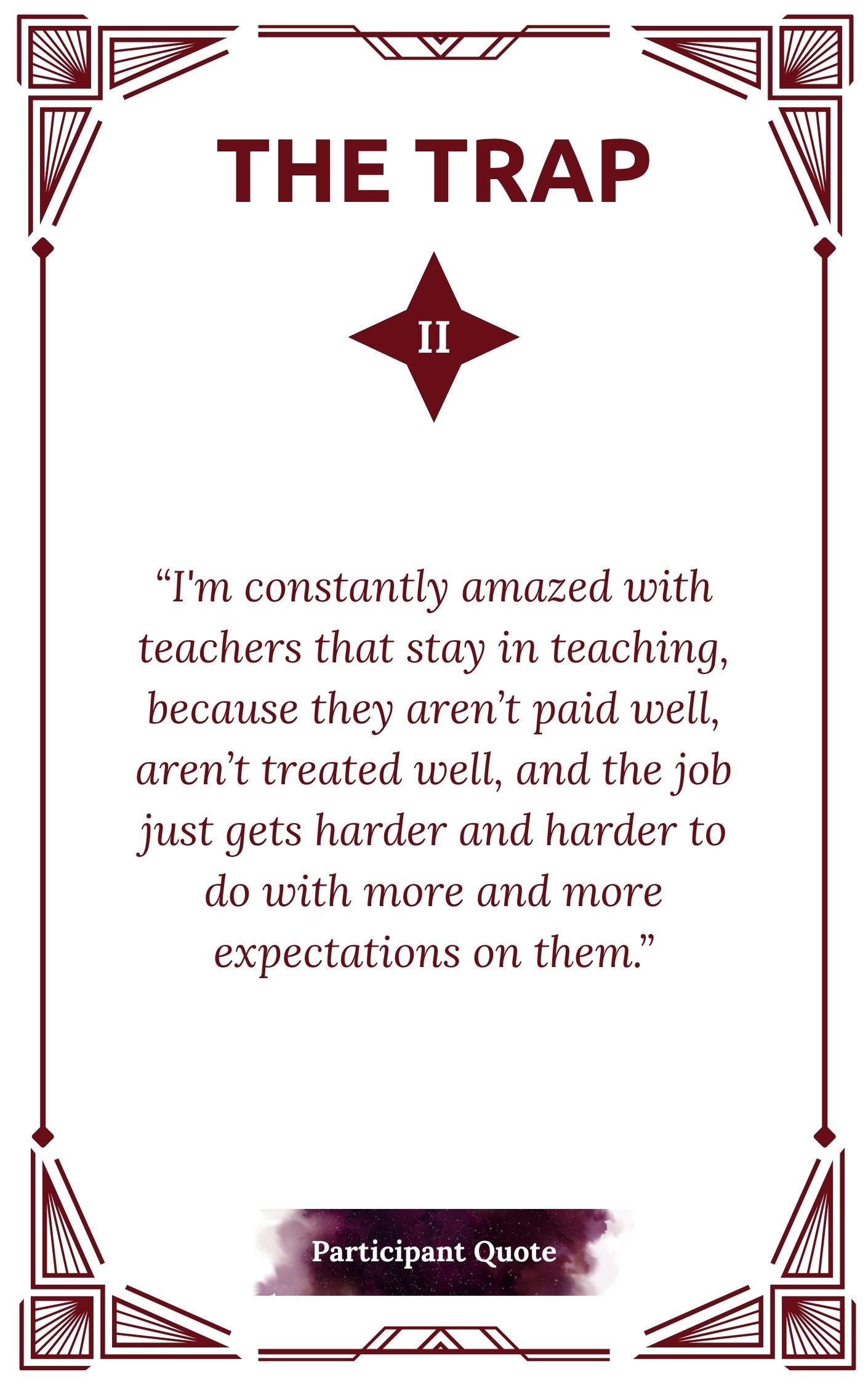
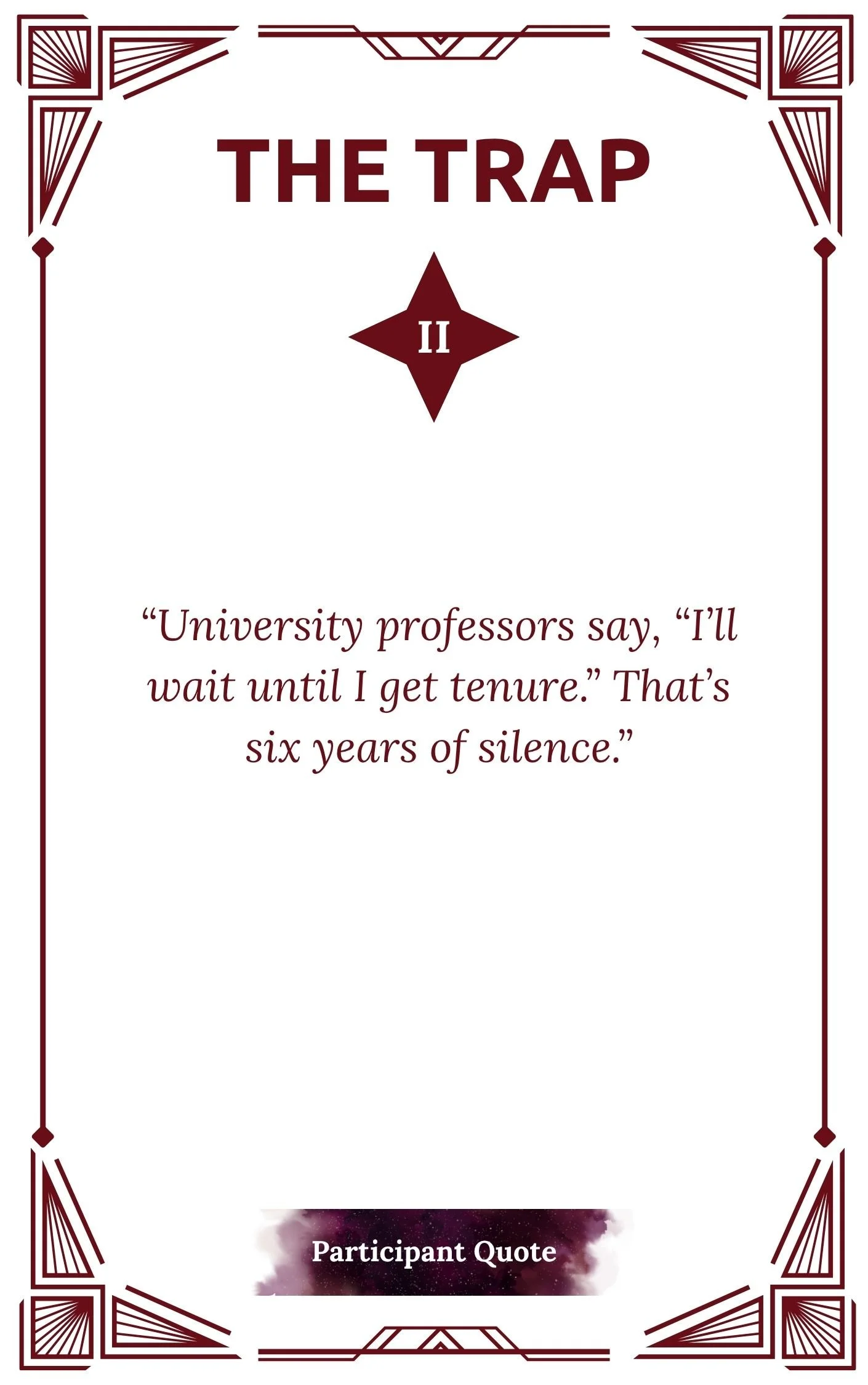
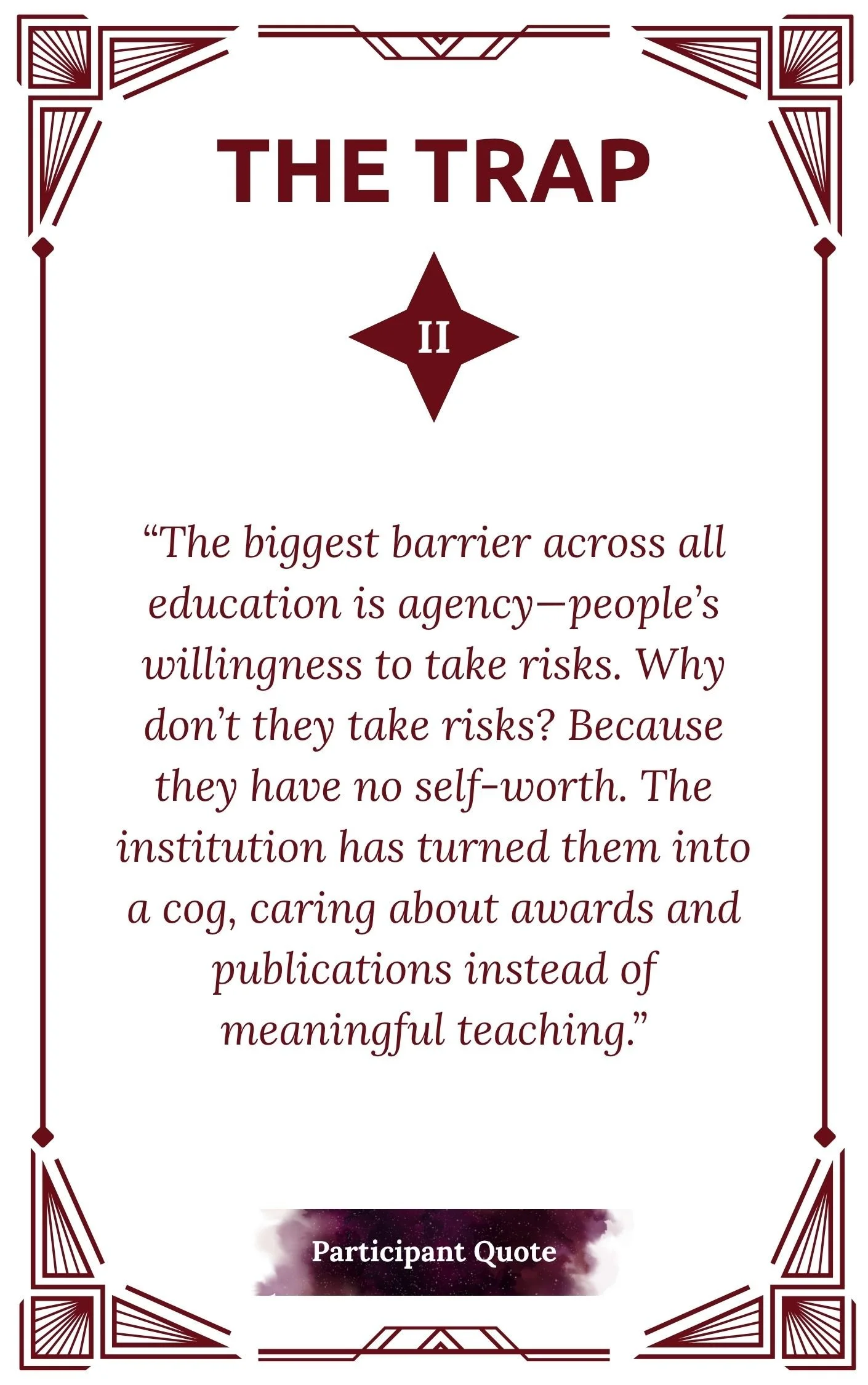
Assumptions that have become normalized within traditional schooling are now being questioned. As our education system is seen to reward compliance, productivity, and performance while often overlooking well-being, belonging, and human development. Homework, excessive workloads, rigid schedules, and high-stakes testing expectations were frequently cited as examples of practices that can contribute to stress, disengagement, and burnout. Participants challenged the idea that more work necessarily leads to more learning, arguing instead that meaningful engagement emerges when students have opportunities for rest, reflection, connection, and purpose. There was a shared recognition that many current educational norms were designed for efficiency and control rather than for supporting the full humanity of students and educators.
Direct quotes from participants aligned to The Trap
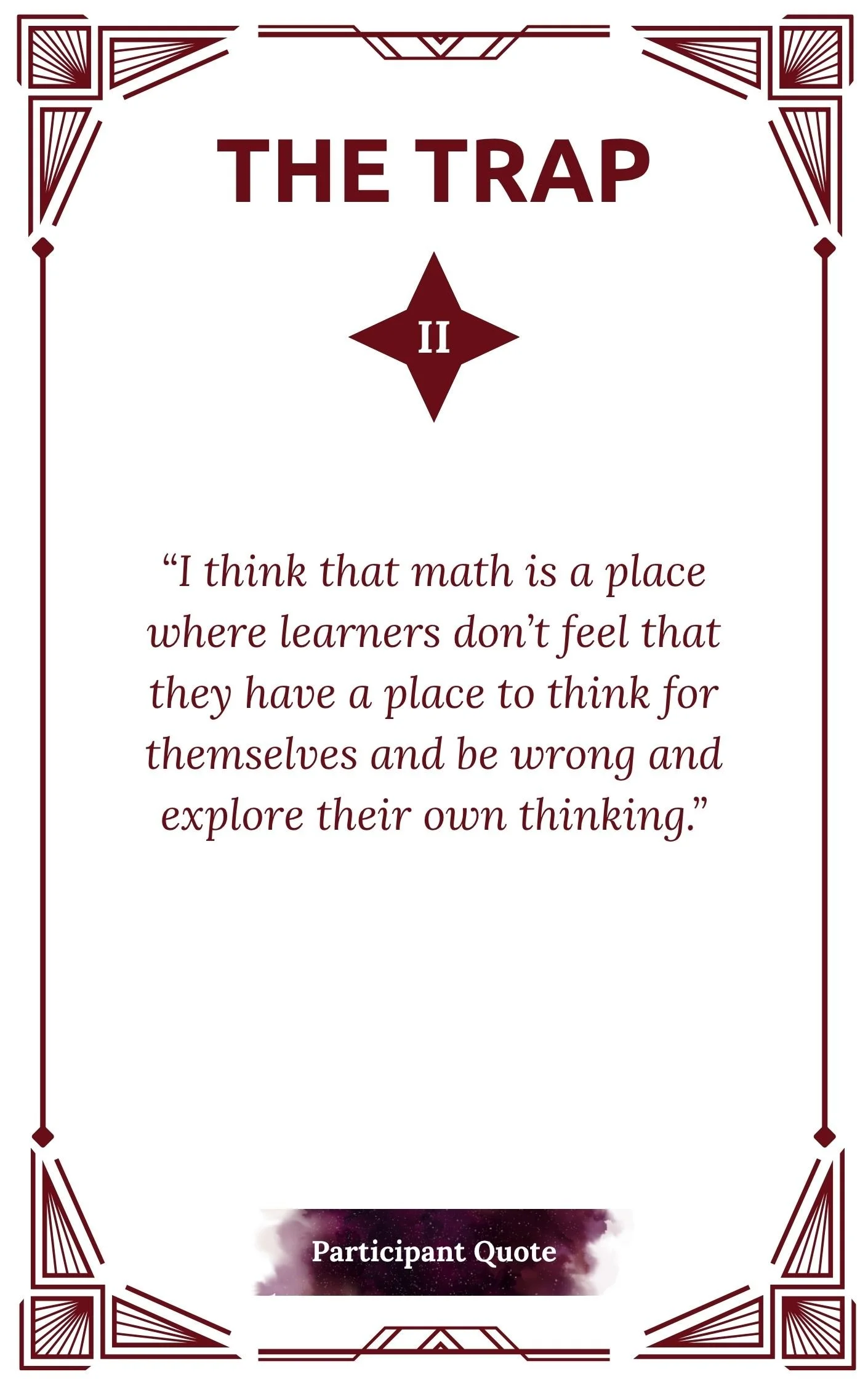
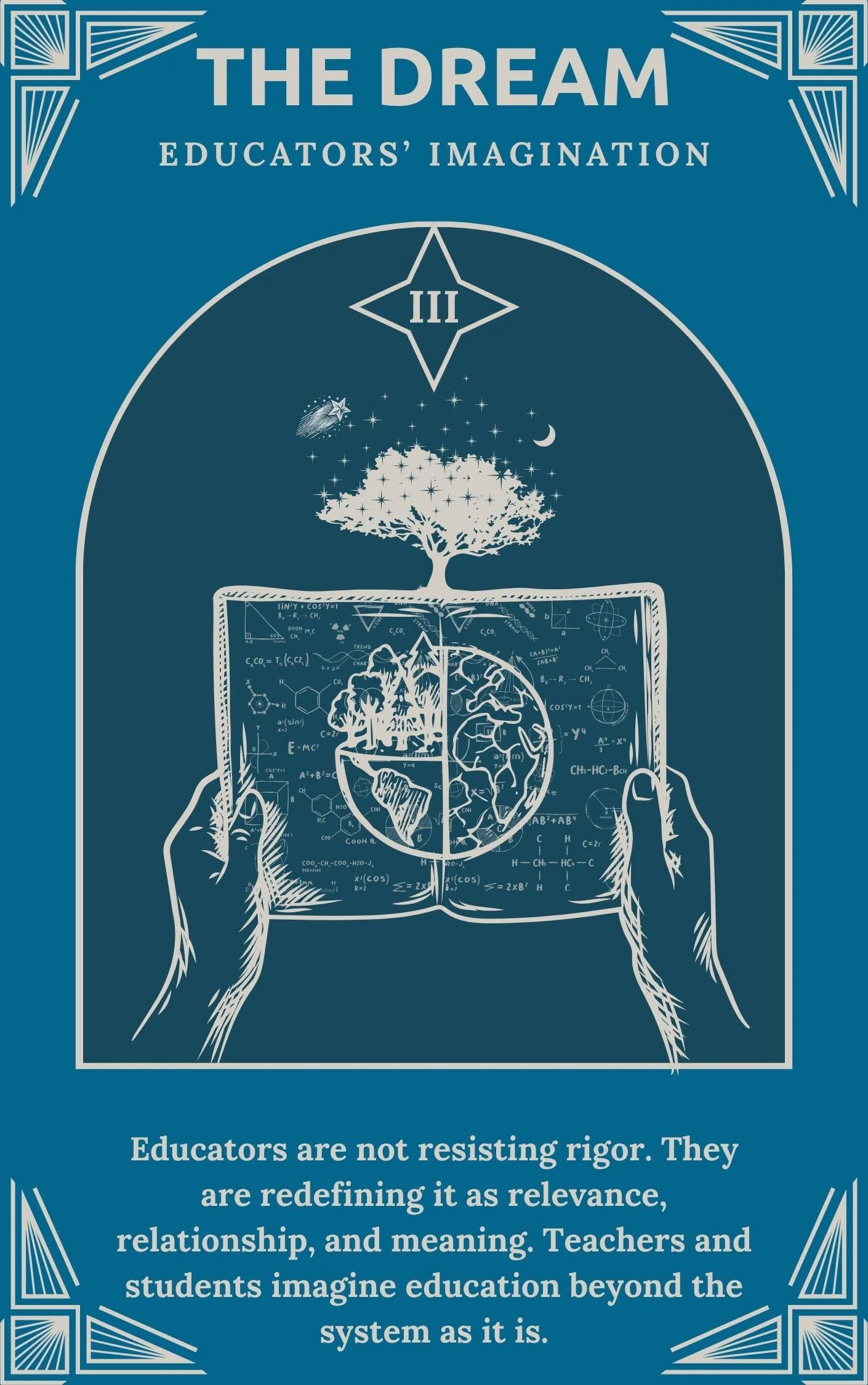
The Urgent Need for Systemic Change in a Failing System
Rather than individual blame, participants emphasize that the biggest challenges they face stem from systemic issues—not from deficiencies in students or educators. Participants share a clear, collective recognition that the current S.T.E.M. education system, especially in mathematics, needs significant transformation.
-
Both inside and beyond the classroom, educators are building alternative systems of support, truth, and liberation. As they navigate tensions around identity and academics, many recognize that when students’ basic needs and identities are not centered, traditional schooling can feel irrelevant or even oppressive.
-
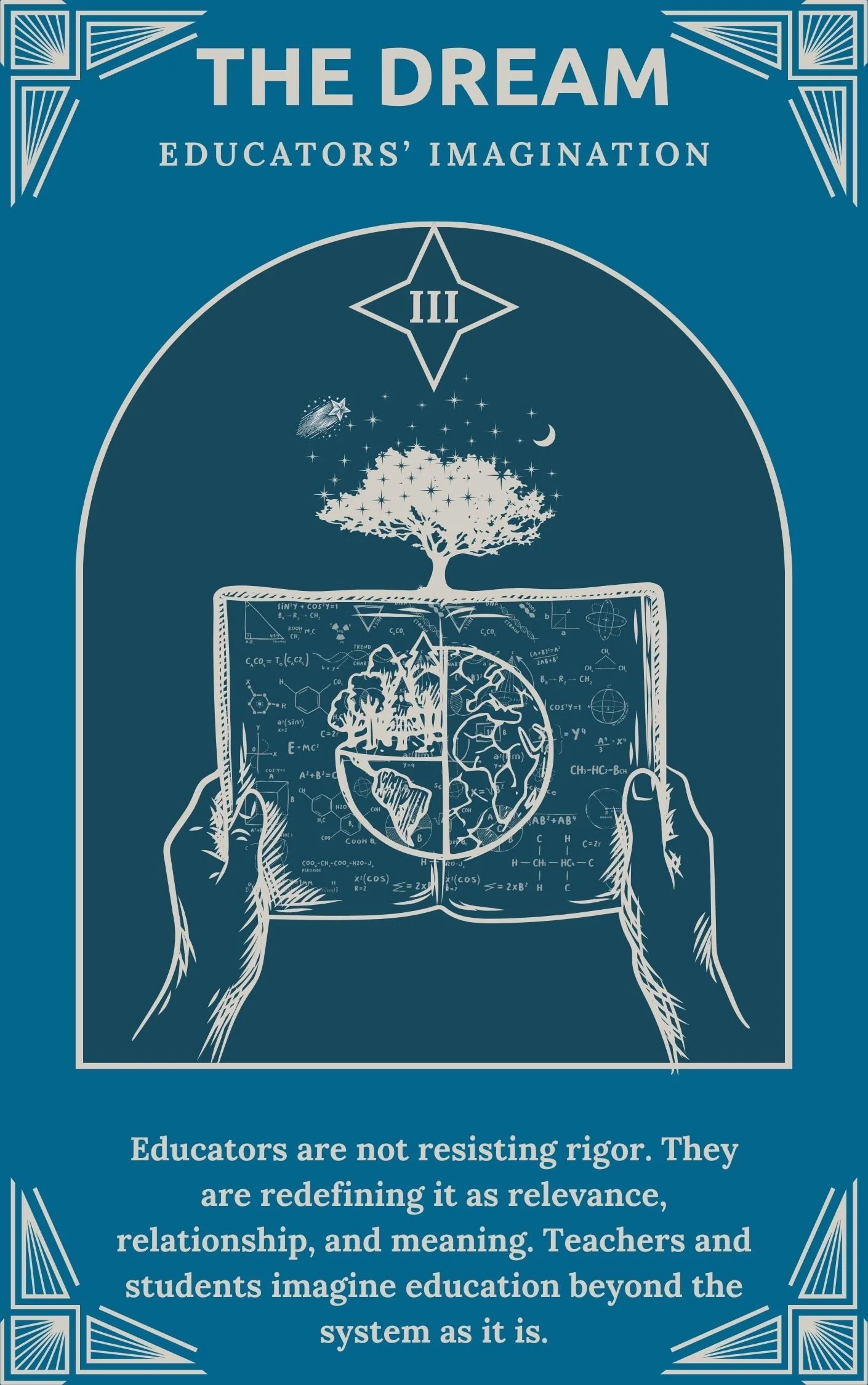
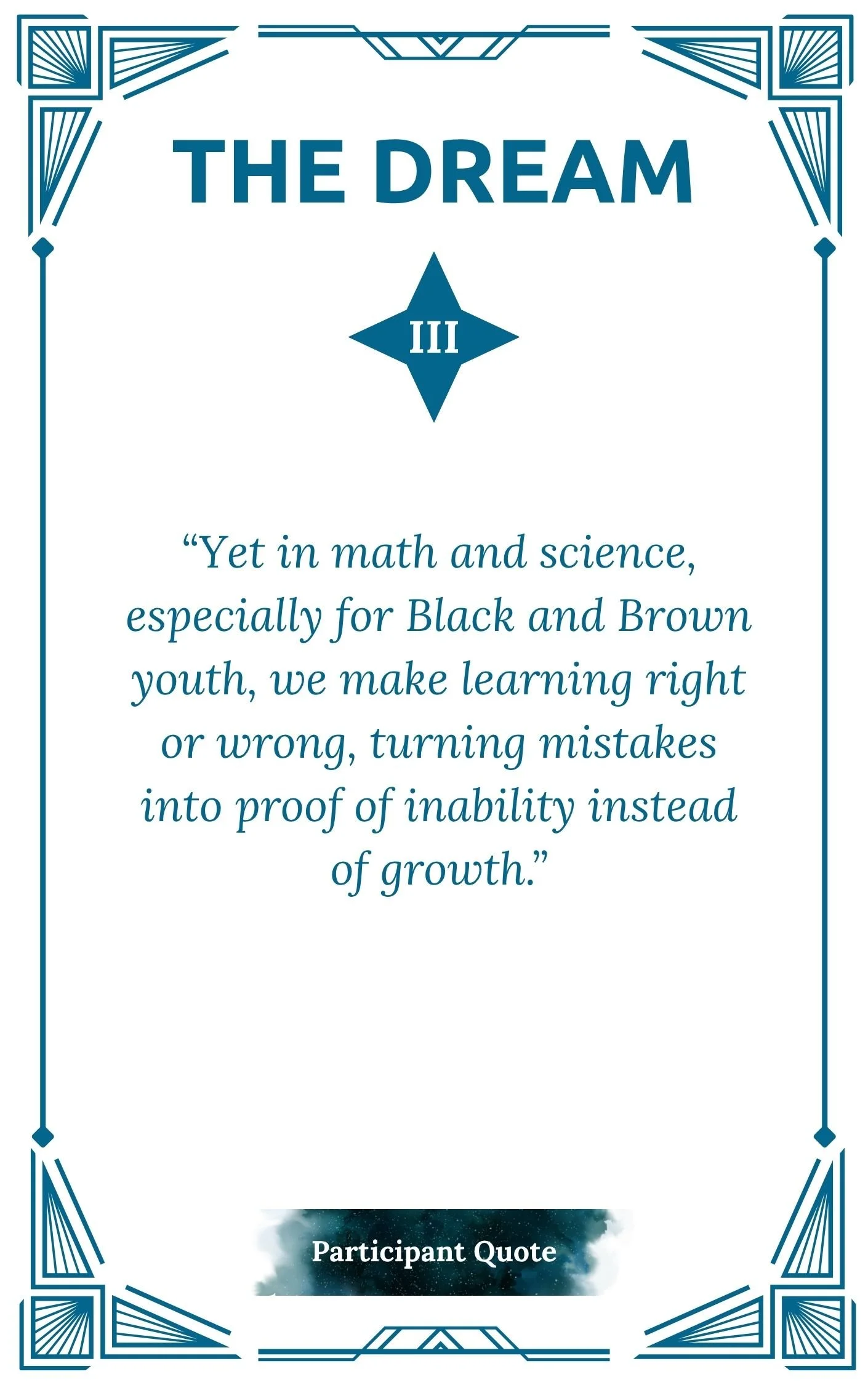
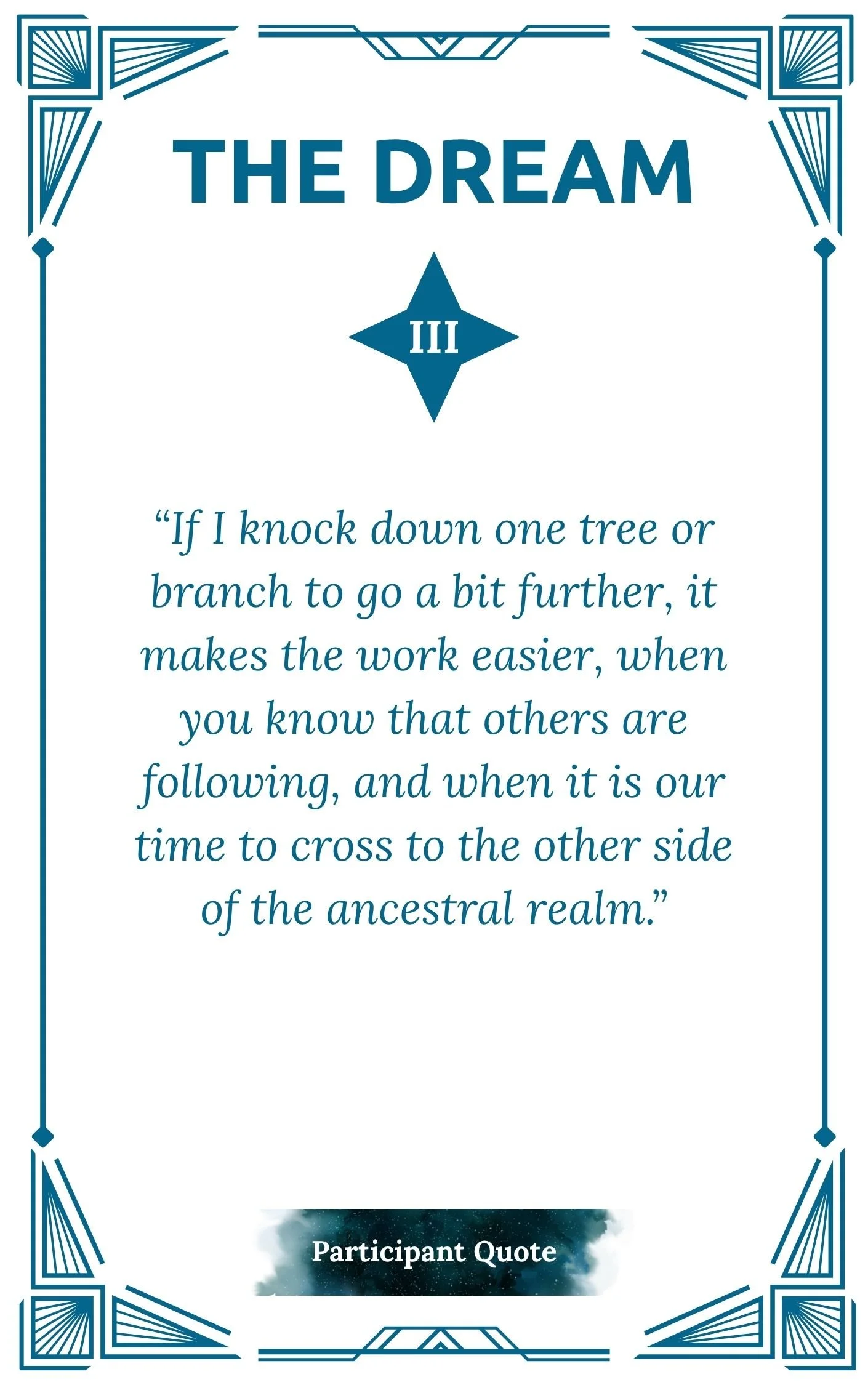
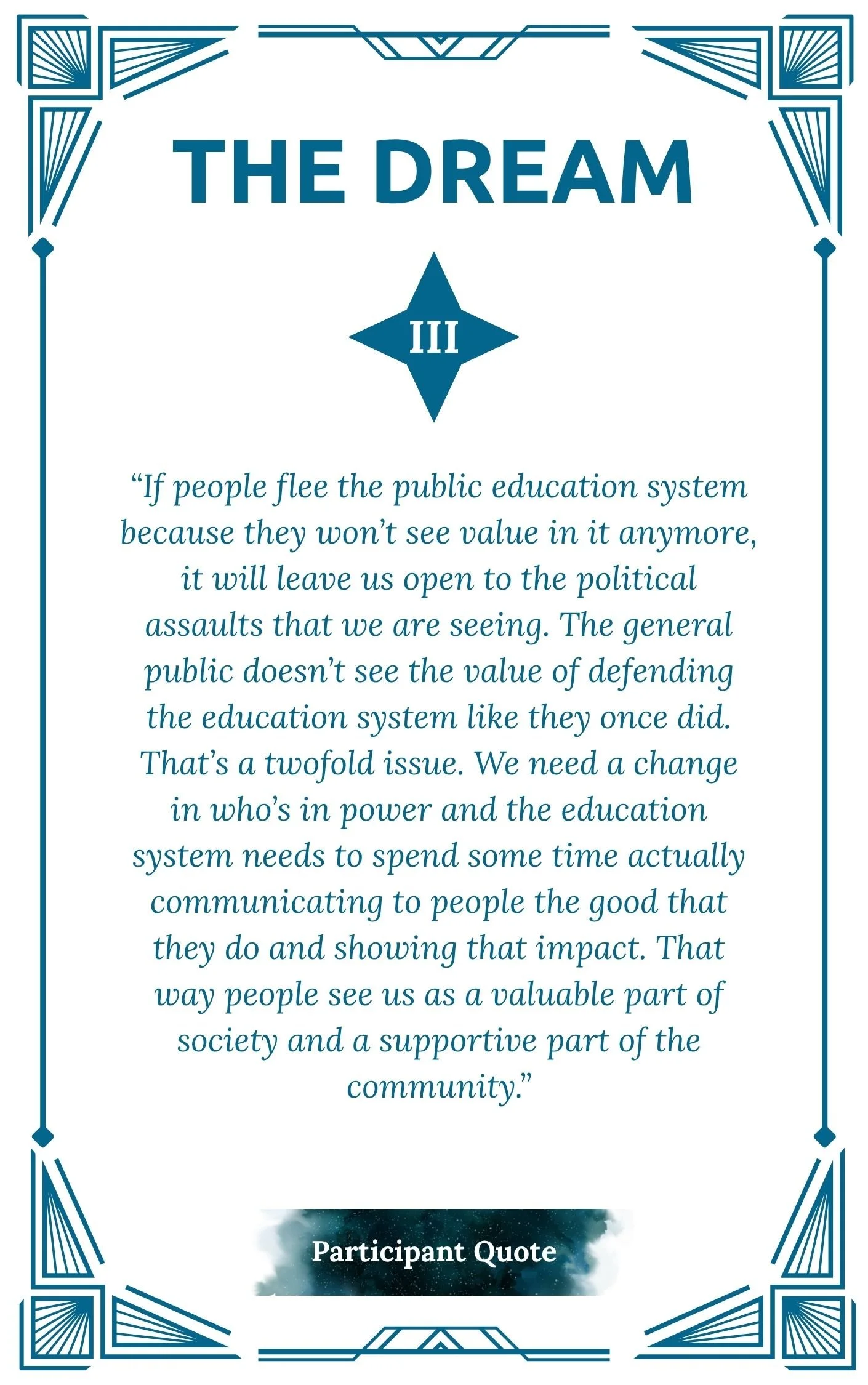
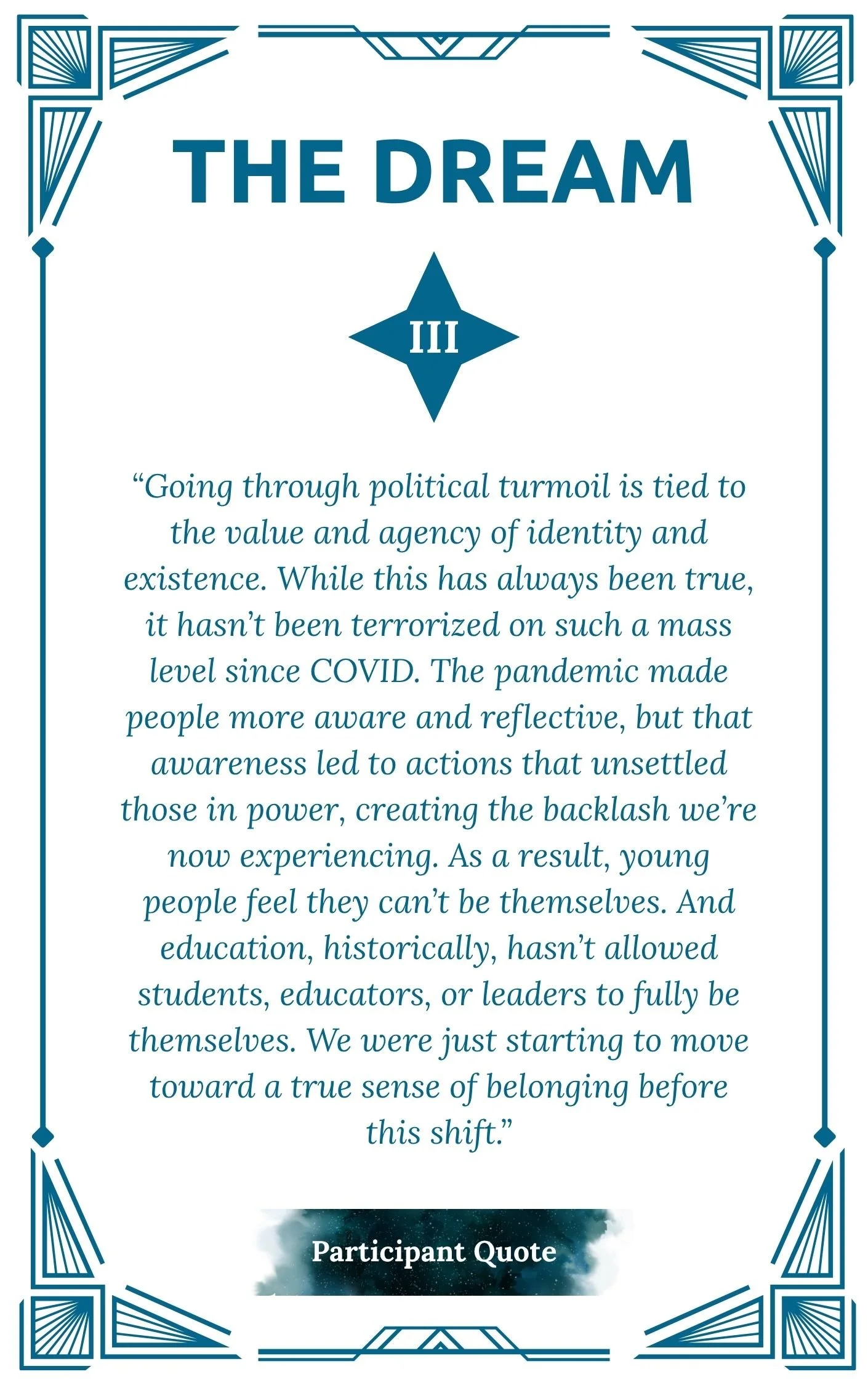
Educators consistently expressed the need for systems that trust teacher expertise and create space for professional autonomy. Their vision for change includes empowering educators as designers of learning, rather than limiting them to implementing mandates disconnected from the realities of their classrooms.
Direct quotes from participants aligned to The Dream
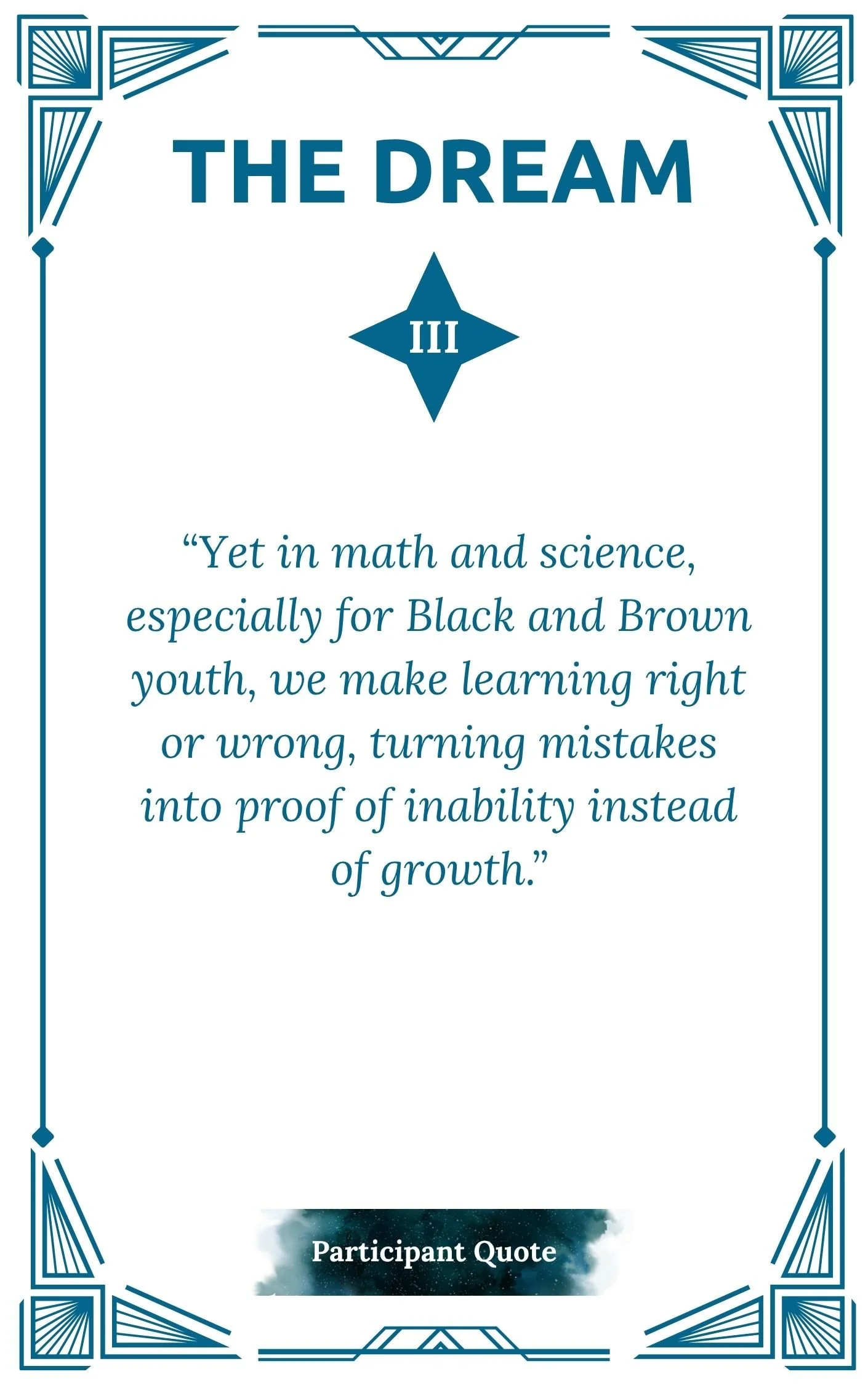
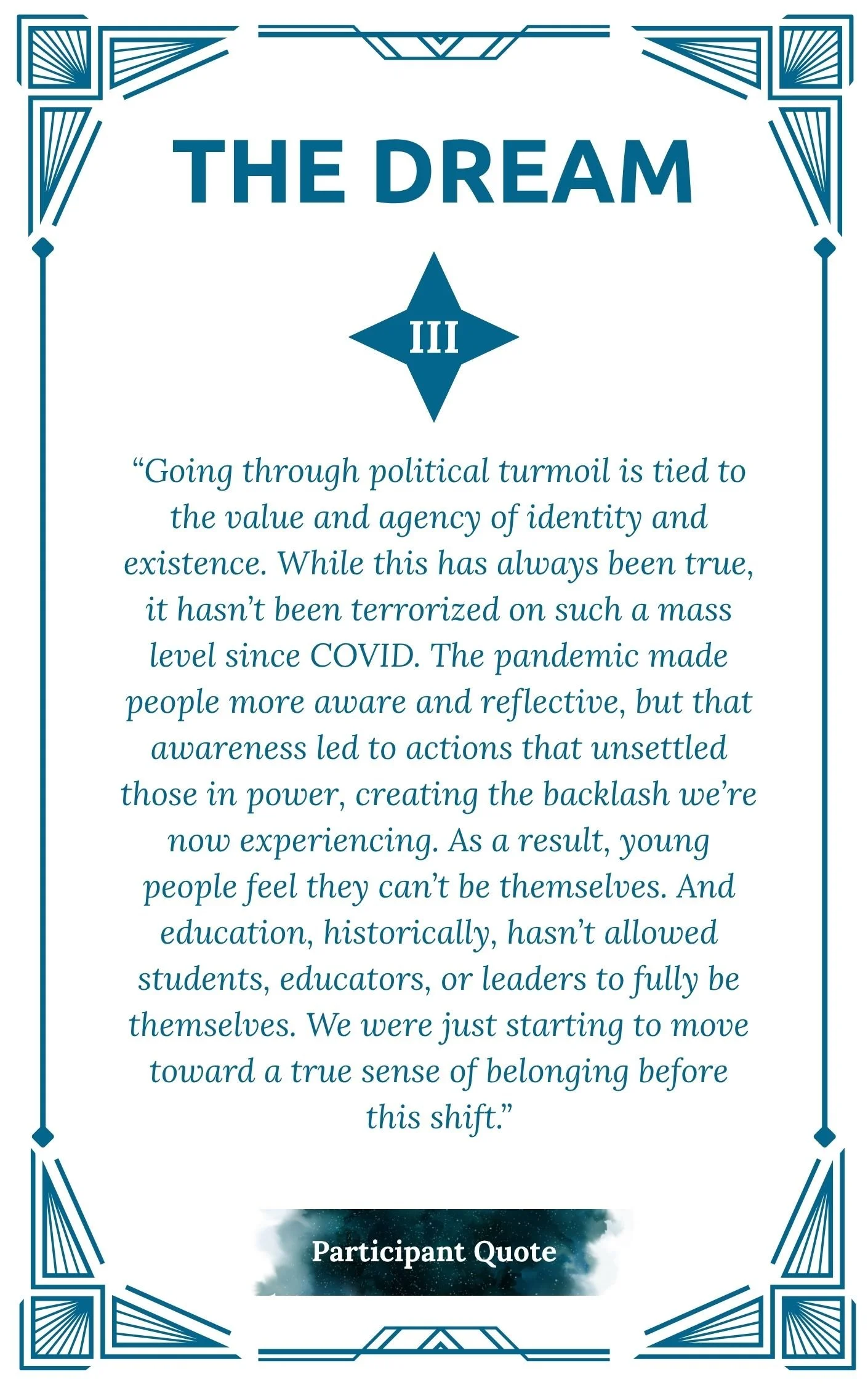
Finding Joy in Building Relationships
Amid stories of constraint, uncertainty, and systemic challenges, participants consistently returned to one source of hope: relationships. Educators described their greatest moments of fulfillment not through test scores, compliance metrics, or institutional recognition, but through meaningful connections with students, colleagues, and communities. These relationships created spaces where trust, belonging, curiosity, and growth could flourish despite broader systemic barriers. Joy emerged as both a form of resistance and a reminder of what education can become when human connection is placed at the center. Participants' experiences suggest that meaningful transformation begins with the relationships that make learning possible.
-
Hope is found in the moments when students experience curiosity, confidence, and ownership of their learning. Across responses, educators described joy not in delivering content, but in creating conditions where students can think deeply, take risks, ask questions, and discover what they are capable of. These moments serve as reminders of what education can be when learning is rooted in agency, belonging, and meaningful engagement.
-
Educators voiced feeling deep joy in witnessing students develop confidence, curiosity, and ownership of their learning. Whether supporting a struggling student who experienced academic success for the first time, watching students engage deeply with complex ideas, or seeing learners grow emotionally and socially, educators found fulfillment in helping young people realize their potential. Several participants reflected on reconnecting with their own love of teaching through new opportunities to work with different age groups, explore new subjects, conduct research, or engage students in collaborative inquiry. These experiences served as powerful reminders that education is not only about delivering content, but about creating conditions where people can grow, discover who they are, and imagine what is possible. In these moments, educators rediscovered the purpose that first drew them to the profession and the possibilities that keep them committed to the work.
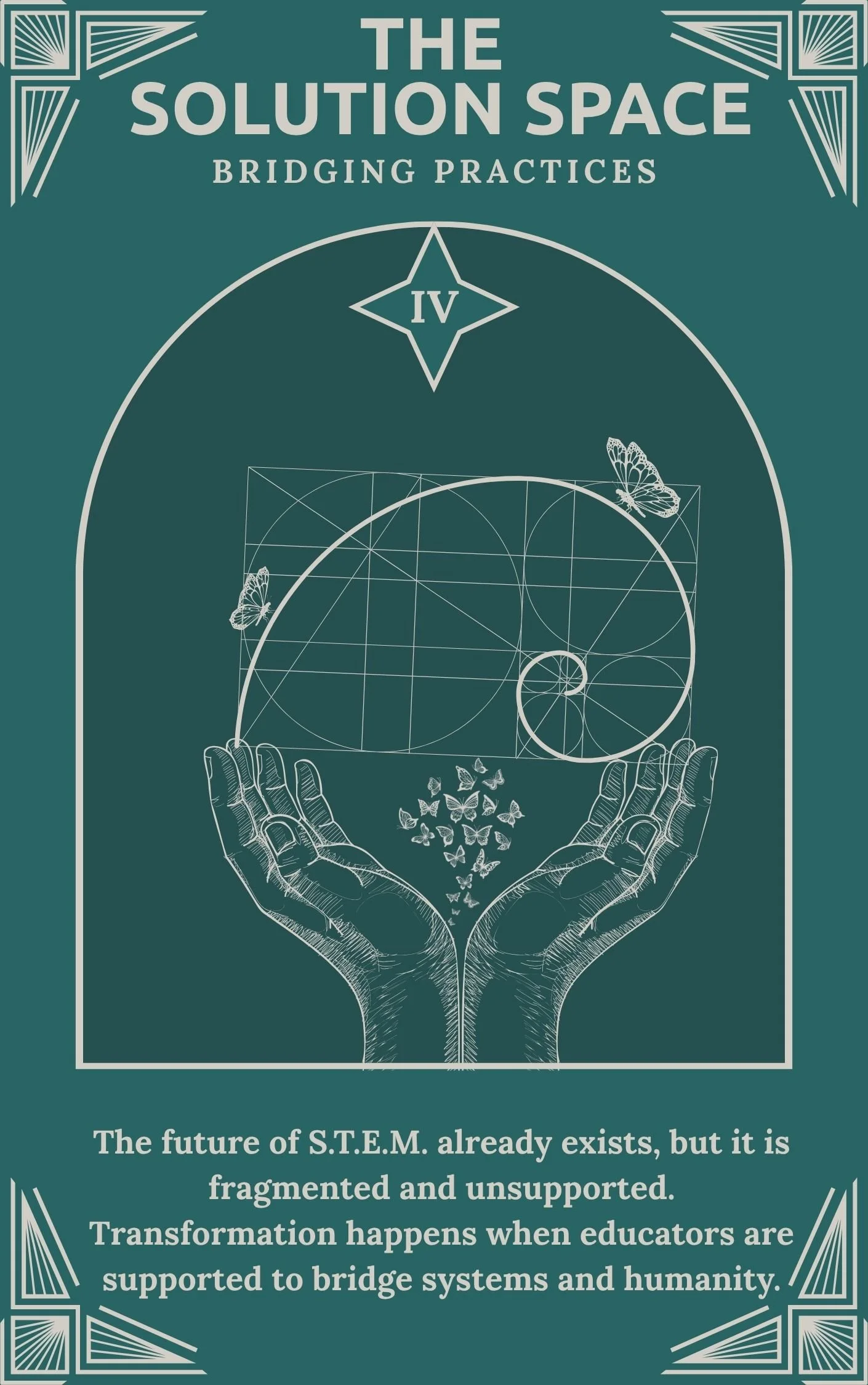
Direct quotes from participants aligned to The Solution Space
Humanizing Learning Through Collective Design
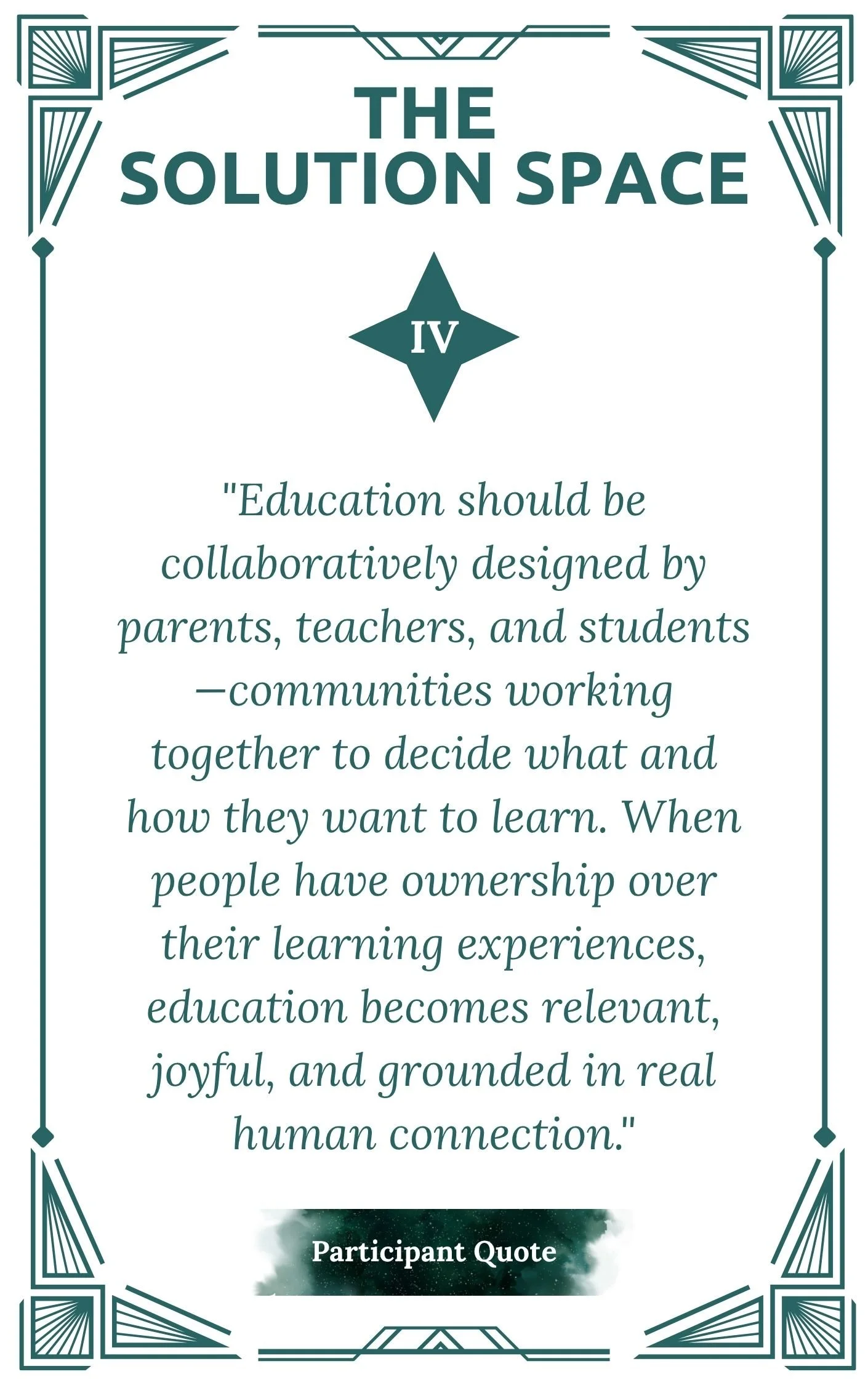
Educators envision learning as joyful, interdisciplinary, culturally connected, and driven by student curiosity. Across responses, educators are not calling for isolated reforms or technical fixes. Instead, they imagine educational systems built around relationships, belonging, and shared responsibility. Their vision extends beyond improving individual classrooms; it calls for schools, districts, universities, families, and communities to collectively design learning environments where students' identities, cultures, experiences, and aspirations are treated as assets rather than obstacles. Particularly in schools facing scrutiny, accountability pressures, or probationary status, participants describe the need to move beyond compliance and toward systems that trust educators, honor students, and cultivate meaningful learning through partnership.
-
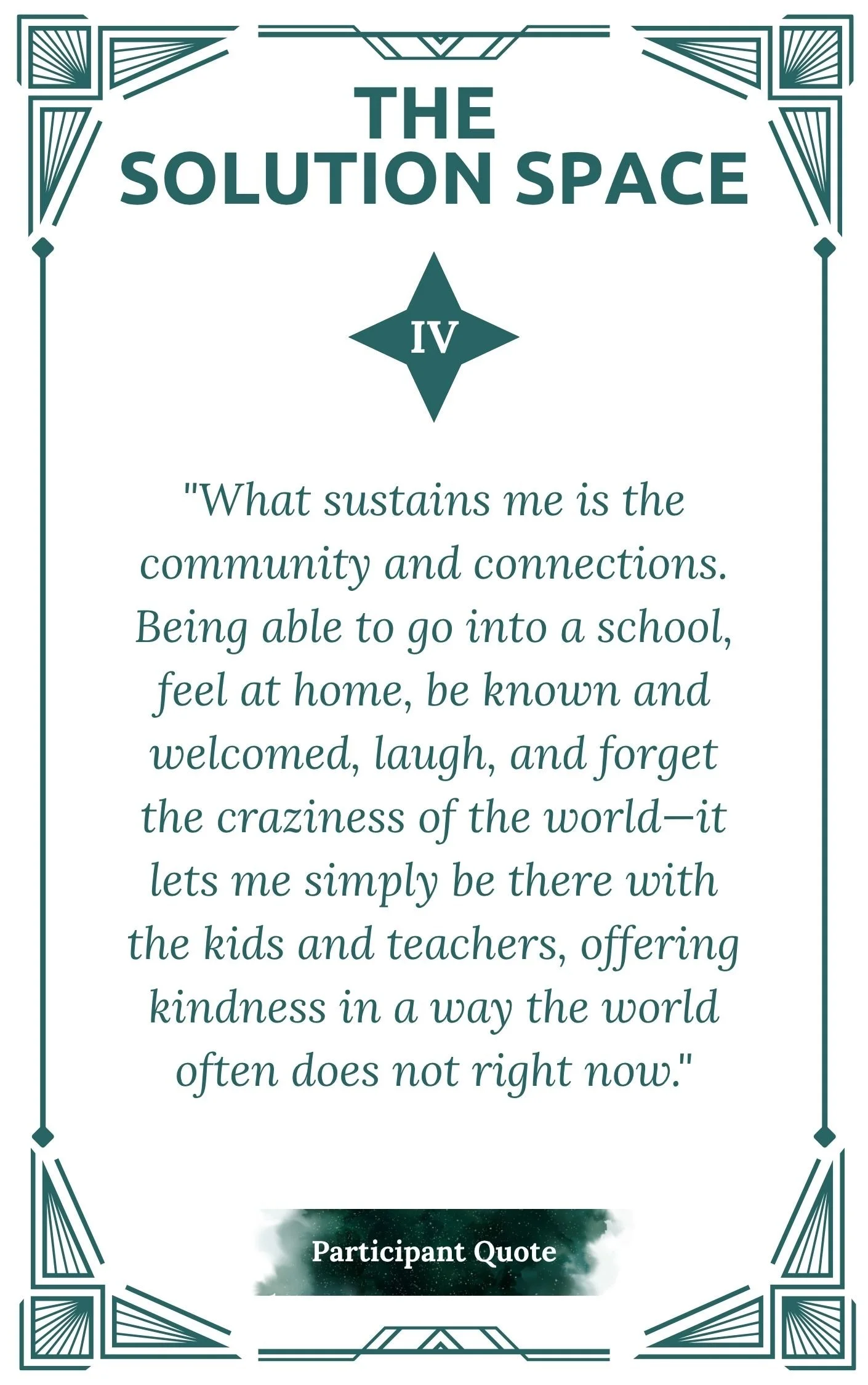
Participants repeatedly described meaningful learning as something that happens through relationships. Whether discussing students, colleagues, families, universities, or community organizations, educators emphasized that transformation is sustained through collective care and shared responsibility. The future of STEM education is not built through isolated programs, but through ecosystems of people working together to create conditions where learners and educators can thrive.
-
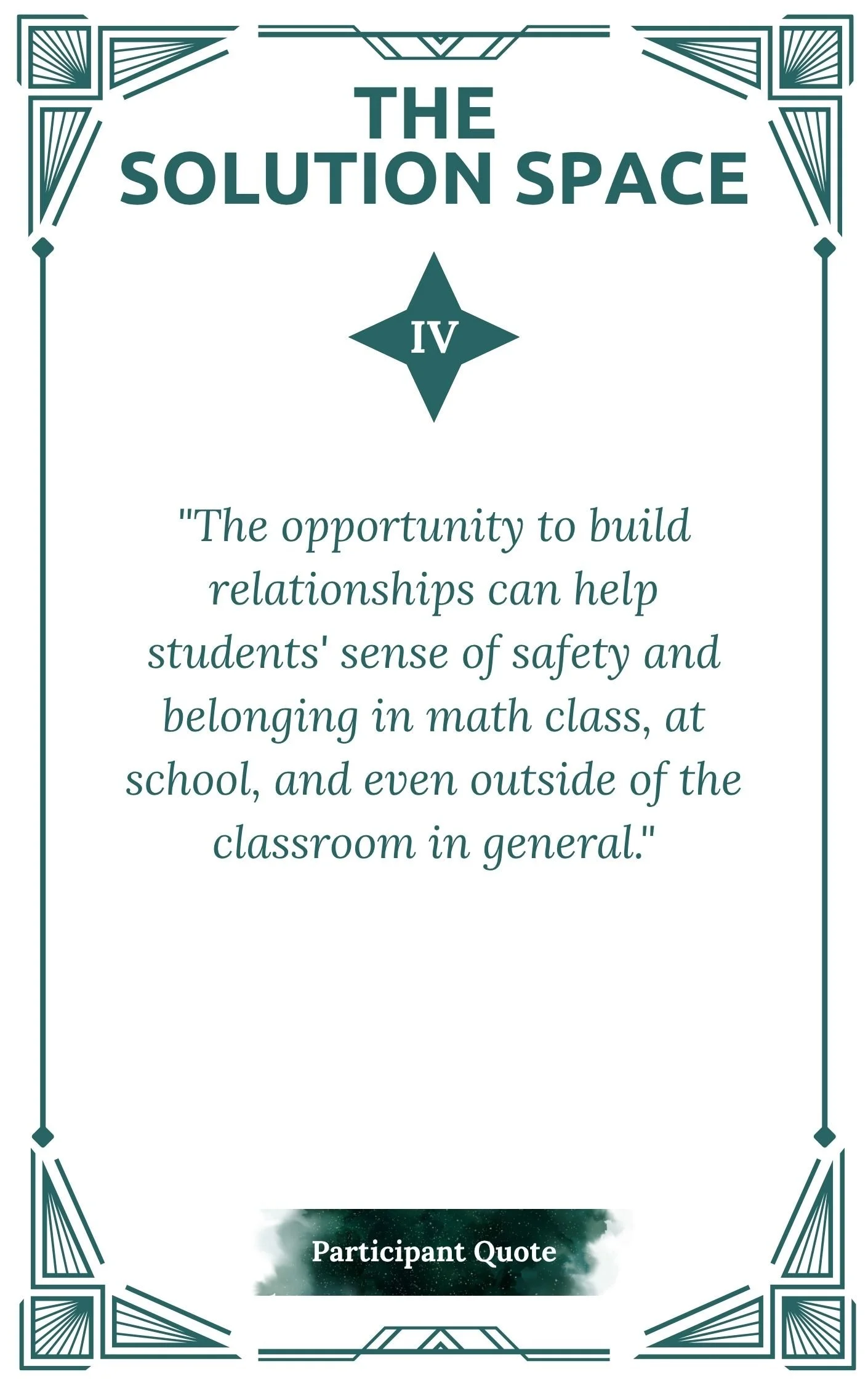
Across interviews, participants consistently returned to relationships as the foundation of meaningful change. Trust between students and teachers, collaboration among educators, professional learning with experienced partners, and authentic engagement with families and communities were viewed as more impactful than any single initiative or policy. Participants suggest that lasting transformation begins not with mandates, but with people who are willing to connect, listen, learn, and build together.
-
Participants consistently describe meaningful learning as something co-created by educators and students rather than delivered through rigid systems of compliance. They critique scripted curricula, excessive testing, and top-down mandates that limit both educator creativity and student voice. Instead, participants advocate for learning environments where educators are trusted as professionals and students are empowered as thinkers, contributors, and problem-solvers. Engagement increases when learning connects to students' cultures, lived experiences, communities, and interests. Creating these conditions requires more than instructional changes; it requires investing in educator autonomy, providing meaningful professional development and support, and designing systems that recognize both teachers and students as active partners in the learning process.
-
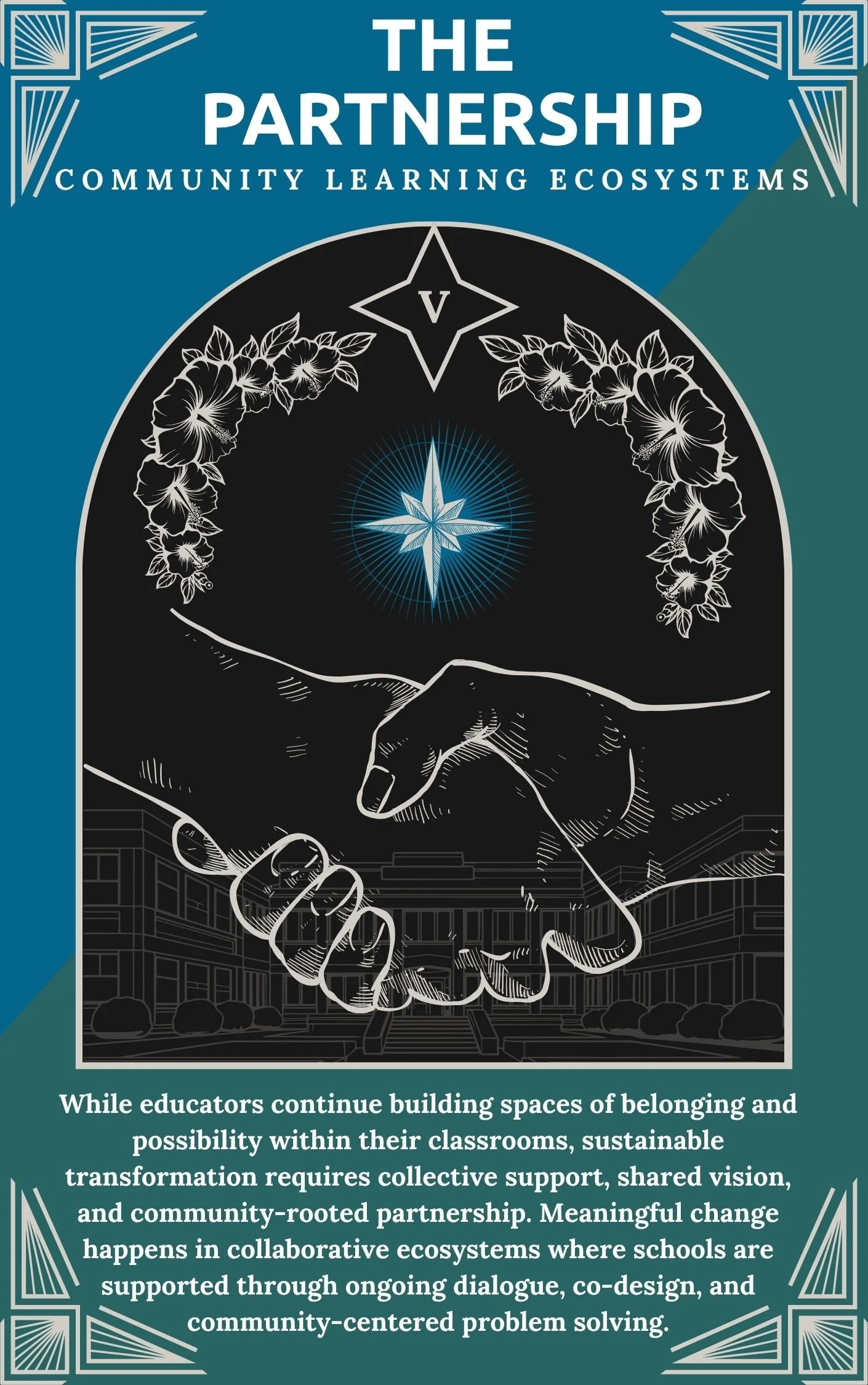
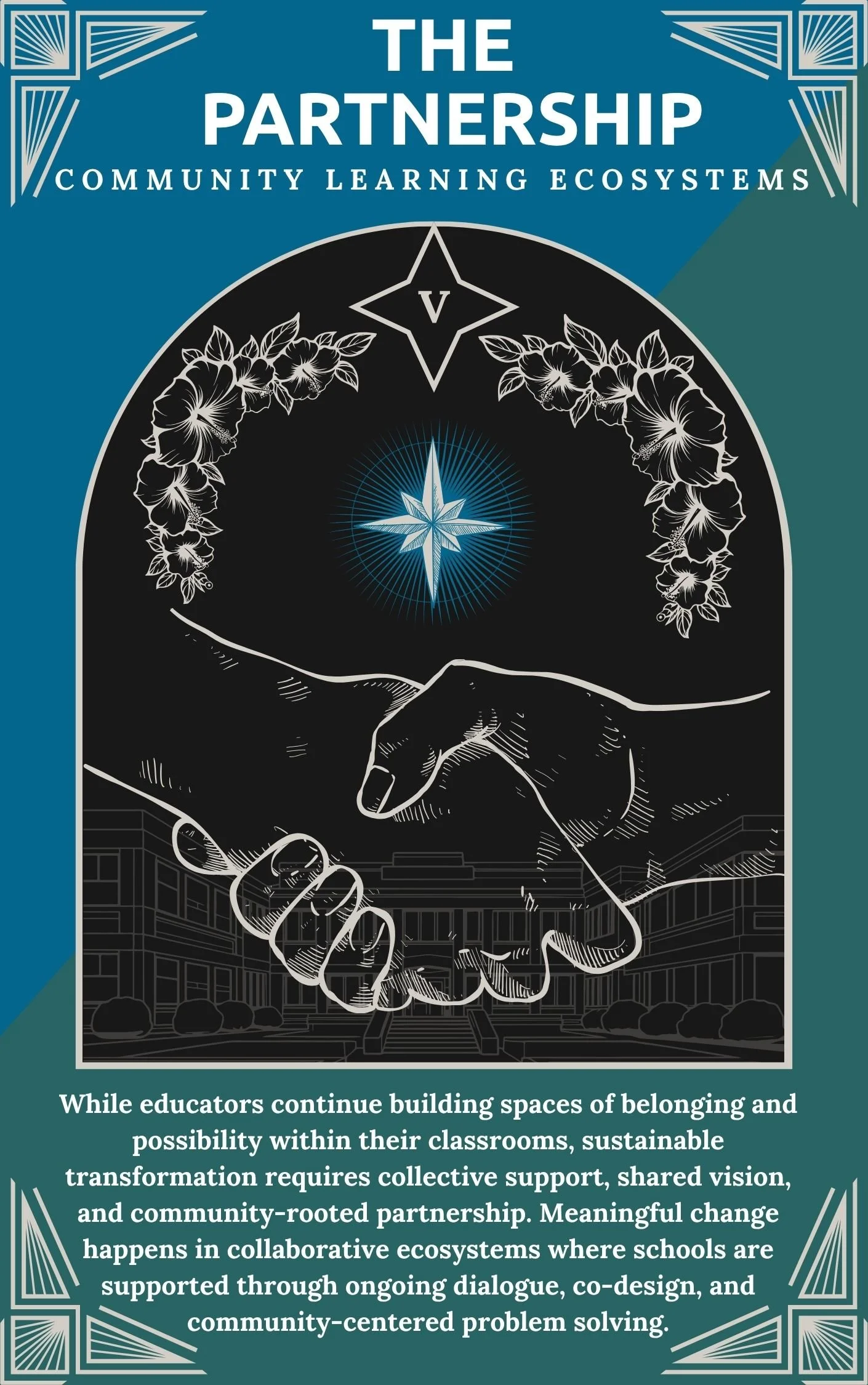
Participants reject the idea that educational improvement should rest solely on the shoulders of individual educators. Instead, they envision a future where responsibility is distributed across institutions, communities, and systems. Schools, districts, universities, policymakers, and community partners all playing a role in creating the conditions for meaningful learning. This collective approach shifts the conversation from individual accountability toward shared stewardship of educational change.
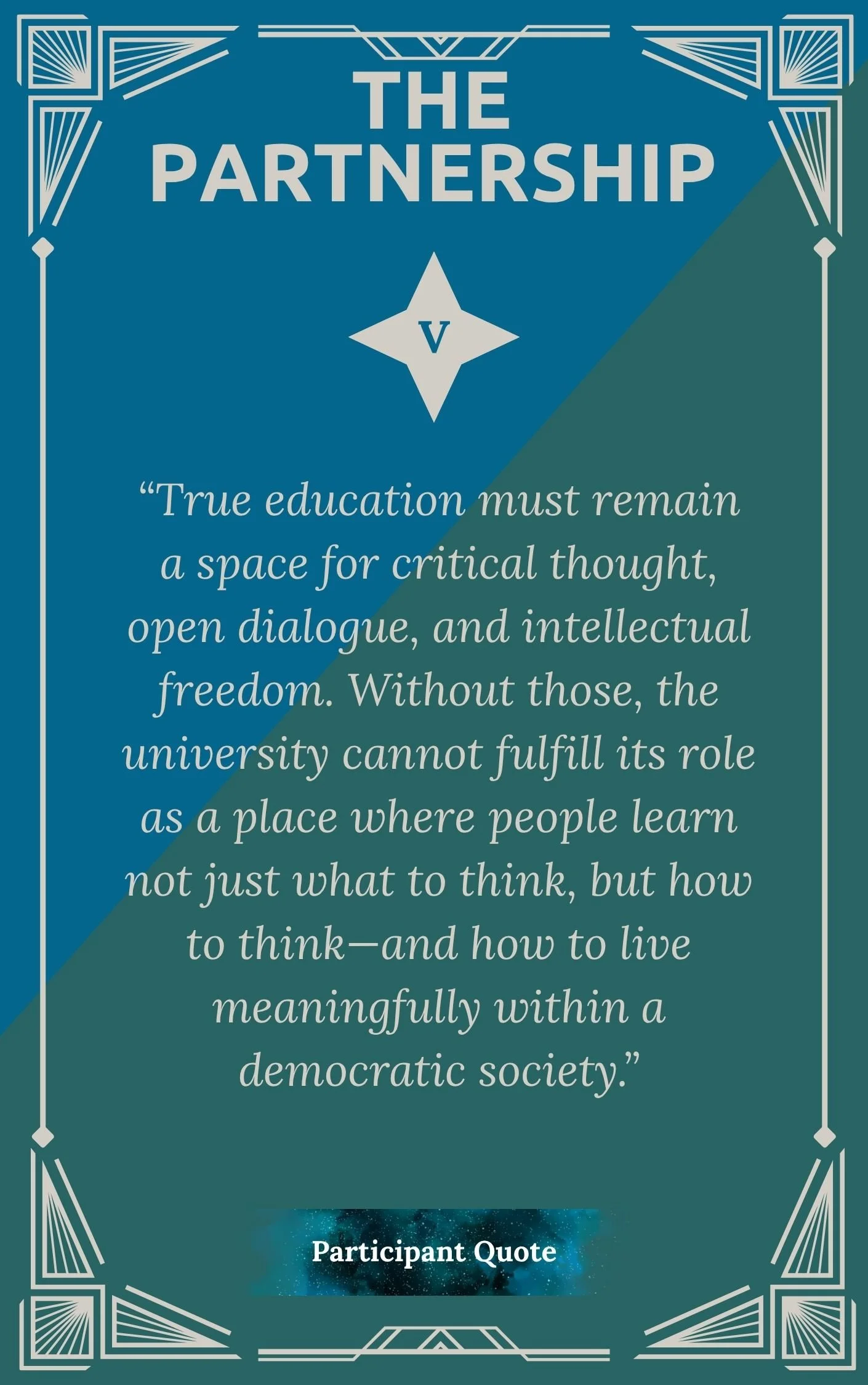
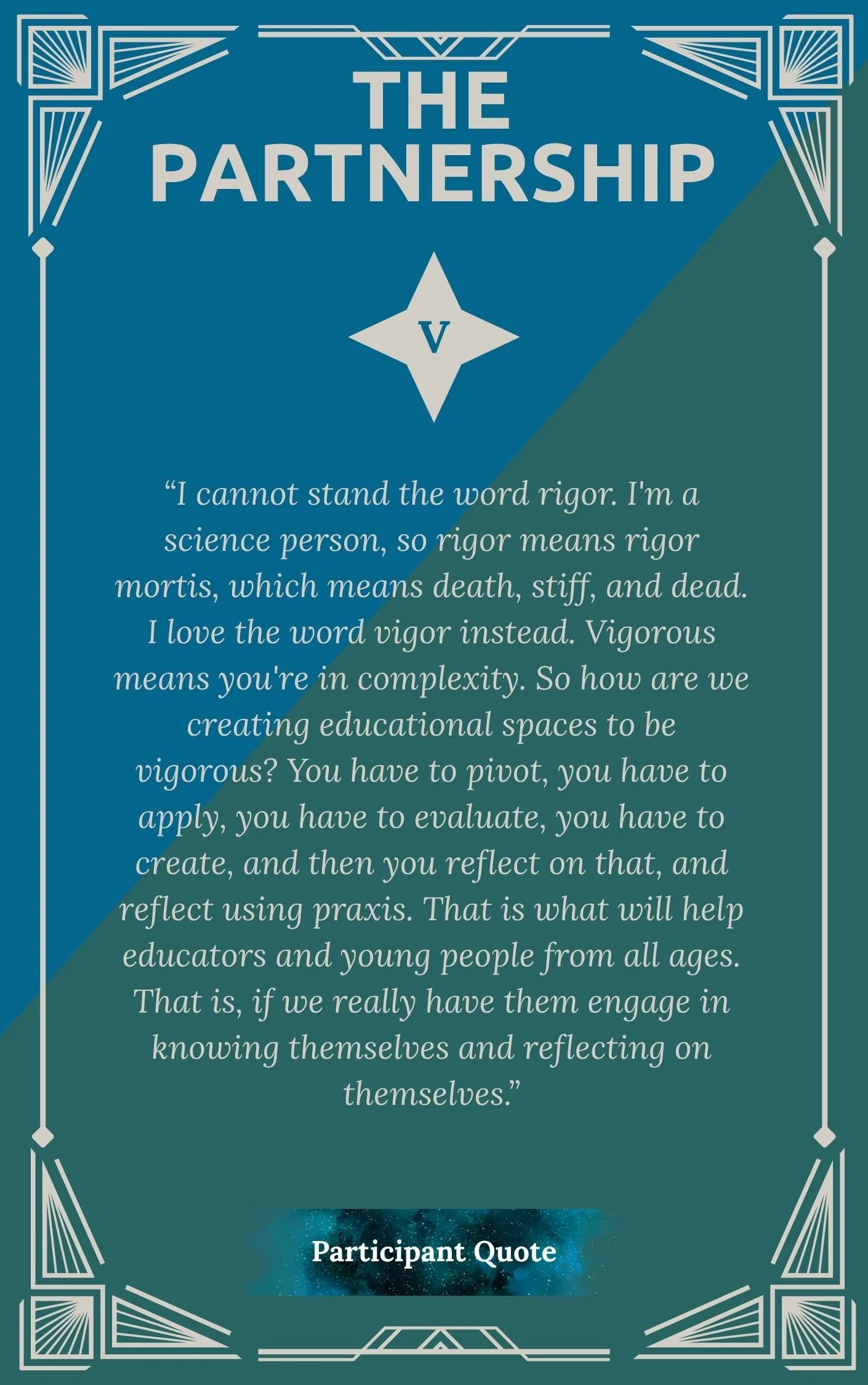
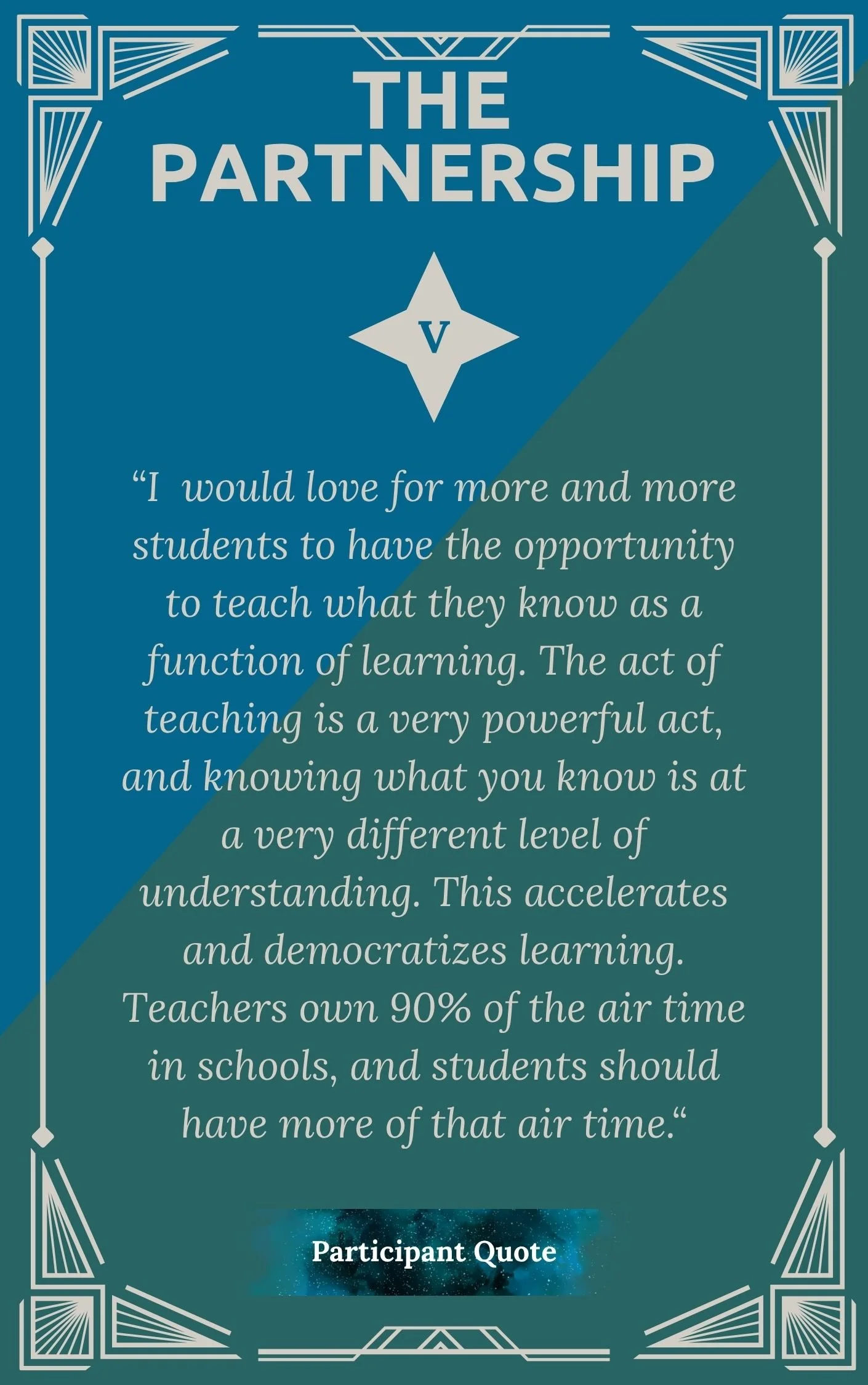
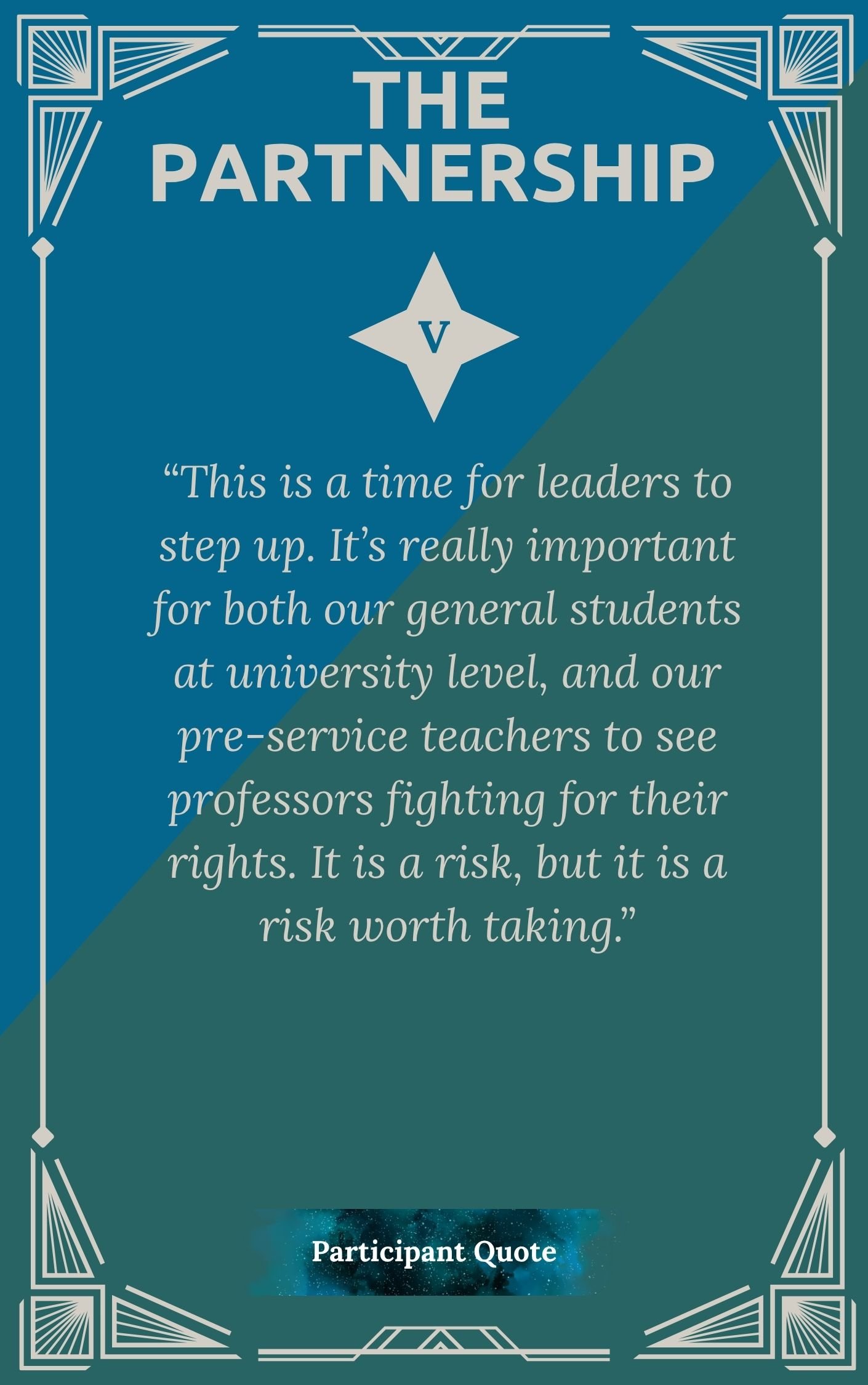
Direct quotes from participants aligned to The Partnership

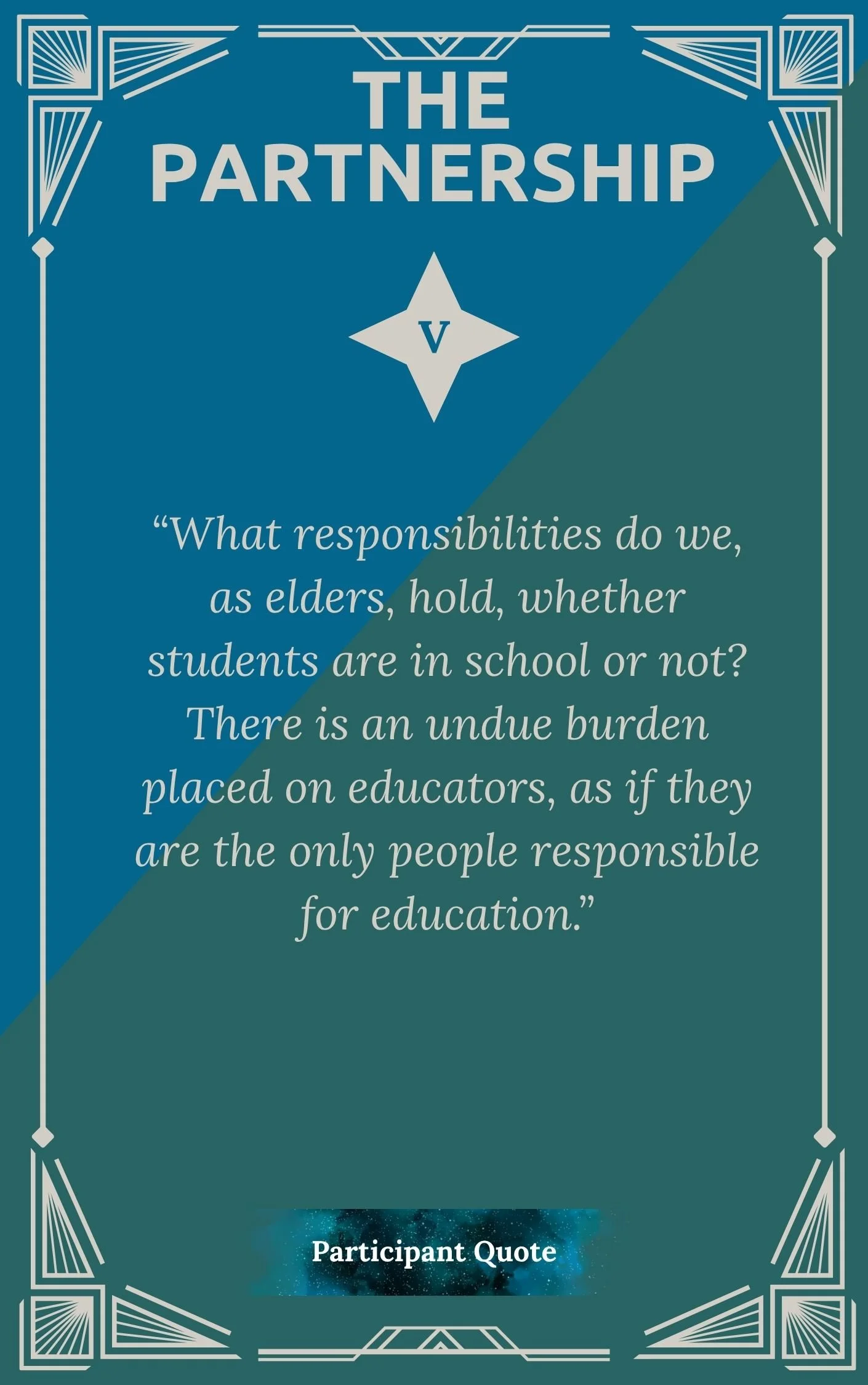
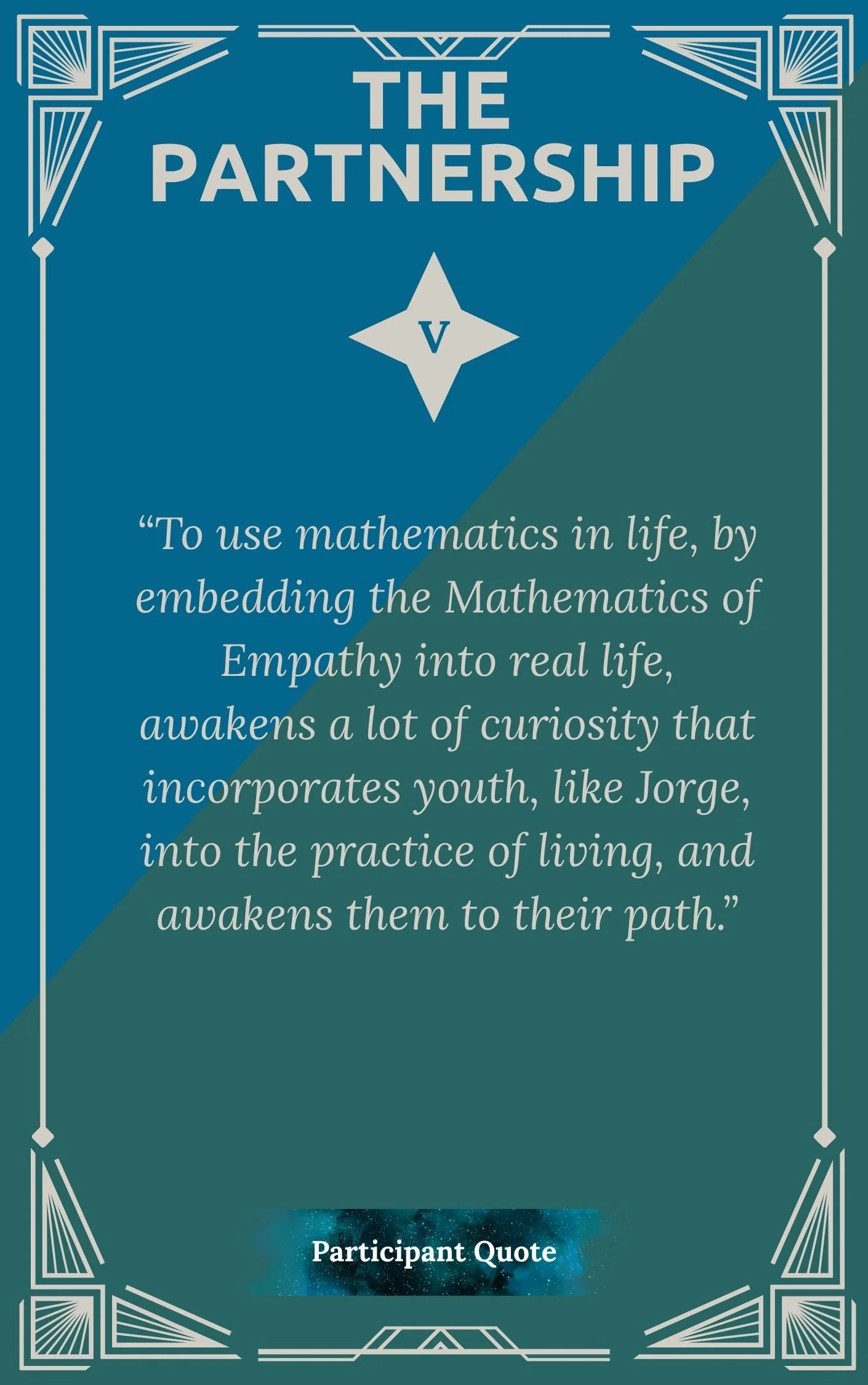
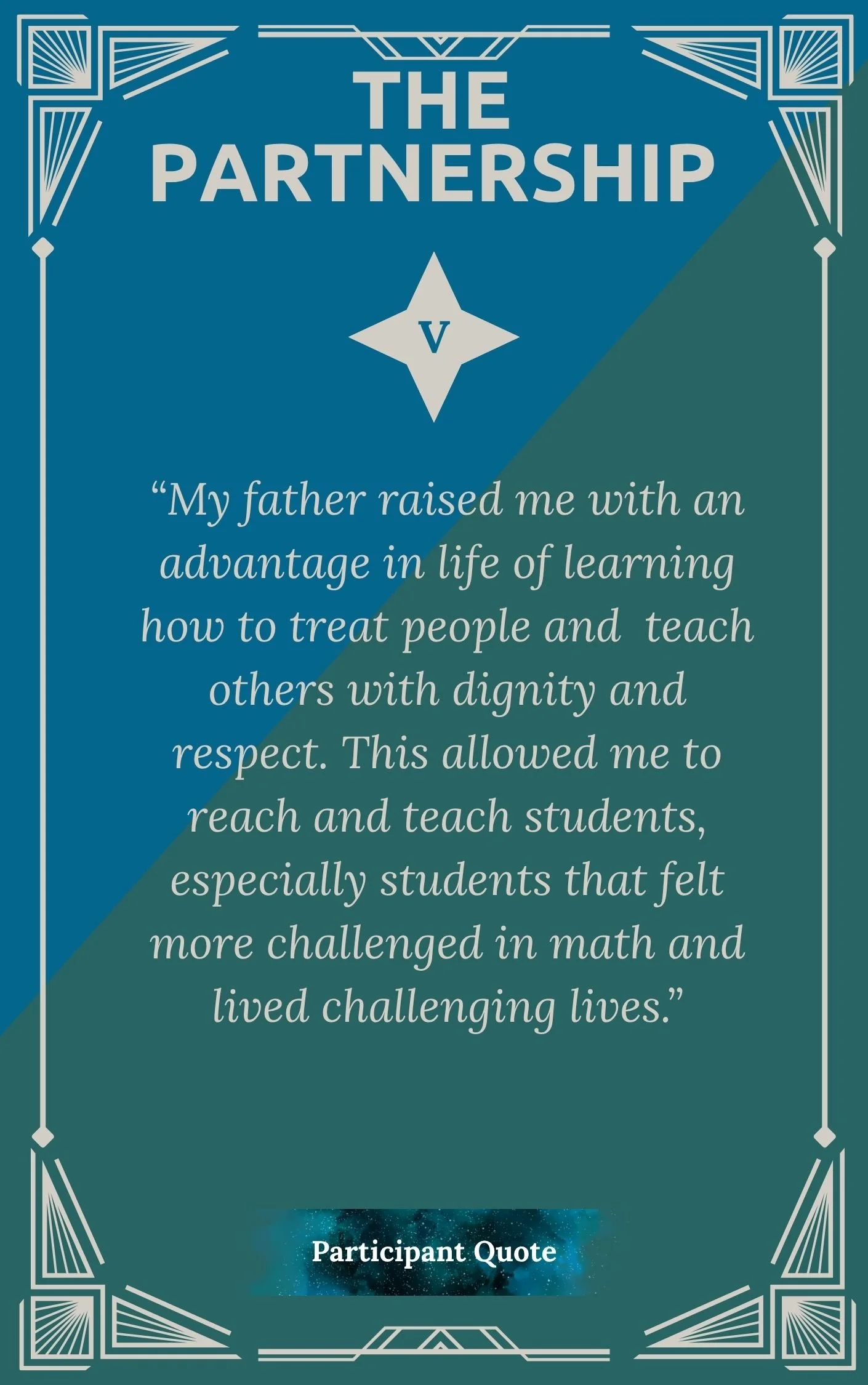
Questions from our participants for us to collectively reflect on.

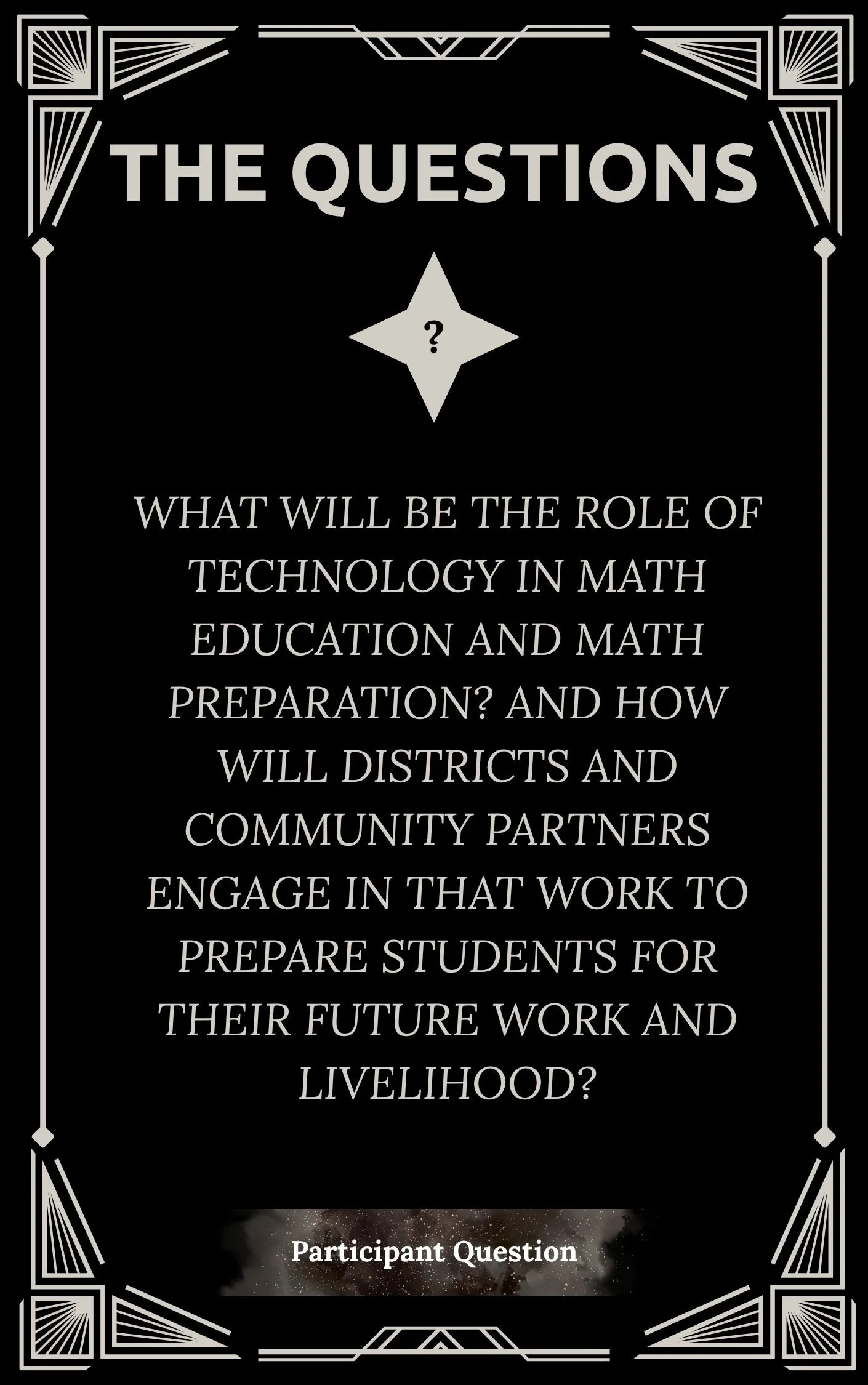
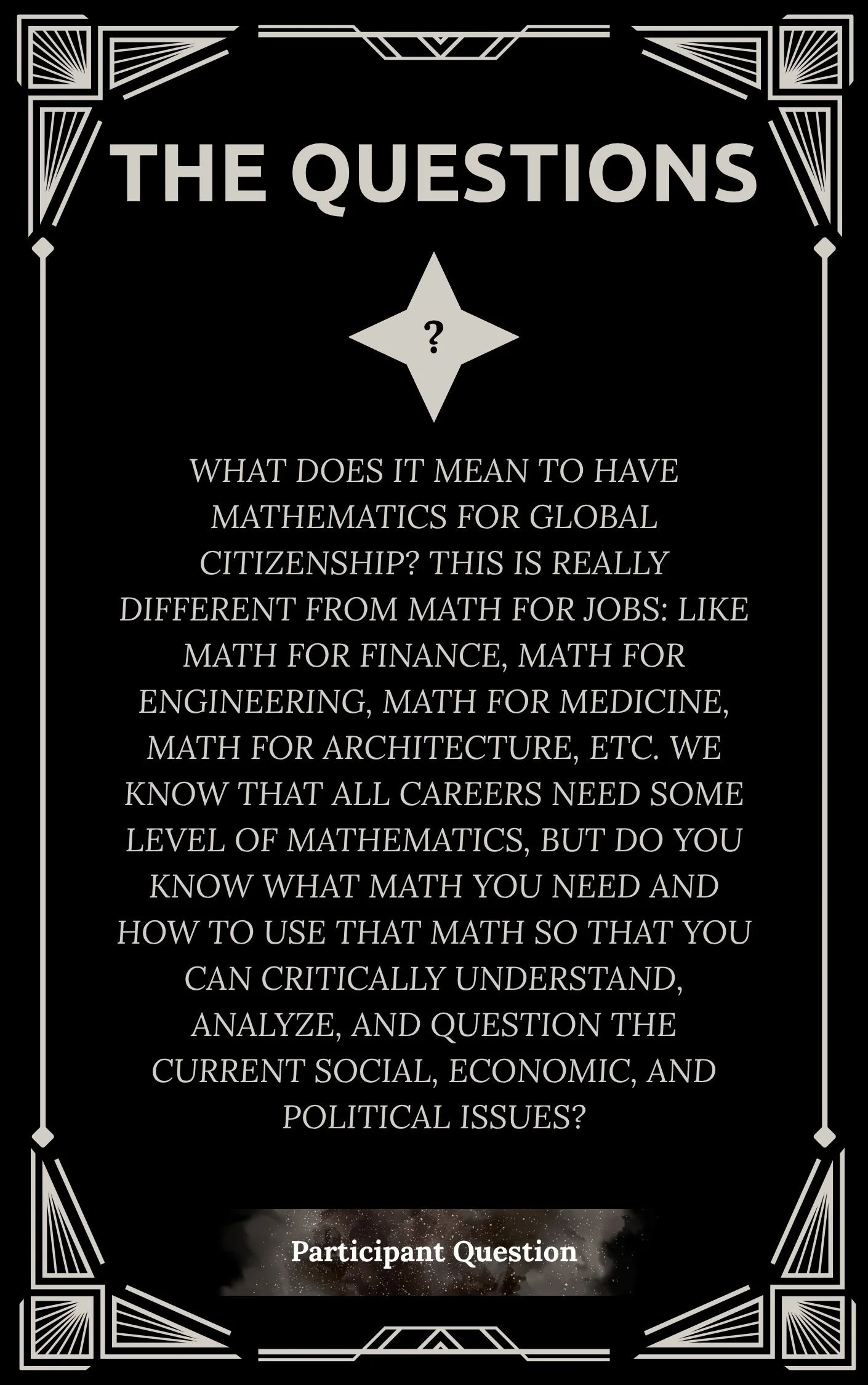
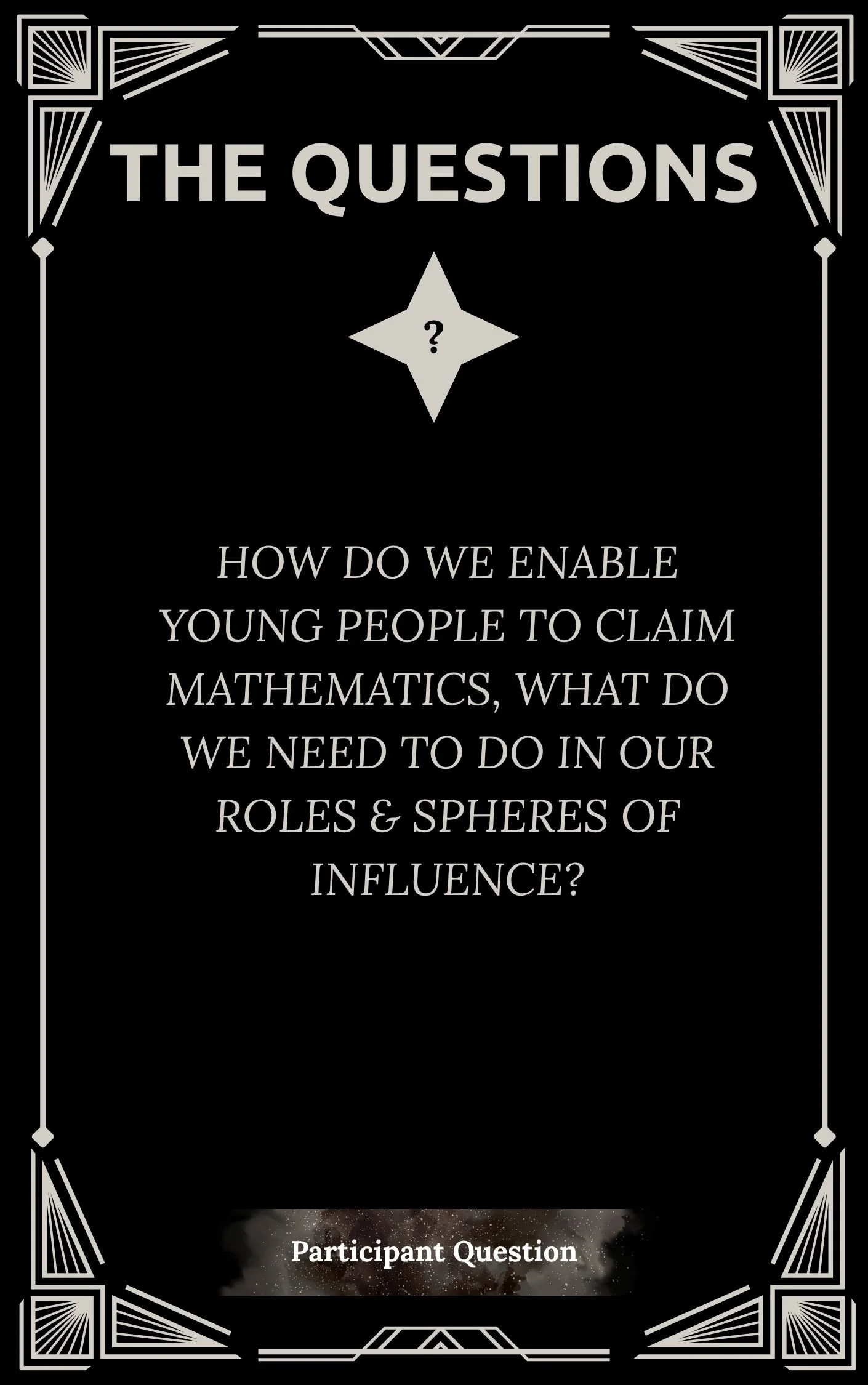
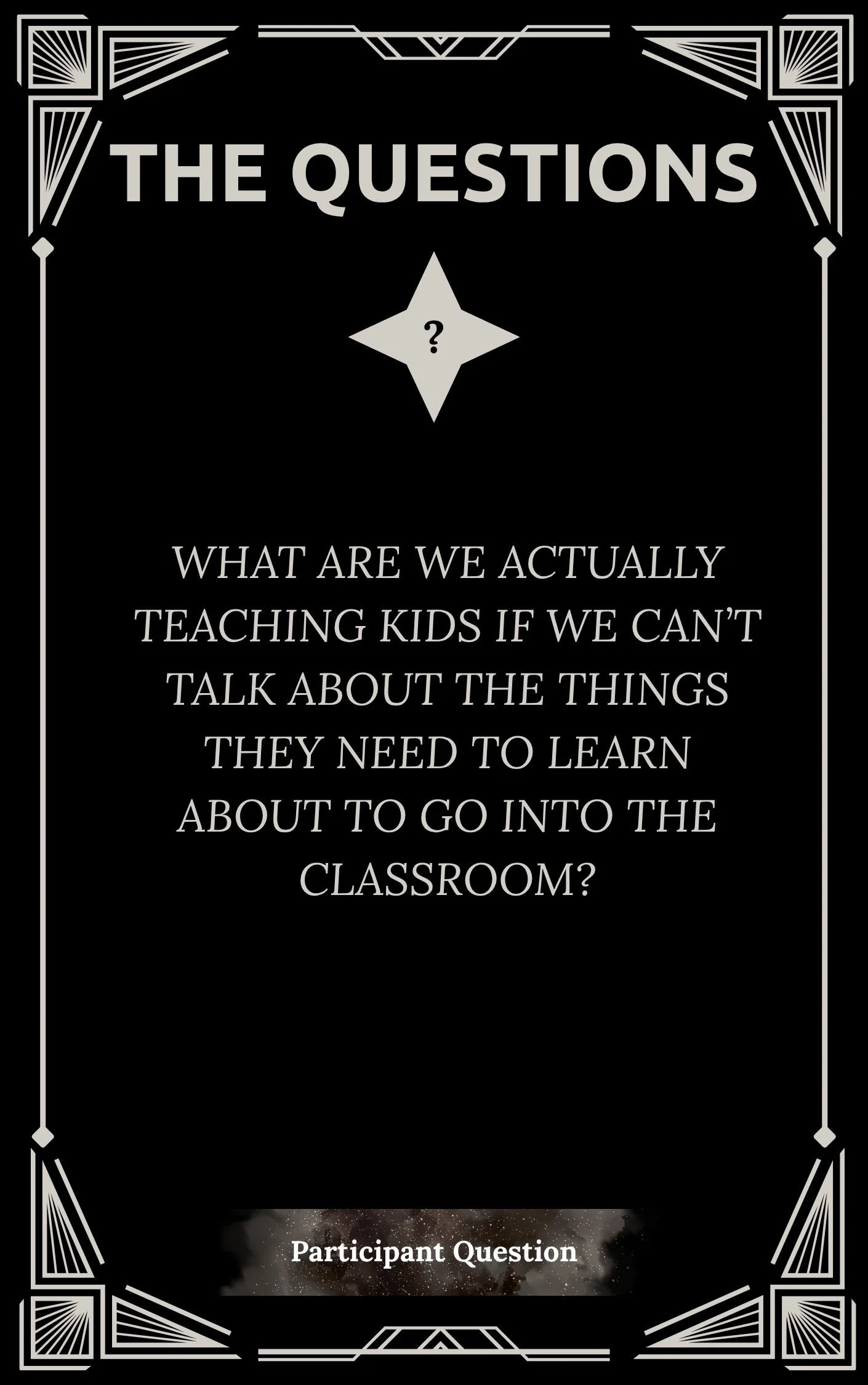
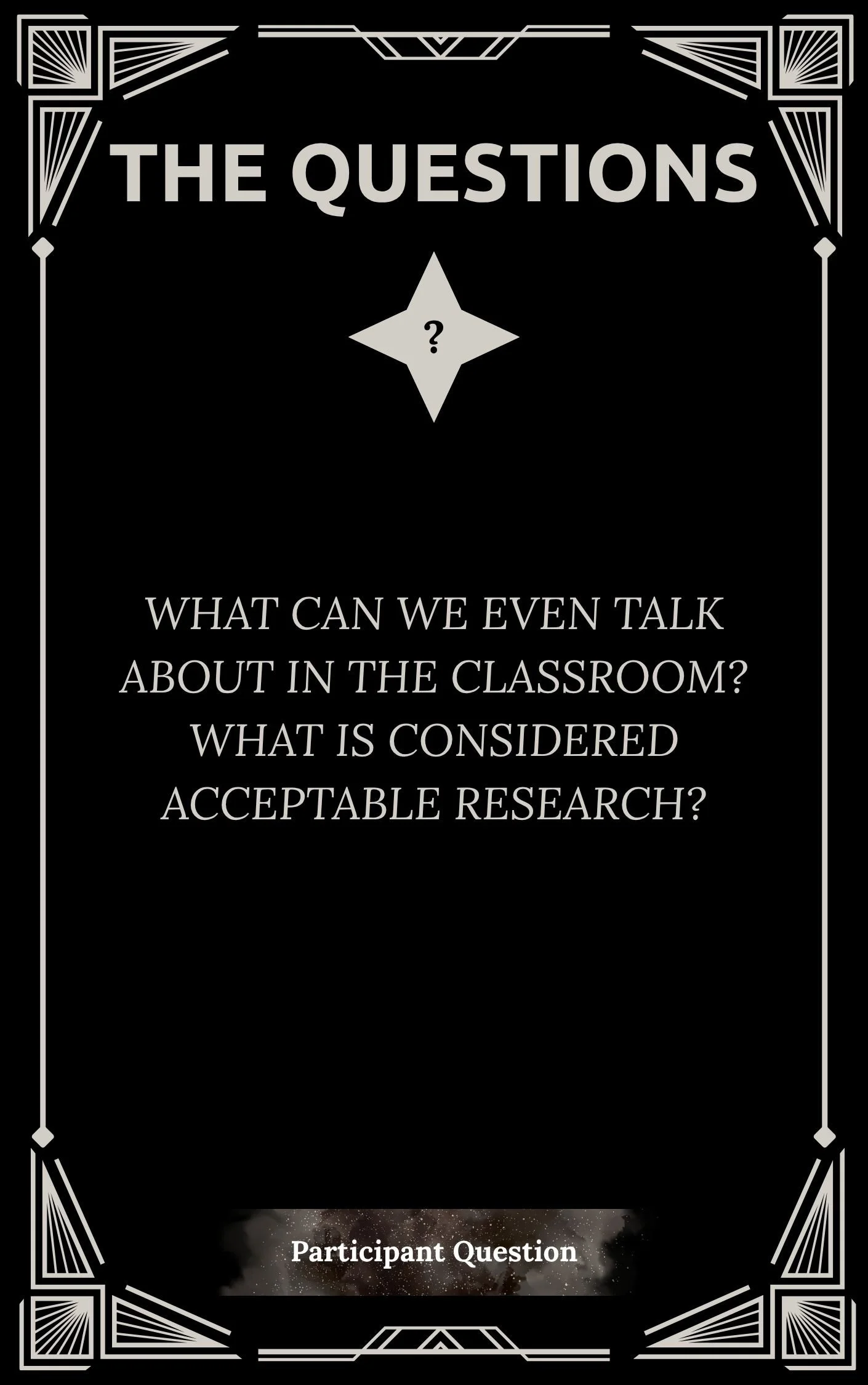

Participants didn’t just list out problems. They made it clear that they need a specific kind of support. S.T.E.M. Educators are looking for relational, equity-centered, and S.T.E.M.-focused guidance that bridges the gap between massive system demands and human-centered teaching.
This gap is exactly why educator-led organizations like Nth Education Partners are so vital. We understand both the daily realities of the classroom and the heavy pressures of institutional expectations. We build authentic partnerships with district and regional leaders, alongside the S.T.E.M. educators who work closest with students every day. By connecting high-level system priorities with what actually happens in the classroom, we help schools and communities design environments where children, youth, families, and educators can all thrive.